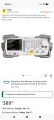
Note that the MCU is an STM8.
LCMX02 is a Lattice FPGA.
I would start by tracing the channel output and working backwards.
I think that your problem is likely user error. You need to read the User Manual and learn how to program the AWG from a PC.
Note that the MCU is an STM8.
LCMX02 is a Lattice FPGA.
I would start by tracing the channel output and working backwards.
I think that your problem is likely user error. You need to read the User Manual and learn how to program the AWG from a PC.
Oh I have no doubt that many of the problems I have are in fact user error since all of this may as well be brand new. the last time before I retired I laid hands on a soldering Iron was at 14,15 and 16. that was more than 50 years ago. So I may as well be a complete noob at this point. the one or several plusses I do have is a BSC in Math and another in Physics and I am no stranger to programming but not in what is used today but the principals are the same just the language changed some. so those being my only strengths I am in effect a complete noob with electronics. but I am capable of learning and eager to do so. Hence why I'm here. Oh yea I have no intention of trying to program anything into that processor. My programming for the foreseeable future is in the Arduino for now. then I will look into the ESP32 I'm not sure which one I will need ultimately but I feel it could be the ESP32 over the Arduino. I think I would need 2 Arduinos to just one ESP32 to handle all functions I want on the positive rail and the negative rail simultaneously with any step functions I would like to have programmed into it. Also deciding on a seperate board for any processor I do use or have it built into the main board. All these things I am not ready yet to touch. that can come after I get one positive rail supply done with simple analog controls at first to tie in the processor after. quite a bit of catch up learning to do in the programming end of things. things like what I need to use where PWM vs direct analog weather an external A-D converter is what the ESP needs or the Arduino needs. I don't know these things yet. also exactly how much math can be handled within the cpu and how fast it can do the calculations needed and respond. Like I said much to learn and I think maybe fun and informational in the end.
You misunderstood what I meant by "learn how to program the AWG from a PC". It is not like programming Arduino, ESP32 or any other MCU. You don't have to program the STM8 MCU. The MCU is already programmed to accept an established command protocol.
Not sure it's a matter of I don't want it. If I was in a position to replace it with something different I would be glad to send it to you but for now it's all I have and I need it. So for now till I find it's replacement a repair is the more favorable outcome.
That was the intent from the start but funds limited my choices at the time. Now I spend a lot of time looking at what I want and trying to get a feel for how well it works. Money is not the problem I just want something that will be reliable and have at least the basics of what I want. I got my scope in the same order as the signal generator and it has been very very reliable. Scope says 100MHZ I say about 40-60 at best. but it does the job and always has.
You misunderstood what I meant by "learn how to program the AWG from a PC". It is not like programming Arduino, ESP32 or any other MCU. You don't have to program the STM8 MCU. The MCU is already programmed to accept an established command protocol.
Mr Chips you are a wealth of information and I appreciate all you have done. I will certainly look through and carefully read the information you have provided and maybe I have a gem of a different type in this thing in it's late life. Still just sort of erks me that it died like that. I have used it so many times on repairs I have done and I don't believe I made any mistakes with this amp any more than the dozens I have looked through in the past. but just a bit over a year and already problems. I am very careful with my equipment. Most of them I have used in my past life in Physics so I am careful about what I do with them. I like my tools so I like to take care of them.
This is true and the plan is for a new one. But This is an opportunity to maybe learn something in the process and if I see the repair costs to high to bother doing then I will give up the ghost and at least learned something.
This is true and the plan is for a new one. But This is an opportunity to maybe learn something in the process and if I see the repair costs to high to bother doing then I will give up the ghost and at least learned something.
From a learning standpoint you could buy another unit identical to the one you have and make comparison measurements at various points on the circuit board, that and using the schematic provided in an earlier post may give you a clue as to where the signal is being hindered, only thing is that once you fix the problem you will have two identical function generators, on the plus side, you will have a function generator even if you can't fix the one you already have.
From a learning standpoint you could buy another unit identical to the one you have and make comparison measurements at various points on the circuit board, that and using the schematic provided in an earlier post may give you a clue as to where the signal is being hindered, only thing is that once you fix the problem you will have two identical function generators, on the plus side, you will have a function generator even if you can't fix the one you already have.
Yea that would give me twins and it's not an upgrade which is what I want. These sorts of tools are ones that sometimes you simply don't want them breaking down. Multimeters, scopes and signal generators are some of those tools you just need to work. Reliability is the order of the day. Many tools you can do without but the ones you use daily must be reliable.

 Facebook
 Google
 GitHub
 Linkedin