One of the nightmare scenarios that I wonder if it has ever been seriously considered is the vulnerability to malicious inside actors. We give a lot of attention to things like cyber attacks, but what about a low-level employee that intentionally seeks to cause as much damage as possible before they are physically stopped. Imagine an adversary (let's just assume it's a nation-state actor) that wants to commit a major attack. They recruit agents that seek low-level employment at the target and then determine ways that they can damage machines that will bring them down for a long time and then maneuver themselves into roles that would allow them to carry at as many of those attacks as quickly as possible. Until actually ordered to do so, they are nothing but a model employee. But once activated, they are a soldier on a mission and so they are not limited by what they can do clandestinely -- anything and everything at their disposal is on the table, limited only by what they can smuggle in (if anything is even needed) and how much damage they can do before they are physically stopped. I would envision the attack starting out with "quiet" events such as introducing contaminants into ultraclean spaces that cause widespread damage to things such as lenses. They move through a laundry list of these kinds of things as quickly as they can but, eventually, they reach a point where they just start taking a hammer to things. Their attack could also include a chemical or biological component on the people working there, too.
By "low-level employee", I don't mean unskilled; rather, I mean positions that are reasonably obtainable by a new employee in a reasonable amount of time (possibly several years). How much damage could just one such person do at a place like TSMC? How many people would be required to cripple an entire industry for an extended period of time?
One of the nightmare scenarios that I wonder if it has ever been seriously considered is the vulnerability to malicious inside actors. We give a lot of attention to things like cyber attacks, but what about a low-level employee that intentionally seeks to cause as much damage as possible before they are physically stopped. Imagine an adversary (let's just assume it's a nation-state actor) that wants to commit a major attack. They recruit agents that seek low-level employment at the target and then determine ways that they can damage machines that will bring them down for a long time and then maneuver themselves into roles that would allow them to carry at as many of those attacks as quickly as possible. Until actually ordered to do so, they are nothing but a model employee. But once activated, they are a soldier on a mission and so they are not limited by what they can do clandestinely -- anything and everything at their disposal is on the table, limited only by what they can smuggle in (if anything is even needed) and how much damage they can do before they are physically stopped. I would envision the attack starting out with "quiet" events such as introducing contaminants into ultraclean spaces that cause widespread damage to things such as lenses. They move through a laundry list of these kinds of things as quickly as they can but, eventually, they reach a point where they just start taking a hammer to things. Their attack could also include a chemical or biological component on the people working there, too.
By "low-level employee", I don't mean unskilled; rather, I mean positions that are reasonably obtainable by a new employee in a reasonable amount of time (possibly several years). How much damage could just one such person do at a place like TSMC? How many people would be required to cripple an entire industry for an extended period of time?
Mother Nature (and her uncle, the lawyer Murphy) is capable of attacks (something as simple as 10 lost power cycles on the main redundant (two completely independent substations and feeds) captive utility power could trigger very cost processing shutdowns) on semiconductor infrastructure that make intentional insider man-made attacks trivial in comparison. The process environment is very tightly monitored/controlled and company wide 'insider' threat training is routine. It's possible but it will be easily detected and IMO will be the least of our worries if something like that happens because of nation-state actors.
This self-contained ecosystem has thrived for over 60 years, creating a perfectly balanced and self-sufficient garden. The compost's bacteria consume the deceased plants and convert the oxygen released by the plants into carbon dioxide, which is necessary for photosynthesis.
Essentially, the bottle functions as a microcosm of Earth.
Went to Lewis & Clark Caverns in Whitehall Montana. While touring the caverns the tour guide pointed out a huge rock suspended over a narrow passageway. He said the rock was named "Poison Rock". He then asked if anyone knew why it was called that. Nobody answered. So he said simply, "One drop will kill you." And yes, it was a huge rock.
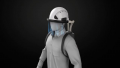
The team has currently designed a prototype version that looks like a backpack system. This 10-pound backpack houses all the essential components that make the system work such as a nonthermal plasma module that treats incoming air. It also contains an air handler, electronics, and a battery pack to power the entire operation. Clean air is drawn into the backpack, treated by the plasma module, and then directed to the nozzle array of the air curtain, creating a protective shield for the wearer.
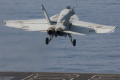
I was watching the title sequence of Top Gun - Maverick and was reminded of the rudder toe-in during takeoff. I think "tweaks" like this are cool and interesting and so often go unnoticed by most people.
I first saw it back in 1986 during William Tell at Tyndall AFB watching a CF-18 (Canadian) demo flight. I got a chance to ask the pilot what was going on, and he explained that, during takeoff and high AoA (angle-of-attack) maneuvers at low speed, the wings excessively shadow the stabilators, reducing their authority, so the rudders deflect inward (known as toe-in) in order to provide pitch-up force. In addition, the main wheels are set way back to better handle carrier landings, which then requires more nose-up force to get the nose-gear off the ground. The fact that the vertical stabilizers are canted outward makes this more effective, in that they act a bit more like elevators, but even if the stabs were straight up and down it would still provide a nose-up force since they are located above and behind the aircraft's center of gravity.
Another thing that is interesting is that, on takeoff, they stay toed-in for ten seconds after the WoW (weight-on-wheels) switch indicates that the aircraft has taken off. The reason that this is not tied to airspeed or angle of attack is so that a failure in the pitot-static or other control surface system won't cause the rudders to fare (straighten out) prematurely, which would likely be fatal in a carrier take-off. The rudders also toe-in on landing, initiated by the pilot turning off the auto-flaps configuration as part of the pre-landing checklist. They can also toe-in as part of the integrated "living wing" approach to maintaining controllability during flight. To the best of my knowledge (and I could be wrong), they never toe-out.
The first of these "tweaks" that I ever encountered was on the F-15. One of the first times I got my hands on the bird was when I was tasked to help with a hydraulic system bleed. I was in the cockpit cycling the control surfaces and, as a pilot myself, was in the habit of looking at the control surfaces to make sure that they were "free and correct" to detect binding and rigging issues. I started out with full nose-up, left-roll, left-rudder and everything looked good. I transitioned to full nose-up, right-roll, right-rudder and things looked fine. I thing moved to full nose-down, keeping right-roll and right-rudder, and noticed that the rudders moved from right-rudder to left-rudder. This alarmed me, so I brought it to the attention of the guys I was working with, and they thought it was odd. Since this was actually after swing shift had ended, there weren't any maintenance supervisors around, so I could only conclude that the aircraft had been misrigged or something, so I Red-X'ed the aircraft, noting the issue. The next day I was called back down there and asked why I had Red-X'ed a perfectly good aircraft. When I explained what I had seen, it was explained to me that this is a built-in bias in the control system. The explanation given to me then was that it prevented the aircraft from swapping ends in a diving turn, given that the engines are mounted so far back. I accepted this explanation (no reason not to), but since then have run across some more detailed explanations that indicate that it is to counteract a tendency to roll too-sharply in a nose-down configuration (and there is a bias that adds additional rudder in a nose-up configuration to increase a tendency to roll too-weakly, but that bias is impossible to see when cycling the controls on the ground. So learned something, and even got a letter of commendation for my file because I had taken the initiative to prevent what I believed was a dangerous situation, despite being wrong.
I was watching the title sequence of Top Gun - Maverick and was reminded of the rudder toe-in during takeoff. I think "tweaks" like this are cool and interesting and so often go unnoticed by most people.
I first saw it back in 1986 during William Tell at Tyndall AFB watching a CF-18 (Canadian) demo flight. I got a chance to ask the pilot what was going on, and he explained that, during takeoff and high AoA (angle-of-attack) maneuvers at low speed, the wings excessively shadow the stabilators, reducing their authority, so the rudders deflect inward (known as toe-in) in order to provide pitch-up force. In addition, the main wheels are set way back to better handle carrier landings, which then requires more nose-up force to get the nose-gear off the ground. The fact that the vertical stabilizers are canted outward makes this more effective, in that they act a bit more like elevators, but even if the stabs were straight up and down it would still provide a nose-up force since they are located above and behind the aircraft's center of gravity.
Another thing that is interesting is that, on takeoff, they stay toed-in for ten seconds after the WoW (weight-on-wheels) switch indicates that the aircraft has taken off. The reason that this is not tied to airspeed or angle of attack is so that a failure in the pitot-static or other control surface system won't cause the rudders to fare (straighten out) prematurely, which would likely be fatal in a carrier take-off. The rudders also toe-in on landing, initiated by the pilot turning off the auto-flaps configuration as part of the pre-landing checklist. They can also toe-in as part of the integrated "living wing" approach to maintaining controllability during flight. To the best of my knowledge (and I could be wrong), they never toe-out.
The first of these "tweaks" that I ever encountered was on the F-15. One of the first times I got my hands on the bird was when I was tasked to help with a hydraulic system bleed. I was in the cockpit cycling the control surfaces and, as a pilot myself, was in the habit of looking at the control surfaces to make sure that they were "free and correct" to detect binding and rigging issues. I started out with full nose-up, left-roll, left-rudder and everything looked good. I transitioned to full nose-up, right-roll, right-rudder and things looked fine. I thing moved to full nose-down, keeping right-roll and right-rudder, and noticed that the rudders moved from right-rudder to left-rudder. This alarmed me, so I brought it to the attention of the guys I was working with, and they thought it was odd. Since this was actually after swing shift had ended, there weren't any maintenance supervisors around, so I could only conclude that the aircraft had been misrigged or something, so I Red-X'ed the aircraft, noting the issue. The next day I called back down there and asked why I had Red-X'ed a perfectly good aircraft. When I explained what I had seen, it was explained to me that this is a built-in bias in the control system. The explanation given to me then was that it prevented the aircraft from swapping ends in a diving turn, given that the engines are mounted so far back. I accepted this explanation (no reason not to), but since then have run across some more detailed explanations that indicate that it is to counteract a tendency to roll too-sharply in a nose-down configuration (and there is a bias that adds additional rudder in a nose-up configuration to increase a tendency to roll too-weakly, but that bias is impossible to see when cycling the controls on the ground. So learned something, and even got a letter of commendation for my file because I had taken the initiative to prevent what I believed was a dangerous situation, despite being wrong.
Researchers have developed a new type of memory device that they say could reduce the energy consumption of artificial intelligence (AI) by at least 1,000.
Called computational random-access memory (CRAM), the new device performs computations directly within its memory cells, eliminating the need to transfer data across different parts of a computer.
She looks like she is being pulled up the wall. If you're wondering by that, do I mean "I think she was actually pulled up the wall" or "she did that so fast it created an optical illusion of being pulled up the wall," well I am wondering the same thing but I am pretty sure I mean the latter. I watched several times from all the angles in full speed, half speed, and quarter speed, and there are some parts of her ascent where I can't cant wrap my head around where her upward thrust is coming from. Particularly right here:
She looks like she is being pulled up the wall. If you're wondering by that, do I mean "I think she was actually pulled up the wall" or "she did that so fast it created an optical illusion of being pulled up the wall," well I am wondering the same thing but I am pretty sure I mean the latter. I watched several times from all the angles in full speed, half speed, and quarter speed, and there are some parts of her ascent where I can't cant wrap my head around where her upward thrust is coming from. Particularly right here:
Momentum keeps her going up for while, like a bottle rocket that runs out of propellant but keeps moving up for a while. That that level of speed it's not about stopping at holds, it's about acceleration, use and Conservation Of Momentum until it's needed.
My daughter climbs (beginner level) at the local indoor facility (she's also taking jiu jitsu there during the summer).

 Facebook
 Google
 GitHub
 Linkedin