Voltage, RPM, current for small motor

Thread Starter

Jan Luthe

Joined Jan 10, 2015
89
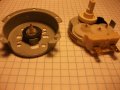
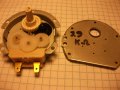
I have this motor (see attachments) that came from an over the range microwave turntable (LG LMHM2017ST). I believe the motor 'failed' due to grease that got in the gears and when it cooled the hardened grease was too much resistance. I want to use the motor for something else. The info I have:

Repaired turntable turns at 6 rpm
Coil resistance is 3.7M ohms
Turntable turns one way and then the other way when used the next time.
The black magnet (rotor?) has 8 'magnetic spots' and 8 almost non magnetic spots
Approximate gear reduction is about 300 to 1 (I did not count the gears. It is very approximate)

How high a voltage and AC or DC should I first try to see what works?
How does the motor rpm relate to turntable rpm if AC voltage? (Basic calcs/explanation so I learn a bit more)
 

Attachments

MaxHeadRoom

Joined Jul 18, 2013
30,654
Some are 21vac ran off of a winding on the MW oven transformer, others are 120 or 240vac direct.
They are AC synchronous motors.
The do not turn relative to voltage but frequency.
Try on low voltage AC first, if not turning then use the mains direct.
Max.
 

wayneh

Joined Sep 9, 2010
18,104
Some are 21vac ...
My only quibble might be to use "most" instead of "some". I'm not really sure which it is but the point is that the TS should definitely NOT try using the mains until the lower voltage has been thoroughly tried with a free-spinning motor.
 

Thread Starter

Jan Luthe

Joined Jan 10, 2015
89
I agree, as stated, but I also assumed 3.7M ohm is meg-ohms?
Max.
Thanks for the feedback. It is 3.7 meg-ohms. Tried with 14 vac (no gears) and motor just hums. I am thinking of a way to get 120vac safely. I was thinking of using a ground fault receptacle with a 0.5 amp fuse. Any other suggestions?
The motor does not quite spin freely because the rotor magnet is attracted to one of the metal tabs.
 

MaxHeadRoom

Joined Jul 18, 2013
30,654
Tried with 14 vac (no gears) and motor just hums. I am thinking of a way to get 120vac safely. I was thinking of using a ground fault receptacle with a 0.5 amp fuse. Any other suggestions?
The motor does not quite spin freely because the rotor magnet is attracted to one of the metal tabs.
I guess you don't have a Variac?
Most Synchronous motors do not spin freely.
I don't see a lot of current flowing even if 120v were applied.
Just for a very brief test.
Max.
 

Thread Starter

Jan Luthe

Joined Jan 10, 2015
89
I guess you don't have a Variac?
Most Synchronous motors do not spin freely.
I don't see a lot of current flowing even if 120v were applied.
Just for a very brief test.
Max.
I'm just a beginner. I don't have a variac. In my junk I may have some small transformers. If I have a 120vac transformer to 6vac, could I feed, say 2 vac to the 6vac side and get say 40 vac out of the primary side? Also, I have seen numerous talks on using isolation transformers from the mains for safety reasons. How does a non-fused transformer help safety wise?
 
Top