Voltage regulator... proportional?

Thread Starter

Enrique Rumbo

Joined Aug 31, 2019
25
So you want to monitor the battery voltage of the plane using the video camera? Is there another solution out there for remote battery voltage monitoring? My drone does. When the drone battery gets low my remote starts beeping. Unless you want to shoot video at the same time.
Receiver doesn't have telemetry, so it can't send the voltage monitoring to the radio. It has to be done with the camera, so I can see it. It'll be far away from me, so a beeper isn't an option neither.

I'll be recording my FPV feed as I'm flying.

I'm looking for a way to take of the LiPo batteries by not discharging just one cell more than the other two by plugging the camera/VTx to just one cell.
 

Thread Starter

Enrique Rumbo

Joined Aug 31, 2019
25
You don't power the camera from the voltage divider. You need to power the camera from a step down switching converter.

If you need to monitor the battery voltage, you need another way to measure the voltage using a system that has a high impedance input.
It was suggested to me in another forum that a step-down/buck converter with modified Vref would do the trick. But this, of course, it's outside my knowledge pool.
 

Tonyr1084

Joined Sep 24, 2015
9,744
OK, here's my last stab at this: Power your camera from a buck converter. Build (or buy) a module to monitor the overall battery voltage. When the batteries get low have it trigger a flashing LED. Mount the LED just within the camera's field of vision. It doesn't need to be in focus. When your LED starts flashing you know your batteries have reached a level of charge that you have set it to trigger at. You won't know the actual voltage but when the LED starts flashing you'll know it has reached a set point - whatever point that is you set it to. Just leave enough headroom for the batteries to bring your plane back to your landing field.

All other solutions would require extensive modifications. And that would definitely be beyond the scope of my abilities.
 

Tonyr1084

Joined Sep 24, 2015
9,744
Or forego the buck converter and just power the camera from an independent source. That way your main batteries will have greater range. The LED will still let you know when you've reached a Minimum Voltage for Return Trip (MVRT).
 

Thread Starter

Enrique Rumbo

Joined Aug 31, 2019
25
How did you arrive at this estimate?

A load of 3800Ω would take about 3.8V / 3800Ω = 1mA not 500mA.

A load of 500mA @ 3.8V = 3.8V / 0.5A = 7.6Ω
When I made the voltage divider, the voltage dropped to 1.4V when it should have been 1/3 of the LiPo voltage. Maybe I got it wrong, but 10kOhm and then, in series, a 5kOhm resistor with a 3.8kOhm (calculated) in parallel is what gave me the number.

Anyways, since it's not a good option...

The 500mA was given by the manufacturer. At what voltage, I don't know.

Since this isn't going to be an easy task, and I don't want to waste your time... just don't bother anymore.

I appreciate the time you all spent trying to answer this.

Thanks.
 

Thread Starter

Enrique Rumbo

Joined Aug 31, 2019
25
OK, here's my last stab at this: Power your camera from a buck converter. Build (or buy) a module to monitor the overall battery voltage. When the batteries get low have it trigger a flashing LED. Mount the LED just within the camera's field of vision. It doesn't need to be in focus. When your LED starts flashing you know your batteries have reached a level of charge that you have set it to trigger at. You won't know the actual voltage but when the LED starts flashing you'll know it has reached a set point - whatever point that is you set it to. Just leave enough headroom for the batteries to bring your plane back to your landing field.

All other solutions would require extensive modifications. And that would definitely be beyond the scope of my abilities.
Or forego the buck converter and just power the camera from an independent source. That way your main batteries will have greater range. The LED will still let you know when you've reached a Minimum Voltage for Return Trip (MVRT).
Thanks sir.
 

MrChips

Joined Oct 2, 2009
34,829
When I made the voltage divider, the voltage dropped to 1.4V when it should have been 1/3 of the LiPo voltage. Maybe I got it wrong, but 10kOhm and then, in series, a 5kOhm resistor with a 3.8kOhm (calculated) in parallel is what gave me the number.

Anyways, since it's not a good option...

The 500mA was given by the manufacturer. At what voltage, I don't know.

Since this isn't going to be an easy task, and I don't want to waste your time... just don't bother anymore.

I appreciate the time you all spent trying to answer this.

Thanks.
I don't mind. You are not wasting my time. The goal here is for YOU to understand how electronic systems work. We can accept that the manufacturer specifies a current consumption of 500mA.

Where did you get the load resistance of 3800Ω?

BTW, you cannot assume that the electronic load behaves like a constant value resistance. In other words, do not assume that the camera obeys Ohm's Law.
 

jpanhalt

Joined Jan 18, 2008
11,087
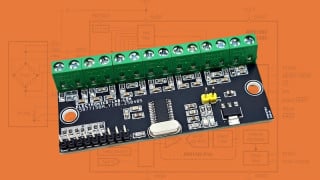
The device presented as an example in post #5 is an adjustable buck/boost regulator that uses the TI TPS63070. Its voltage is set by feedback pins (FB & FB2) to a voltage divider on the output. Most people will want that, as it gives a stable output. BTW, that is a common design for both switching and linear voltage regulators. However, if those high-impedance pins were set to a voltage divider on the input voltage, you should get an output that varies as the input changes.

Check the data sheet to see how to calculate those resistances.

This is not a solution per se, but only a suggestion of a way to get a variable output that reflects the input voltage. It may not work.
 
Last edited:

Alec_t

Joined Sep 17, 2013
15,121
I just need to know the voltage "ball park", no need to know it exactly.
To protect the cells from damage you need to monitor the voltage of each one. The cells are never identical, so the lowest capacity one will discharge to a critical low level befor the others.
 

jpanhalt

Joined Jan 18, 2008
11,087
The drones I fly are fixed wing, and the ESC (electronic speed control) gives a warning at a preset voltage, such as a decrease in engine speed that can be reset. That is a signal to return and land. The glide ratio of multi-copter drones, which I suspect the TS is flying, is a lot lower, so such a signal could be a problem.

My guess is that the TS wants to monitor the main power battery for the same purpose, i.e., a safe return, and his FPV display may allow that.

As suggested above, the feedback of a voltage regulator for the FPV supply, the batteries of which are shared with the propulsion system, could be defeated so that it simply produces a constant ratio of input to output voltage. Using the supply for feedback would give an inverse relationship. One could also envision various other ways, such as a zener-regulated feedback voltage to give a constant ratio. Either approach might work but will need development and testing.
 

BobTPH

Joined Jun 5, 2013
11,534
Simple solution: Change your battery from 3S to 3P. This will power the camera and its built in voltage monitor directly, so it will work correctly. Then use a boost converter to run the motors.

Bob
 

jpanhalt

Joined Jan 18, 2008
11,087
Simple solution: Change your battery from 3S to 3P. This will power the camera and its built in voltage monitor directly, so it will work correctly. Then use a boost converter to run the motors.

Bob
As above, 3P won't run the propulsion system. That would require a much bigger boost.
 

BobTPH

Joined Jun 5, 2013
11,534
What is wrong with using a boost converter? 3P and 3S have the same energy capacity, with a good converter you will get as high as 95% efficiency, so nearly the same runtime. And energy you would otherwise waste converting down for the camera is regained.

Bob
 

jpanhalt

Joined Jan 18, 2008
11,087
What is wrong with using a boost converter? 3P and 3S have the same energy capacity, with a good converter you will get as high as 95% efficiency, so nearly the same runtime. And energy you would otherwise waste converting down for the camera is regained.

Bob
95% efficiency dropping 12 V to 4 V at 0.5 amp is a lot different then boosting 4V to 12 V at 10 to 20 amp. The weight if the inductor matters. Let's wait for the TS to respond. Maybe he has gotten his answer elsewhere.
 

Thread Starter

Enrique Rumbo

Joined Aug 31, 2019
25
Thanks for all your answers.

As told before, I cannot use 3P and then step up to power the motor.

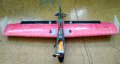
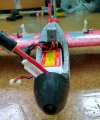
I think you'll understand better with some pictures. I don't have room to install a LED to warn me about low voltage, nor I can use other method apart from the camera OSD.

I'm already using a 5V buck converter to power the servos and the receiver, but I can't use it to power the camera because the servos make to much noise and the video feed is horrible.

She's already flying, but this would be a way to take care of the batteries better.


Again, it doesn't seem worth your time as I thought this would be less complicated. But... if you like a challenge...

Thanks.

IMG_20190902_132440.jpg
IMG_20190902_132453.jpg
IMG_20190902_132511.jpg
 

jpanhalt

Joined Jan 18, 2008
11,087
Being that it is fixed wing doesn't change the solution I offered; although, I have never had a problem with the ESC method mentioned. Most electric flyers at our local club just use performance and/or a timer to control the duration of their flights.

I would use the fixed voltage feedback to ensure a fixed ratio of input to output.
 

Thread Starter

Enrique Rumbo

Joined Aug 31, 2019
25
Being that it is fixed wing doesn't change the solution I offered; although, I have never had a problem with the ESC method mentioned. Most electric flyers at our local club just use performance and/or a timer to control the duration of their flights.

I would use the fixed voltage feedback to ensure a fixed ratio of input to output.
Thanks for the answer.

My ESC simply doesn't have that option and I can't swap it for another.

What would your solution entail? I'm an electronics noob.

Thanks.
 
Top