Facebook
 Google
 GitHub
 Linkedin

I am Constructing an Electric Bike for a school project, and I am running into the most peculiar issue.
the PWM for the speed control is generated by a counter, Magnitude comparator, and A/D converter and a few other components, all requiring 5V for operation. the motor runs on a 24 Volt SLA battery, which I am switching with a 60A MOSFET. I have all protection on the motor, like freewheeling diodes and filtering capacitors. however, the issue does not remain here.
scince the past monday I have destroyed about 10 5V Voltage regulators. I hook them up right, I attach them to a HUGE heat sink, and they constantly self-destruct after about a minute of use. For the record, If I run the 5V part off of my benchtop supply, I draw no more than 100 milliamps, so I'm not shorting the regulator. the regulator is supposed to have a Vin of 8 to 36 volts, which is fine for being powered from a 24 volt SLA battery.
Getting tired of blowing fuses (thank god they were there... I would be replacing quite a bit of IC right now if they weren't) I simply hooked another regulator up without anything on its output except for a 1K resistor. I ran my circuit for a while. And the regulator blew up. With no load.
I am at a complete loss. I can understand the regulator dying from over-current, or over-voltage, but there is nothing of the sort occuring. What could possibly be destroying my regulators? my best guess is back-emf, but I have freewheeling diodes to protect against that. And if that was the case my MOSFET's would fry, not my regulator.
Also, if I JUST hook a regulator to the output of the battery, it works fine. It has to be something in the power area that is causing this.
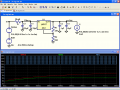
schematic:

I dont have the PWM controller's schematic, but I do not believe that it is the cause of the problem.
the PWM for the speed control is generated by a counter, Magnitude comparator, and A/D converter and a few other components, all requiring 5V for operation. the motor runs on a 24 Volt SLA battery, which I am switching with a 60A MOSFET. I have all protection on the motor, like freewheeling diodes and filtering capacitors. however, the issue does not remain here.
scince the past monday I have destroyed about 10 5V Voltage regulators. I hook them up right, I attach them to a HUGE heat sink, and they constantly self-destruct after about a minute of use. For the record, If I run the 5V part off of my benchtop supply, I draw no more than 100 milliamps, so I'm not shorting the regulator. the regulator is supposed to have a Vin of 8 to 36 volts, which is fine for being powered from a 24 volt SLA battery.
Getting tired of blowing fuses (thank god they were there... I would be replacing quite a bit of IC right now if they weren't) I simply hooked another regulator up without anything on its output except for a 1K resistor. I ran my circuit for a while. And the regulator blew up. With no load.
I am at a complete loss. I can understand the regulator dying from over-current, or over-voltage, but there is nothing of the sort occuring. What could possibly be destroying my regulators? my best guess is back-emf, but I have freewheeling diodes to protect against that. And if that was the case my MOSFET's would fry, not my regulator.
Also, if I JUST hook a regulator to the output of the battery, it works fine. It has to be something in the power area that is causing this.
schematic:
I dont have the PWM controller's schematic, but I do not believe that it is the cause of the problem.
Last edited: