Facebook
 Google
 GitHub
 Linkedin

Yes and no.A proper voltage regulator also provides line regulation as well as load regulation.
Let us take this circuit as an example.
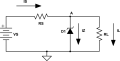
Let us suppose,
Vs = 20 V
Vz = 10 V
Imax = 10 mA
We design for Rs,
Rs= (Vs - Vz) / Imax = ( 20V - 10V) / 10 mA = 1k Ω
If RL = 1k Ω, IL = 10 mA, VL = 10 V
Regulation occurs for varying loads so long as RL is 1k Ω or higher.
If Vs falls below 20 V, voltage regulation fails.
In order maintain the desired output of 10 V even if Vs falls below 20 V, we have to alter the design criteria.
Even though the specified Imax is 10 mA, we would have to design for a higher Imax, i.e. we would have to lower the value of Rs.
Then you have to increase the wattage rating of both Rs and the zener diode.
Suppose we make Rs = 500 Ω instead of the designed 1000 Ω.
Imax is now 20 mA and RL can fall as low as 500 Ω.
On the input side, it means that Vs can now fall to 15 V and still maintain output regulation at 10 mA @ 10 V.
To summarize, yes, you can provide some degree of line and load regulation but only if you modify the design criteria.