Facebook
 Google
 GitHub
 Linkedin
Happy new year guys,
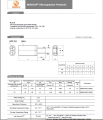
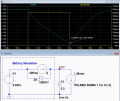
My circuit is running on following battery, which has maximum pulse current of upto 400 mA. As with most embedded devices, my device spends most of its time in sleep state consuming uAs of current. But, roughly around every 2 hours, device need to drive a servo, which requires either 5V or upto 600 mA of current for couple of seconds. I tried placing a 1000 uF capacitors parallel to battery to help supply higher pulse current, but solutions doesn't seem to be reliable enough. Now I am thinking 2 approaches here.
https://uk.farnell.com/eve/er34615/battery-lithium-3-6v-d/dp/1973584
1. Boosting the current in my circuit, with a current boost IC, but as I understand it would have effect on the battery voltage, considering battery starting voltage is 3.6V and I need minimum of 3.3V for my circuit to operate.
2. Second solution would be to somehow boost the voltage with boost converter for only 2 seconds when servo is demanding higher voltage.
Your thoughts on this will be very welcome.
My circuit is running on following battery, which has maximum pulse current of upto 400 mA. As with most embedded devices, my device spends most of its time in sleep state consuming uAs of current. But, roughly around every 2 hours, device need to drive a servo, which requires either 5V or upto 600 mA of current for couple of seconds. I tried placing a 1000 uF capacitors parallel to battery to help supply higher pulse current, but solutions doesn't seem to be reliable enough. Now I am thinking 2 approaches here.
https://uk.farnell.com/eve/er34615/battery-lithium-3-6v-d/dp/1973584
1. Boosting the current in my circuit, with a current boost IC, but as I understand it would have effect on the battery voltage, considering battery starting voltage is 3.6V and I need minimum of 3.3V for my circuit to operate.
2. Second solution would be to somehow boost the voltage with boost converter for only 2 seconds when servo is demanding higher voltage.
Your thoughts on this will be very welcome.