Facebook
 Google
 GitHub
 Linkedin
Hello everybody!
My question is theoretic, not practical, but practical answers might help as well!
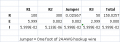
I read the textbook of this homepage (http://www.allaboutcircuits.com/vol_1/chpt_5/7.html), and it states, that a shorted component has no voltage in serial circuits (for expamle R2 in this example. Second circuit figure). However, I don't understand this because the jumper wire on R2 makes the serial circuit serial+parallel.
When I see the figure, the current has two ways to achieve the next resistance. It can go through both the jumper wire and the R2 resistor. So why R2 has no resistance? Why doesn't drop any vontage on R2? The jumper wire and R2 constitute the parallel part of this circuit, don't they?
Please help me to understand!
(And yeah, I'm beginner, electricity is my new hobby!)
My question is theoretic, not practical, but practical answers might help as well!
I read the textbook of this homepage (http://www.allaboutcircuits.com/vol_1/chpt_5/7.html), and it states, that a shorted component has no voltage in serial circuits (for expamle R2 in this example. Second circuit figure). However, I don't understand this because the jumper wire on R2 makes the serial circuit serial+parallel.
When I see the figure, the current has two ways to achieve the next resistance. It can go through both the jumper wire and the R2 resistor. So why R2 has no resistance? Why doesn't drop any vontage on R2? The jumper wire and R2 constitute the parallel part of this circuit, don't they?
Please help me to understand!
(And yeah, I'm beginner, electricity is my new hobby!)