Voltage conversion 100V to 120V

Thread Starter

Digi-Gear

Joined Aug 27, 2024
1
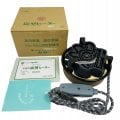
I have an electric heater especially made to heat water for the Japanese Tea Ceremony. The heating unit was made in Japan and is designed to operate at 100V. I have it here in the US and want to use it with 120V. The heater is rated at 400 Watts. How can I convert the unit to operate on 120V?

Note: A voltage converter rated for 400W is way too big for this environment. I presume there is no transformer in the unit... it is not that big or heavy.

Thanks, Eric Lane
eric@teadogu.com
 

Attachments

crutschow

Joined Mar 14, 2008
38,320
1. A triac light dimmer.
I would go with that, but you would need a true RMS voltmeter (multimeter) to set the voltage properly to 100Vrms.
3. If it has thermostat and heats up reasonably quickly It would probably survive the overvoltage
I wouldn't trust that.
Running on 120V would increase the power about 44% to 576W, and that could damage the heater element in the time it takes to heat the water to the desired temperature.
 

MisterBill2

Joined Jan 23, 2018
27,181
Put a ten amp 200 volt diode in series with the heater. That will cut the 576 watts in half. So the water heating will be a bit slower but the heater will last longer. The smallest and cheapest solution, and no way to adjust it incorrectly.
 

Ian0

Joined Aug 7, 2020
13,097
I would go with that, but you would need a true RMS voltmeter (multimeter) to set the voltage properly to 100Vrms.
I wouldn't trust that.
Running on 120V would increase the power about 44% to 576W, and that could damage the heater element in the time it takes to heat the water to the desired temperature.
Japanese voltage is 100±10V, so it will be designed to operate safely on 110V. What is the maximum USA voltage? I seem to think it might be 120V±6%
 

crutschow

Joined Mar 14, 2008
38,320
Put a ten amp 200 volt diode in series with the heater. That will cut the 576 watts in half. So the water heating will be a bit slower but the heater will last longer. The smallest and cheapest solution, and no way to adjust it incorrectly.
That will generate several amps of average DC current, which the main's power transformer may object to by saturating.
 

MisterBill2

Joined Jan 23, 2018
27,181
Our local pole mounted mains transformer feeds four households having 100 amp 235 volt service. A non-symetrical six amp load is not likely to be noticed, or to cause any issues.
 

crutschow

Joined Mar 14, 2008
38,320
Our local pole mounted mains transformer feeds four households having 100 amp 235 volt service. A non-symetrical six amp load is not likely to be noticed, or to cause any issues.
Depends upon the transformer size and how close it's operating to its maximum rated input voltage, so that's a little bit of a WAG.
 

ronsimpson

Joined Oct 7, 2019
4,647
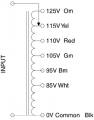
At digikey.com I found this transformer. I think it is to do this job. Connect your Nippon heater from 0V to 95V or 105V. Connect the US power line from 0V to 115V or 125V.
1725071642060.png
digikey transformer
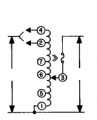
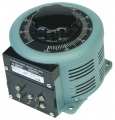
I have some of these transformers. Some have meters. This one does not. There are usually several taps to connect power and a wiper arm for the output. I would connect the US power line from 1-4 and the heater from 1-3. Then set the knob to 80%.
1725072191002.png
1725072025650.png
 

DickCappels

Joined Aug 21, 2008
10,661
Some heating appliances can operate over a wide range of voltages. I have soldering iron and a glue gun that can handle 120 VAC through 240 VAC. They seem to get away with it because the heating element has a positive temperature coefficient of resistance, and tends to keep the temperature similar with the different input voltages. You might want to contact the manufacturer and ask whether the heater would be safe to operate at 120 VAC. If you have a wattmeter you can check directly by just checking to see whether the power dissipated is way off or not.
 

BobTPH

Joined Jun 5, 2013
11,463
A metal container full of water is a fantastic heat sink. Unless the water boils away, I can’t see how 20% over voltage would do much other than boiling the water a bit faster. And I expect it has a thermostatic cutoff to handle that situation, or it would not last long for me. The tea kettle I use cuts off immediately when the water boils.
 

MisterBill2

Joined Jan 23, 2018
27,181
Certainly the POWERSTAT variable is a wonderful device! But it is not by any means SMALL! and it is far from cheap! Likewise the step-down transformer from Digikey. Certainly either would work, but both are rather heavy packages and not especially small. That is why I suggested the series diode. The phase distortion from the half wave rectifier is not likely to cause any problems in a place powered by the "grid". There might possibly be an issue in an off-line system that used an inverter.
 

Ramussons

Joined May 3, 2013
1,567
Put a ten amp 200 volt diode in series with the heater. That will cut the 576 watts in half. So the water heating will be a bit slower but the heater will last longer. The smallest and cheapest solution, and no way to adjust it incorrectly.
You mean 20 Volt Diode.....
 

crutschow

Joined Mar 14, 2008
38,320
I still think a triac light dimmer is the best way to get the 100V.
It avoids the high cost of a transformer and the large DC current generated by a series diode.
The 20V, 5A transformer (example) in buck series is my second choice if you want to avoid the possible EMI from a light dimmer.
 

crutschow

Joined Mar 14, 2008
38,320
And I think it is unlikely to be damaged or malfunction running on 120, but nobody else seems to agree.
That's because those heating elements are likely designed as cheaply as possible, so there would not be much design margin if they operate at a significantly higher power level.
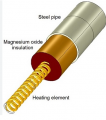
Even though the outside is at the water temperate, the element on the inside could exceed its safe operating temperature due do the electrical/thermal insulation (calrod type structure, below) between the element and the water.
That's my take on it anyway.

1725117234417.png
 
Top