Variable Wattage Box

Thread Starter

q12x

Joined Sep 25, 2015
2,227
Until he gets over that fallacy, he isn't likely to make any actual progress.
I know exactly what this circuit is doing. I build it 3 times already, all with successful results and also good lessons in many directions.
Do not make the mistake of assuming what I think. But in your own way I know you want to help (I hope).
The analog multiplier is your friend.
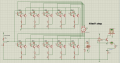
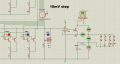
yes, I was thinking on this idea myself, and is an interesting choice to those 2 multiplying ICs. But my device will SET the wattage and I will use 1 DMM to read the V (and I) over the 1Rload. The wattage will be SET from the start while the components in test will vary. At least thats the planned idea. I finalized a "step" in my cct design already, but I have a bigger one in front of me. If I can make it... Im GOOD. hahaha. But at this "step" Im right now, it is perfectly functional, its only a bit more uncomfortable to switch the testing component between the 3 modules. Otherwise, it's game. Until now, I only design and test it in my simulator. I didnt do anything in reality. Im actually waiting for 9pcs of 1P12T to arrive soon. Then I will get the wings of making it.
 

WBahn

Joined Mar 31, 2012
32,823
But my device will SET the wattage and I will use 1 DMM to read the V (and I) over the 1Rload. The wattage will be SET from the start while the components in test will vary. At least thats the planned idea. I finalized a "step" in my cct design already, but I have a bigger one in front of me. If I can make it... Im GOOD. hahaha. But at this "step" Im right now, it is perfectly functional, its only a bit more uncomfortable to switch the testing component between the 3 modules. Otherwise, it's game. Until now, I only design and test it in my simulator. I didnt do anything in reality. Im actually waiting for 9pcs of 1P12T to arrive soon. Then I will get the wings of making it.
If this circuit is successful at doing what you claim you want it to do, namely set the wattage once and then have it maintain that wattage as you change the load, then what happens if you set the wattage for your circuit to deliver 1 µW to a 1 Ω load by adjusting your pot so that the current is 1 mA. Fine up to this point. Now replace the 1 Ω load resistor with a 2 Ω load resistor. Does your circuit maintain 1 µW delivered to the load without you having to adjust anything? If not, then your circuit isn't being very successful at doing what you claim you want it to do.
 

wayneh

Joined Sep 9, 2010
18,104
smart idea but....
View attachment 331585 View attachment 331586
In first picture, nothing changes ! Remains the same.
In the second picture with the common -5V(or -1V) the ampermeter must be reversed and the voltage across 1RLoad is dependent by the -5V instead of the top variable supply as intended.
---
Edit#1
I changed the direction of that ammeter and still showing MAX value. So its not the current flow. And usually the bigger potential surges into the lowest one, if my top PSU is +7V and the bottom one is -1V, the +7V should surge into that -1V with no problems. This might be yet another bug of the simulator? hmmm. But either way, he is telling me clearly something is wrong. Also the blue probe is showing 1.19V which is indeed the max of my +input setting.
---
Edit#2
View attachment 331590
I changed the opamp with the classical uA741. The problem remains the same !
I power the opamp with +5 and -5V. If Im keeping a little bit below 0V, that -0.5V on the 1RLoad, it is working, showing some results, not the ones I want but some numbers on the ammeter. But if I go crazy, to -1V or more (-5V) it will MAX out. I believe that THIS it is related, most PROBABLY, with what you just said earlier "Allowing Direct Sensing Near Ground". Interesting.
The load should still sit between the positive supply and ground, not the negative rail. You want zero current to show as zero voltage, and the negative rail on the op amp to be a bit below zero so that it can sense accurately at zero volts.
 

AnalogKid

Joined Aug 1, 2013
12,127
But my device will SET the wattage
Only if you know in advance what the exact value of the load resistance is, and that that resistance is stable. Once the voltage and peak current are set, any device or circuit that draws a varying current, such as an audio amplifier, sensor conditioner, or digital logic circuit, will dissipate a varying wattage. Even a simple LED circuit will change as the LED heats up.

ak
 
Last edited:

Thread Starter

q12x

Joined Sep 25, 2015
2,227
Only if you know in advance what the exact value of the load resistance is, and that that resistance is stable. Once the voltage and current are set, any device or circuit that draws a varying current, such as an audio amplifier, sensor conditioner, or digital logic circuit, will dissipate a varying wattage. Even a simple LED circuit will change as the LED heats up.
- Well, this is the thing, or maybe with a little trick, that I discovered while pushing for a solution. I did it myself and it is quite interesting and elegant and accurate. We will see in the end after my first real prototype. But I totally agree with you and I know the rules and is very good to mention the obvious, even so, because it is attracting my attention and is making me re-evaluating the circuit, to re-check it (mentally) if it does what you say, and so far so good. I believe. Hahahahaha, unfortunately Im always in doubt in anything electronics and this publicly display of doubt is making me look incredibly weak and rookie and in my first day of electronics like a chihuahua zero experience. I can assure you Im not inexperienced, au contraire, Im very hard working and detailed, with 30 years of experience, (but not specialized school for it, I have other specialization, in art from wich 0$ as anyone knows and guess what, 0$ from electronics too -yay hahaha) Im only very doubtful which I should learn to suppress or to display more credibly than I usually (not) do. Probably thats 1 of many reasons I stick so close to this forum, to repair this flaw I have. I hope. Hmm, we'll see. I also do check other things too.... hahaha.
- Thank you very much for any suggestion even if you don't know how I arranged my table here.
 
Last edited:

Thread Starter

q12x

Joined Sep 25, 2015
2,227
Phiuuuu, I finally receive these. In a record time of exactly 2 weeks (14 days). Usually is 2 months (or even more, up to 6 months was the record once or twice).
So, like I said, I will make a prototype and see how things are going. I didnt make "stage 2" of my project, Im still at 3 modules instead of 1 that is dealing with all 3 at once as I want and wish. Well, this is the first version then. I leave room for upgrades later.
1726482097852.png(that total price includes transport, it is the true total)
Note: Am luat 9pcs ca erau la cea mai ieftina oferta $/pcs = practic ma costat 0.65$/buc cind restul is de la 1$/buc in sus
 
Last edited:

Thread Starter

q12x

Joined Sep 25, 2015
2,227
I made the first test in reality (after all my simulation time). It's inconclusive at this point. It worked but not in the parameters I expected from the simulator. I recon that I didnt actually used some critical component value I used in my sim. Thats 1st.
The 2nd is this: -precise special resistor value.
1726612030520.png
But here is my question to you.
-How you will obtain such exotic resistor values in practice/reality ?
I can think only on a single way to do it, but it is the hard way. Maybe you have some aces under the sleeve that I never heard about. What you read, or do in practice, or seen somewhere else. Anything, is good enough for me.
 

Thread Starter

q12x

Joined Sep 25, 2015
2,227
Another announcement. My project failed.
I was concentrated on some details while I ignored others and now when I looked back to them, bam, to shit.
Failure is a normal side of experimentation ! (said mister q12). Is also learning, for unwanted lessons. (also said by mister q12).
I worked probably 1 week at it, unsleep nights, and total disaster. Eh well.
here is what I tried:
1726654729270.png
The circuit left from opamp is working fine, even in reality (with all those transistors).
The circuit right from opamp is the problem. Specifically that 0.1R. If that is changed, everything crumble.
My idea was a smart one but...not good enough it seems.
First of all, I can SET some power from that rotary switch. This is the core functionality I wanted from the start. The opamp can read the setting and do its bizniz. Good.
That 1RLoad is fixed, unchanged. The idea is that by adding another resistor in series with it at a value of less than 1R (that 0.1R), will affect the 1Rload reading very little. Like a small tolerance. Also, by taking the voltage over the 0.1R, we already know the amperage over the 1Rload from Voltage reading over it. So basically V*I=W over the 0.1R. It's a manual mode this way.
Originally I SET everything to a reference value of 0.1R, so all my rotary switch values will give me a -perfect- 1Rload reading, 10by10 or 100by100. But that remains only as a reference only. If we change it to some other value, everything goes to shit, like I said.
If Im adding a diode, here in the sim, is giving me some small readings, but in reality I only get ~450mV (opening diode voltage drop). I didnt test it like here in the sim, with multiple values so it might change too, but so far... not good.
At least I tried my best. I knew is a complicated matter and I had to solve it alone, this is how high I could push it.
It had some interesting lessons to solve in it. Like that 1mV problem-oh boy... haha.
1726655428201.png

-this is a very large img file; is best to download it into your PC and zoom in it there, not here on the webpage.
1726654747142.png
---
In conclusion, I was thinking everything in terms of reference ! That 0.1R as a reference. Thats why I said it is working "fine". But, I was concentrated on the left side of the cct back then. I probably took the easier path, and ignored the real problem? hmmm, maybe. I usually head on the biggest problem. This time I chicken out, probably. Actually, I didnt know where to start to solve the problem. So I started from somewhere. That was the idea. Doing it alone, with only sketchy suggestions, its more than hard, at least for me. I do thank you for the suggestions though. I wanted a solution,but it is a hard subject from what I understood, although at this point in modern times this should be a trivial subject, and if is still not a trivial one, it should bloody become one very soon.
- Another approach or the next one is to use arduino and actively read and calculate the W over the element in test. Not the 1RLoad, but the 0.1R or whatever resistive value is inserted there. I actually have some arduino clones (very cheap) I took some years ago and store them for good, 10pcs I think and never used one, waiting for an important project, and this one here might be a fit. We'll see.
 
Last edited:

Thread Starter

q12x

Joined Sep 25, 2015
2,227
Nah, Im fine, I know my mistakes. I also point to a solution, but... actually doing it is probably harder than speaking about it.
I wished I could do it without programming. Only with logic. Thats what I struggle here. Eh well, we cant win every battle.
When you have a solution, come to me.
 

dl324

Joined Mar 30, 2015
18,326
How you will obtain such exotic resistor values in practice/reality ?
You can use a series or parallel combination. I prefer a parallel combination.

To get 881 ohms, pick a larger standard value. In this case, I'd use 909 for 1% (because I don't have 887).

Using the parallel resistor equation
\( \large \frac{1}{R_P} = \frac{1}{\frac{1}{R_1}+\frac{1}{R_2}} \)
and rearranging
\( \large \frac{1}{R_{parallel}} = \frac{1}{\frac{1}{R_{desired}}-\frac{1}{R_{standard}}} \)
909 ohms in parallel with 28.7k gives 881 ohms.

If you used 5% values, 910 in parallel with 27k gives 880.
 

Thread Starter

q12x

Joined Sep 25, 2015
2,227
You can use a series or parallel combination.
like I said, this is the hard way I was thinking/referring too. I was asking if there is another way. So probably no or is very expensive.
I was thinking on making myself specific value resistors... as a thought, I dont know in practice. I did seen something in my past, filing or grinding to precision what you needed but... is just a memory blur. I cant imagine how to make the contact with the cut side. Anyway...heh.
 

dl324

Joined Mar 30, 2015
18,326
I was asking if there is another way. So probably no or is very expensive.
Not practical and could be expensive. The vast majority of people would just use some combination of series/parallel resistors using standard values.

Pots are an option, but only for reasonable numbers of resistors.
 
Top