USB Isolator that outputs 5.43 Volts

Thread Starter

Secan

Joined Sep 20, 2024
205

MisterBill2

Joined Jan 23, 2018
27,187
FIRST question: Have you verified the accuracy of that meter?? Second question: 5.43 volts looks like cell phone charging voltage output.
AND THEN another question: To protect that expensive medical thing, why buy from an on-line seller of unknown stuff??
 

dl324

Joined Mar 30, 2015
18,221
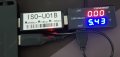
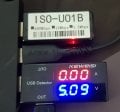
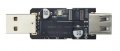
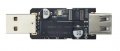
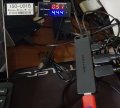
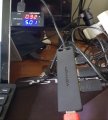
I bought this USB isolator that uses the ADUM3165 chip. It outputs 5.43V instead of 5.09V when device plugged in directly to pc usb (see images below).
That's a bit on the high side, but the spec allows 5.5V. Have you confirmed the voltage reading with a different voltmeter?
 

Thread Starter

Secan

Joined Sep 20, 2024
205
Yes it is really 5.4 o 5.5 Volts. Based on the following circuit, which component can make the output increase to 5.4V when the input is just 5.0V?

usb isolator circuit.jpg
 

WBahn

Joined Mar 31, 2012
32,706
That's a bit on the high side, but the spec allows 5.5V. Have you confirmed the voltage reading with a different voltmeter?
I thought the spec was ±5%, would would be from 4.75 V to 5.25 V.

I echo the earlier question regarding why one would buy a cheap isolator to protect an $18k piece of equipment instead of buying an externally-powered isolator that is intended for use with medical and industrial equipment.
 

spenkmo

Joined Apr 24, 2025
25
B0505-S2WR3 is the DC-DC converter. The two Chinese characters say "isolated". This is a 5V-in-5V-out converter. Its output voltage depends on the load current. When the load current is low, probably how you test it, the spec I have says the output voltage may have a positive error of ~10%. Can you try applying some load when you test it?
 

ronsimpson

Joined Oct 7, 2019
4,649
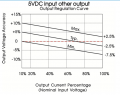
The power isolator has this load regulation.
At no load the typical output is +6%.
At 70% load typical output is 0%
At 100% load typical output is -2.5%
Next add to that the output is +/-5%.
Lets say the used is 20% to 80% load.
A max part will run +9% high at 20% and a min part will run -6% at 80% load.
1752107177406.png
By read in between the lines, it appears that a 1% change in input voltage causes a 1.2% change in output voltage. This makes me think that it is not regulating at all. Just passing the voltage through. So if the input 5V is a little hot the output voltage will also be a little hot.
 

WBahn

Joined Mar 31, 2012
32,706
Here's the datasheet for the converter.

I don't know the internals of that converter, but it is probably designed to echo the input voltage to the output, so you would expect it to have very poor power supply rejection. But it IS a DC-DC converter and therefore has a conversion gain that will depend on the tolerances of the components.

Notice that it requires a minimum load of 10% of rated load in order to be guaranteed to operate within spec. Hopefully, the designers of the isolator took that into account and made sure that it is drawing a minimum of 40 mA from the USB port powering it. But, it's a cheap part, so that is far from certain.

Look like it is designed so that its output will match the input at a load of 75% of rated current and that this is achieved by having the no-load output be right at the edge of the USB output spec. This means that a given part that is on the high side of the tolerance can start as high as 10% over nominal and not even get down to the 5% USB spec until it gets to that 75% load level. On the flip side, a part that starts out at the low end of the tolerance range can drop below the lower USB voltage limit above 75% load.

As a result, you can never be sure that the voltage at the output of the isolator will be within the 5% USB spec. A part at the high end of the tolerance range will be above 5% over until it is delivering 300 mA, while a device that is on the lower end of the spec will drop below 5% under once it start delivering 300 mA. And this is before even attempting to take into account the effect of the rest of the circuitry in the isolator.

Which all comes back to the central question of why someone would choose to protect an $18k piece of equipment with a $15 isolator from Ali Express.
 

MisterBill2

Joined Jan 23, 2018
27,187
WB, in post #6, asks the same question that I would ask. Why possibly risk damaging an expensive device with cheap junk??
IN ADDITION, does that expensive device have application literature that lists the I/O specifications and tolerances??? Does it possibly already have isolated data and COM ports??
 

Thread Starter

Secan

Joined Sep 20, 2024
205
I'm using a Microsoft Surface 2017 to run it. The speed is enough. Is it not the USB output of this notebook or any other laptops when connected to purely battery and not AC plugged in would be safe enough? I just bought the isolator just to use on Desktop PC but it is ok never to use the Desktop PC.

Is it possible even with laptop battery powered (AC adaptor NOT plugged in), you still need isolator in case the laptop would have higher battery voltage into the USB? is this possible?
 

Thread Starter

Secan

Joined Sep 20, 2024
205
The power isolator has this load regulation.
At no load the typical output is +6%.
At 70% load typical output is 0%
At 100% load typical output is -2.5%
Next add to that the output is +/-5%.
Lets say the used is 20% to 80% load.
A max part will run +9% high at 20% and a min part will run -6% at 80% load.
View attachment 352408
By read in between the lines, it appears that a 1% change in input voltage causes a 1.2% change in output voltage. This makes me think that it is not regulating at all. Just passing the voltage through. So if the input 5V is a little hot the output voltage will also be a little hot.
In case even a notebook computer battery operated without AC adaptor needs isolator in case the USB got defective (see last message). I found out the china made isolator voltage can get to as low as 4.44V when the mouse, keyboard, external drive, and usb plugged in (see photo below). In other Isolator. Can it maintain 5V even with all plugged in? I heard the external drive has strange noise as if it is not getting enough power. It is difficult to connect a device to the china isolator with just the right power to make it exactly 5V. Do other isolators maintain 5V even with no load or just mouse load?

isolator voltage with many connected.jpg
 

ronsimpson

Joined Oct 7, 2019
4,649
I don't see why you need an isolator.

The only time where we needed isolation was in China where the wiring was so bad that were was a large voltage difference from "ground" on one side of the room compared to the other side. No one noticed the problem because each group of equipment was plugged into a single wall. When we connected a cable across the room there was sparks. With reasonable wiring, there should not be a problem.

USB is 5V +/-5% which would be 5.25V/ 4.75V for the output voltage. I believe the parts ate rated to at least 5.5V. I built some products where we tested to 8V just to be safe. I would feel better if you did not use the isolator.
 

schmitt trigger

Joined Jul 12, 2010
2,031
I am also joining the chorus; why would you choose to provide power to a multi-kilo dollar medical device from a no name, cheap isolator?
You appear to be fixated on using it, though.
 

Thread Starter

Secan

Joined Sep 20, 2024
205
Without using the isolator, the voltage direct at the USB with mouse, keyboard, external drive and usb drive connected is 5.01V (see 2 messages above for the descriptions).

without isolator usb.jpg
 

Thread Starter

Secan

Joined Sep 20, 2024
205
I am also joining the chorus; why would you choose to provide power to a multi-kilo dollar medical device from a no name, cheap isolator?
You appear to be fixated on using it, though.
I plan to try the equipment to a desktop pc (just temporarily). My concern is the desktop pc USB port may have some main power leaks to the port. Doesn't this occur at all? Also I thought all isolators are the same.
 

WBahn

Joined Mar 31, 2012
32,706
I plan to try the equipment to a desktop pc (just temporarily). My concern is the desktop pc USB port may have some main power leaks to the port. Doesn't this occur at all? Also I thought all isolators are the same.
Why would you think all isolators are the same?

Are all cars the same? Are all stereos the same?

You say this is an expensive piece of medical equipment. Aside from the question of protecting an expensive piece of equipment, have you determine what is required by regulation because it is a medical device?

A five-second search online shows that there are USB isolators that are specifically intended for use with medical devices and which are compliant with EN 60601-1.
 

Thread Starter

Secan

Joined Sep 20, 2024
205
Why would you think all isolators are the same?

Are all cars the same? Are all stereos the same?

You say this is an expensive piece of medical equipment. Aside from the question of protecting an expensive piece of equipment, have you determine what is required by regulation because it is a medical device?

A five-second search online shows that there are USB isolators that are specifically intended for use with medical devices and which are compliant with EN 60601-1.
I don't intend to use it at the desktop pc. I just want to try if will run in the old motherboard. So bought the isolator just for a few time use to protect the USB.

Anyway. For a laptop that is battery charged without any AC adaptor plugged in.. what situation when the USB can say suddenly go to 7V from 5V. What defect can make it occur? This is to decide if I'll get an isolator just to protect the USB in a laptap with battery only.
 

MisterBill2

Joined Jan 23, 2018
27,187
For one of the multiple-voltage USB charger/power supply devices all it would take is a software error. For the single voltage systems that are part of an actual computer package, usually having a switch-mode power supply, it would take a voltage regulation system malfunction to produce an excess USB voltage. MUCH LESS LIKELY!!
 
Top