Facebook
 Google
 GitHub
 Linkedin

From LinkedIn:
"The House That Stood"
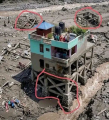
When the glacial lake burst above Mustang, engineers hundreds of kilometers away in Kathmandu watched satellite feeds in silence. Village after village vanished under a wall of grey mud and debris. But one structure remained — a turquoise house on stilts, rising alone from the wreckage like a lighthouse in a sea of ruin.
The story of that house wasn't luck. Years earlier, its owner, a retired mason named Dorje, had ignored the cheaper, faster building method everyone else used. Instead, he'd sunk deep stone-and-concrete piers into the riverbed rock, cross-braced with timber trusses angled to let floodwater pass through rather than push against the structure. Neighbors mocked the design — too tall, too strange, too expensive. It looked like a house standing on a bridge.
When the flood came, it swallowed everything at ground level: homes, walls, roads, the flimsy pillared structures nearby that simply weren't built to let force pass by them. Dorje's house didn't fight the flood — it let the water flow beneath it, its open lattice of wooden beams acting like the pylons of a bridge, distributing the load instead of resisting it head-on. The family — five of them — climbed to the rooftop and waited, watching debris and mud rush past just meters below their feet.
Later, engineers studying the wreckage called it a masterclass in "passive flood-resilient design" — no electronics, no sensors, no smart technology at all. Just physics, foresight, and a stubborn old man who understood that surviving nature isn't about building strong walls, but about knowing when to build no wall at all.
The photo of that house — five people alive on a rooftop amid a river of mud — became a case study shared in engineering schools across South Asia within weeks.
"The House That Stood"
When the glacial lake burst above Mustang, engineers hundreds of kilometers away in Kathmandu watched satellite feeds in silence. Village after village vanished under a wall of grey mud and debris. But one structure remained — a turquoise house on stilts, rising alone from the wreckage like a lighthouse in a sea of ruin.
The story of that house wasn't luck. Years earlier, its owner, a retired mason named Dorje, had ignored the cheaper, faster building method everyone else used. Instead, he'd sunk deep stone-and-concrete piers into the riverbed rock, cross-braced with timber trusses angled to let floodwater pass through rather than push against the structure. Neighbors mocked the design — too tall, too strange, too expensive. It looked like a house standing on a bridge.
When the flood came, it swallowed everything at ground level: homes, walls, roads, the flimsy pillared structures nearby that simply weren't built to let force pass by them. Dorje's house didn't fight the flood — it let the water flow beneath it, its open lattice of wooden beams acting like the pylons of a bridge, distributing the load instead of resisting it head-on. The family — five of them — climbed to the rooftop and waited, watching debris and mud rush past just meters below their feet.
Later, engineers studying the wreckage called it a masterclass in "passive flood-resilient design" — no electronics, no sensors, no smart technology at all. Just physics, foresight, and a stubborn old man who understood that surviving nature isn't about building strong walls, but about knowing when to build no wall at all.
The photo of that house — five people alive on a rooftop amid a river of mud — became a case study shared in engineering schools across South Asia within weeks.
Last edited: