Facebook
 Google
 GitHub
 Linkedin

Hello everyone!
This is my first post here, so please forgive me for any mistakes or inconveniences.
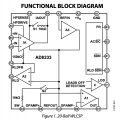
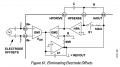
I’m currently exploring the AD8233 signal conditioning block to use in an sEMG application, and I came across its instrumentation amplifier design, which uses two transconductance amplifiers (GM) and two op-amps configured as high-pass filters to eliminate DC offsets.
I’m finding it quite challenging to understand exactly how this circuit functions, and I would greatly appreciate it if someone could help explain it.
Specifically, I’m trying to understand how the op-amp with the capacitor C1 works together with the HPA. How does the feedback through GM2 generate a proportional current to effectively eliminate DC offsets?
I’ve attached an image of the circuit and included the datasheet for reference.
Thank you very much in advance for any insights!
https://www.analog.com/media/en/technical-documentation/data-sheets/ad8233.pdf
This is my first post here, so please forgive me for any mistakes or inconveniences.
I’m currently exploring the AD8233 signal conditioning block to use in an sEMG application, and I came across its instrumentation amplifier design, which uses two transconductance amplifiers (GM) and two op-amps configured as high-pass filters to eliminate DC offsets.
I’m finding it quite challenging to understand exactly how this circuit functions, and I would greatly appreciate it if someone could help explain it.
Specifically, I’m trying to understand how the op-amp with the capacitor C1 works together with the HPA. How does the feedback through GM2 generate a proportional current to effectively eliminate DC offsets?
I’ve attached an image of the circuit and included the datasheet for reference.
Thank you very much in advance for any insights!
https://www.analog.com/media/en/technical-documentation/data-sheets/ad8233.pdf