telegraph equation understanding load type threw time domain pulse responce

Thread Starter

yef smith

Joined Aug 2, 2020
1,446
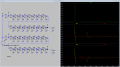
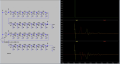
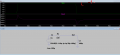
Hello , I am trying to simulate time domain reflectometry and recognise threw the pulse responce if the load is capacitative or inductive.
As you can see its not working .
Where did I go wrong with the concept.
what is the proper way to see threw the time responce if the load is capacitative or inductive?
Thanks.

1775322559182.png

1775322686309.png
 

Thread Starter

yef smith

Joined Aug 2, 2020
1,446
Hello Irving , Yes exactly.
Do you have any manual regarding why inductive load causes negative peak?
whats happening in the reflection coeffient that causes it mathematickally.
Thanks.
 

Irving

Joined Jan 30, 2016
4,996
Hello Irving , Yes exactly.
Do you have any manual regarding why inductive load causes negative peak?
whats happening in the reflection coeffient that causes it mathematickally.
Thanks.
Ummm, the sign of the imaginary part?

It's all to do with phase... and the standing wave in the TL.... I'm not that good with the math...
 

Thread Starter

yef smith

Joined Aug 2, 2020
1,446
Could you give a basic example to this phrase its very intresting.How the phase plays a role?
"It's all to do with phase."
 

KeithWalker

Joined Jul 10, 2017
3,603
You are not applying a pulse to a delay line so why would you expect to see a reflection? This is not time domain reflectometry. All you are doing is applying a pulse through a resistor to a capacitor, so it charges up. You are applying a pulse to an inductor, so you see the back EMF,which then dissipates through the resistance of the inductor.
That is why I asked what you expected to see.
 
Last edited:

Thread Starter

yef smith

Joined Aug 2, 2020
1,446
Hello ,Iwatched the video nsaspook posted.
I want to understand why the inductor gives positive peak while the capacitor gives negative peak.
What is the intuition in this?
Thanks.

Ummm, the sign of the imaginary part?

It's all to do with phase... and the standing wave in the TL.... I'm not that good with the math...

1775407104022.png
 

Irving

Joined Jan 30, 2016
4,996
want to understand why the inductor gives positive peak while the capacitor gives negative peak.
What is the intuition in this?
Consider that to a rising current a capacitor looks like a short and and an inductor a high impedance... Therefore capacitor returns an in-phase pulse and an inductor an anti-phase response the amplitude of which is frequency and reactance related...
 

Thread Starter

yef smith

Joined Aug 2, 2020
1,446
Hello Irving, is there an equivalent model for a "VIA" load so I could see the theory of how it responced to the excitation?
Thanks.
 

Thread Starter

yef smith

Joined Aug 2, 2020
1,446
Hello KeithWalker, this aritce is very good but the loads are lumped elements.
In real life we have a multilayer PCB.the digital signal passes threw traces and VIA from source to destination.
On one board being manufactured the square signal got distorted and its not good as the others.
I need to ivestigate it using TDR TDT.
The TDR TDT shows abnorality
Could you give me an example of such investigation?
So I could see the signal path where is the trace where is the VIAS?
Is there an article like the one in the link which explain the tdr of a signal passing threw traces and vias?
Thanks.
https://map-assets.tek.com/map-assets/asean/PDF/Understanding-Applying-TDR-Primer_48W-74128-0.pdf
 

Irving

Joined Jan 30, 2016
4,996
Yef, every via is a discontinuity, a frequency-dependent impedance mismatch. If the vias are degrading the signal that badly then you need to remove them, or you need multiple vias at each location, to create a better impedance match. This is no trivial issue, and TDR isn't going to solve it for you, because it is frequency dependant. Each section of track is a transmission line with a characteristic impedance determined by it's relationship to other tracks and ground/power planes. Each is different, each needs to be matched to the one before and the one after; fixing this after the event will be nigh impossible. High-speed signals like this should have been routed first to avoid discontinuities and may need to be impedance controlled with guard traces each side. What sort of signal are we discussing? Can you show source and destination traces?
 

Thread Starter

yef smith

Joined Aug 2, 2020
1,446
Yef, every via is a discontinuity, a frequency-dependent impedance mismatch. If the vias are degrading the signal that badly then you need to remove them, or you need multiple vias at each location, to create a better impedance match. This is no trivial issue, and TDR isn't going to solve it for you, because it is frequency dependant. Each section of track is a transmission line with a characteristic impedance determined by it's relationship to other tracks and ground/power planes. Each is different, each needs to be matched to the one before and the one after; fixing this after the event will be nigh impossible. High-speed signals like this should have been routed first to avoid discontinuities and may need to be impedance controlled with guard traces each side. What sort of signal are we discussing? Can you show source and destination traces?
Hello Irving ,its only a situation I saw on the side.
I was explained that this person has bad reflection coefficient plot and he was looking for the VIA PADs to see where is the faulty VIA.
He actually was watching on a microscope the pads of the VIA which are located on the outer layer of the PCB.
I need to practise to do the same .
could you please give an example for such faulty PCB structure which gives bad TDR so I'll get expirience with VIA TDR ?
Thanks.
 

Irving

Joined Jan 30, 2016
4,996
could you please give an example for such faulty PCB structure which gives bad TDR so I'll get expirience with VIA TDR ?
Sorry, I've no idea how I can do that. It might be possible to create a simulation in LTSpice or some other simulator but how realistic that would be I have no idea...
 
Top