Understanding a MOSFET datasheet.

Thread Starter

Mussawar

Joined Oct 17, 2011
157
Hi,
My question might be extremely basic but please bear with me. I've some questions about MOSFET internal body diode. Let say about IRFP064 or other similar MOSFET.
1. Why this diode has a zener symbol.(or it is a schottky diode?) Does it work like a zener by any means?
2. If I use this MOSFET to switch an inductive load, Do I still need a free wheel diode D1 as shown below or I can omit it?
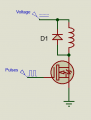
Untitled.png
Thanks.
 

panic mode

Joined Oct 10, 2011
4,864
diode inside the mosfet is just a reverse biased diode.
but on avalanche rated products it may be shown as zener. and to avoid creating too many similar symbols this may appear even on regular mosfets.

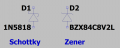
as for symbol differences, look at the line shape at the line (cathode). while there are alternative symbols here as well, commonly used ones are shown below.
note that line shaped as "Z" is for zener. and line shaped as squared "S" is for Schottky. hope this tidbit helps to remember the difference:

1773924578168.png


note that internal diode is not a separate component designed to match transistor ratings - it is just a parasitic diode and it is lower rated than transistor.
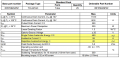
therefore one should be aware of avalanche energy (read the datasheet). this includes single pulse and repeated pulse max energy.

1773925449906.png
1773925196145.png
and with simple algebra this can be transformed into:

I = SQRT(2*E/L)
or
L=2*E/I^2

then you can have limiting values, for example for Iar=59A, Lmax = 11.5uH
 
Last edited:

ronsimpson

Joined Oct 7, 2019
4,646
2. If I use this MOSFET to switch an inductive load, Do I still need a free wheel diode D1 as shown below or I can omit it?
The mentioned device is avalanche rated, so D1 isn't required.
Yet every schematic I can find had D1 there.
With D1 the energy stored in the inductor runs back down with 0.7V across the inductor. This takes a little time. (mS)
With out D1 the voltage across the inductor jumps to some high voltage. Probably high enough to avalanche the transistor. (good or bad ?) The inductor is often more complicated than just a L but has C and R. It is very likely the LC portion will ring until all the stored energy is used up in the R part of the inductor. Time is short.
 

panic mode

Joined Oct 10, 2011
4,864
i work with various circuits, often parts are not physically close, load (inductor) may be meters away, it is often a really good idea to have a diode directly across inductor. faulty wire, lose connection or manually disconnecting load while it is working can give a really nasty shock - even if load current was low (<1A). and this mosfet is capable of so much more.

btw the same happens if inductor and mosfet are next to each other (but without separate diode) when powersource is unplugged - inductor energy has nowhere to go (series circuit with mosfet) so you are holding Tesla coil in your hands. even if you are not the victim of this "electric chair", rest of your circuit will be. so i always add suppression directly across inductor and - as close as possible (and as permanent as possible) to inductor.
and if load is remote, that is two diodes - one at PCB near mosfet, other across load. don't need cable insulation disintegrating, airplanes falling out of sky or person in another room to have pacemaker problems.
 
Last edited:

crutschow

Joined Mar 14, 2008
38,316
2. If I use this MOSFET to switch an inductive load, Do I still need a free wheel diode D1 as shown below or I can omit it?
In summary:
If the MOSFET is avalanche rated for the stored inductive energy, then D1 is not needed.
If it's not avalanche rated for that, then you need D1.
 

Thread Starter

Mussawar

Joined Oct 17, 2011
157
Yet every schematic I can find had D1 there.
With D1 the energy stored in the inductor runs back down with 0.7V across the inductor. This takes a little time. (mS)
With out D1 the voltage across the inductor jumps to some high voltage. Probably high enough to avalanche the transistor. (good or bad ?) The inductor is often more complicated than just a L but has C and R. It is very likely the LC portion will ring until all the stored energy is used up in the R part of the inductor. Time is short.
Thanks for reply.
So D1 is mandatory and this parasitic diode will not work as free wheel in this scheme.
What is the purpose of this internal diode? Where and how it can be used? Especially when switching inductive loads.
This would be great info for me.
Regards.
 

crutschow

Joined Mar 14, 2008
38,316
What is the purpose of this internal diode?
No purpose.
It's a parasitic substrate diode, intrinsic in the manufacturing of a MOSFET, and can't be eliminated.
Where and how it can be used? Especially when switching inductive loads.
It can be (and often is) used in a 4-MOSFET power bridge circuit where the MOSFET diodes ( one in the high side and one in the opposite low side) conduct to dissipate the inductive load energy back into the supply voltage when the bridge turns off.

For example, if the upper right and lower left MOSFETs are on and then turn off, the inductive current will then flow through the upper left and lower right diodes.
 
Last edited:

panic mode

Joined Oct 10, 2011
4,864
agree... if the concern is to ONLY protect the MOSFET, that will suffice.
but in real life, electronics circuits are not restricted to lab bench and there are things more precious than a couple $ mosfet.
 
Last edited:

panic mode

Joined Oct 10, 2011
4,864
sorry, i guess i did not make it abundantly clear...

transistors are cheap. even power transistor is only couple of $.

this is extremely unlikely to be a standalone part, there is always some additional circuitry.

some of it is local (controller, memory, display, whatever. ). this can easily be 10x-100x the price of mosfet. those are things.
some of it may be remote (cable, connectors, load). this can easily be 500x the price of mosfet. those are things.

not sure on price on people or anything else close enough to be affected when things go wrong.
for example if the load is some motor or brake or whatever, its cable is likely to be run in same conduit/raceway as rest of the cables for that or other equipment. (sensors, actuators, whatever).
that can easily cost 10000x - 1000000x the price of mosfet. those are also things.

since things done for real world are not academic exercise, or lab experiment they need to work 24/7/365. they get stressed (thermal cycling, accidents, various failures, mishandling, abuse etc.)

if there is no diode, the inductive load still need path for current when transistor turns off. those tens of amps are not going to stop dead instantly. the path includes load (inductor), transistor (mosfet) and power source (battery, PSU).
disconnect any of them and you have an open circuit. suppose fuse blows... or PSU connection is lost for whatever reason. suddenly there is an open circuit. and if the load has stored energy this is a bad sign. avalanche rating of mosfet is pointless since mosfet is still on. so field collapses and the tens of amp will need to go somewhere. since circuit is open, voltage will rise to great levels. this will easily destroy things other than mosfet.

if the load is external (DC motor, proportional valve, solenoid brake, whatever) and the connection is severed, you have few meters of wires acting as antenna, this will create havoc in other equipment sharing common wireway. even if this is a standalone circuit, cable itself will likely be "involuntary TVS" that gets punished, insulation degrades...

i have seen pranks where 12 of 24VDC and 200mA through coil gets nasty zaps when field collapses. but tens of amps is whole another level.

so is there a potential for damage? yes... can it be costly? yes... can it harm humans? yes. a jolt is nasty enough. but causes people to fall and hurt themselves even more. all because someone was saving on a diode since he did not consider big picture and only considered protecting one thing - cheap transistor..

i do not see from TS posts what is this used for, how and where. he may be repairing existing industrial equipment or designing something new or just playing with the breadboard and something small (2N7000) but the example he found and linked is just an example. either way, the answers should mention safety concerns too specially when energy can be large.
 
Last edited:
Top