Type 3 surge protection

Thread Starter

thor21

Joined Sep 29, 2024
424
Hello,
I have inside my main electrical board eaton type1+2 protection.

I have prettt expensive devices in the living room, placed in 3 different places. Each place contain wall sockets. I dont wanna mess surrounding with extra mains with surge protection. So i was thinking to add to each wall socket extra type 3 surge protection as
Finder 7P.37.8.275.1003
The problem is, how to recess it into the wall, 2 are brick, one is drywall.

I cant find any which is not so big and have clean front design.


Any idea?


Thanks
 
Last edited by a moderator:

MisterBill2

Joined Jan 23, 2018
27,296
Where would such damaging surges come from?? If from the external mains, then add the protection at the mains entrance panel. NOT at the sensitive equipment.
 

Thread Starter

thor21

Joined Sep 29, 2024
424
@MisterBill2 i want to install type1+2 to main panel.

They said it mighe come localy on your circuits from washing machine etc...thats why type 3 protection exists?

No clue.
 

MisterBill2

Joined Jan 23, 2018
27,296
I have seen several "Transient suppression" devices installed in the "service entry panel" (The circuit breaker box). My caution is that such surge arrester devices should be connected to the same breaker as the circuit to be protected. OR IN SERIES with the circuit to be protected, if they are the series protector type.
IN ADDITION, much of the advice attributed to "They Say" is suspect, and needs to be verified by a source willing to be identified as actually understanding the subject.
Being a good writer does not qualify a person as knowing anything about a specific topic.
 

Thread Starter

thor21

Joined Sep 29, 2024
424
No clue.

I am talking about type 3, that has to be as close as possible to endpoint devices. The one u are referring to is type 1/2?
 

MisterBill2

Joined Jan 23, 2018
27,296
If the transients are not present at the source of the power feed to the outlets, (the distribution panel), then where do they originate from???
 

Thread Starter

thor21

Joined Sep 29, 2024
424
Great question — and it often surprises people.

Even if the main distribution panel has no detected transients, transient voltage spikes (surges) can still appear locally on outlet circuits. They don’t have to originate from the upstream supply. Common origins inside the building include:


---

1. Inductive loads switching on/off

Any device with a motor, compressor, pump, solenoid, or transformer produces high-frequency spikes when switching.

Examples:

Fridge / freezer compressor

Washing machine / dishwasher pumps

HVAC / Heat pump / AC indoor unit

Vacuum cleaner

Fans

Electric tools

Blenders, mixers


These can generate hundreds of volts locally when they turn off (inductive kickback), even if the panel is clean.


---

2. Switched-mode power supplies (SMPS)

SMPS units in:

Phone/laptop chargers

LED lights

TVs and monitors

Network switches / routers / NAS

Gaming consoles

PC PSUs


If badly filtered or aging, they can inject high-frequency noise and short transient spikes back into the line.


---

3. Dimmers, TRIAC and SCR power control

LED dimmers

Electronic thermostats

Motor speed controllers


The phase-cutting switching introduces sharp edges → RF noise → transient spikes on the circuit.


---

4. Devices with high inrush current

When turned ON, they produce a mini-transient as the magnetic field suddenly locks in:

Transformers

Amplifiers

Big SMPS (servers, AV receivers)

Halogen lamps

Induction cookers


---

5. Ground loops or neutral imbalance

A fault or poor connection can momentarily shift potentials, creating transient peaks.


---

6. Lightning inside the installation via long wiring runs

Even without a direct strike, nearby atmospheric EM fields induce small surges on long cable runs (tens of meters), especially:

Outdoor cables

LAN cables

AC lines to far rooms


The panel won’t necessarily detect them if they are created downstream or on a branch circuit.


---

Why panel looks clean but the outlets show spikes

Because SPD at the panel clamps external surges, but cannot protect against “internal” surges generated on circuits after the panel.

So you can have:

Grid → Main panel → SPD → clean
|
Branch circuit → fridge kicks off → spike appears locally

That’s why Type 3 SPDs are placed locally near sensitive equipment — they catch what Type 1/2 cannot.


---

Typical real-world case

You plug in Hi-Fi or PC → hear pop / audio crackle → or monitor flickers → but SPD in the panel is fine.

Root cause: a nearby appliance on the same circuit switched, not grid surge.


---

Summary

Surge originSeen at panel?Mitigation

From gridYesType 1/2 SPD
From inside the homeOften noType 3 SPD / RC snubbers / filtering


---

Practical advice

If you notice issues on audio/video gear, servers, or networking equipment → add protection where the noise is produced, not only where the feed enters.

Typical stack:

Type 1/2 in main panel

Type 3 at sensitive circuits/outlets

Local filtering / EMI chokes for precision audio or electronics


---
 

MisterBill2

Joined Jan 23, 2018
27,296
There is a great deal of difference between NOISE and harmful spikes. In addition, most places put a lot of those claimed sources on different circuits. Furnaces, air conditioning, and laundry areas are usually separated. In addition, the inductive spikes are often on the load side of the line switch, not on the supply side. (Deleted)
 

MisterBill2

Joined Jan 23, 2018
27,296
In the older areas such as mine we have "split phase 240 volt power, with a common neutral, so that 120 volts power is available for most loads, and 240 volts is available for high power loads such as AC compressors and electric stoves. Of course many households have a separate meter for the air conditioning load, which allows less expensive interrupt able service. That also creates better isolation from other circuits.
If a residence has three phase power, then isolation of sensitive appliances could be provided by putting noisy loads on different phases.
 

Thread Starter

thor21

Joined Sep 29, 2024
424
got it.
we have here on 1/or 3phase 230v,
but it might be hard do wiring that each room/ etc only specific phase for sensitive app.
 

MisterBill2

Joined Jan 23, 2018
27,296
MOST good quality equipment is able to handle whatever comes from the outlet, so it is not clear why the huge concern.
Other than that, only direct lightning hits on the home power feed have caused any issues.
AND the TS apparently resides in a multi-unit building, which probably has a better power system, and may have adequate protection against direct lightning hits.
That can depend on what part of the world the TS is located in.
 

panic mode

Joined Oct 10, 2011
4,926
it is unclear where you are as different countries will have different electrical safety and building code. also i do not see why would one want to add protection at the outlet, instead of distribution panel. this way not only you do not need to wreck the walls where ever receptacles may be found, but you also avoid other problems like mounting, space etc.

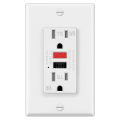
for example, one thing that that makes me cringe are the North American GFCI outlets.
1764599978615.png
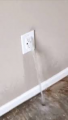
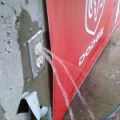
water damage (flooding, bursted pipe, whatever) may find its way to the outlets. even if outlet has GFCI built in, and the protection works works despite being drenched, so it kills the outlet - wiring is still powered. worse - there is nothing upstream to react and stop the madness. and wet surfaces are not a good insulator.
1764599318812.png 1764599579927.png

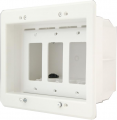
but if you insist, there are recessed boxes and panels, both metal and plastic. for example:
1764599537711.png
 

MisterBill2

Joined Jan 23, 2018
27,296
@Panicmode: Please consider that NOTHING ABOUT THE GFCI SYSTEM is intended to protect any wiring or reduce building hazards such as water-logged wiring. The sole purpose of a GFCI device is to interrupt shock current from the device it is protecting.!!!
Upstream hazards are not a part of the picture., only items past the GFCI. Of course, that can be anywhere in the house, which can lead to interesting complaints. IN one friend's house all of the lights and outlets in the basement went dark after I accidentally touched a white wire upstairs. The GFCI that had tripped was on the opposite side of the basement, 45 feet away and on a different level of the house. And another issue there was when the rear outside door light failed, due to "the Lawn Guy" tripping a GFCI on an outside outlet around the corner of the house.. All because some folks are afraid that others might possibly get a shock.
 
Top