Two motion sensors, one 12V LED strip

Thread Starter

TogetherInElectricDreams

Joined Jan 23, 2019
242
The way those switches work, when the bar is shown in the position it is (not actuated, not pressed) means C & NC (Common & Normally Closed) are in conduction. So when you open a door the switch falls to its non-actuated condition, applying current to the LED's. Either door open or even both doors open at the same time, the LED's will light up. sghioto shows the two switches in parallel. The "C's" are tied together and the "NC's" are tied together. When the doors are closed the switch is in the actuated condition and the C & NC are not in contact, turning the LED's off.

Tony thank you so very much. I will respond to another comment you made...
 

Thread Starter

TogetherInElectricDreams

Joined Jan 23, 2019
242
There are three ways you can wire it. You can wire 120VAC to each switch. They turn on and off the 12V LED Power Supply (PS). That's NOT a good way to do it. Having 120VAC floating around inside a cupboard or cabinet is a bad idea. Easy for someone to get a shock, pull their hand away suddenly and could catch and tear skin on anything sharp enough to cut.

The better way is to have the 12V PS always powered. The PS then goes to the switches and then to the LED's. That's far safer. The down side is having the PS always powered.

The best way - the way I'm heading with six upper cabinets in my dining room is to have a switch on the wall between the upper and lower cabinets. MY configuration is to have TWO switches between the cabinets and two outlets inside the upper cabinets. One controls Over The Cabinet Lighting and another controls the Inside the cabinets lighting. The benefit here is that I can turn the lights on before opening the cabinets IF needed. No sense in having cabinets light up mid day when they are highly ineffective.

Well, that's MY opinion. Others may vary.

Plus, I have cats that know how to open cabinet doors. But they never close them. We went to South Dakota for a few days. When we came home the cabinets were open and if they would have been turned on because of an open door then they would have been on for possibly 5 days.
Were you referring to my project when you mention all of this, if so I'm a bit lost. ;-/
 

Tonyr1084

Joined Sep 24, 2015
9,744
Wire color is almost unimportant. HOWEVER: when wiring whatever lead is considered positive make it one color. Most common is red. But electrons don't care what color the wire is. The other wire can also be any color, even red if that's all you have. You just have to pay very close attention to details if you use all the same color wire. Give me a few min's and I'll draw out the wires. And as an added bonus I'll use red and black just to keep things clear.
 

MisterBill2

Joined Jan 23, 2018
27,652
I was thinking again about the 12 volt motion sensor devices, and so I did investigate that link. The BAD NEWS is that they are already wired with molded-on connectors. so any adjustment to use two of them will mean cutting and splicing and not having any hint as to what is connected to what. SO THOSE sensors would be a very poor choice even for a skilled technical person. In addition, the "product details" section did not have useful information.
The package of four close by at least have terminals, but no product details.

So at this point the second choice of the little micro-switches does appear to be the way to go.

Then I went back to that amazon link and investigated other motion sensor products. Not much in the line of details about the other products, either. I am reminded as to why I never deal with that company.
 
Last edited:

MisterBill2

Joined Jan 23, 2018
27,652
Looks like Bill is on board with microswitches.
What lead to that choice was the amazon offering of DC powered PIR motion sensors. What a dismal collection of unusable stuff. At least that was my impression looking at what I think the TS was considering. The very first one listed, with the coaxial connectors was not good enough for a trash heap!! At least there was no way the TS could have utilized it.
I will not recommend anybody buy a product that they will not be able to use. AND the descriptions of those items were worthless. I was totally reminded about why I do not even look at amazon for anything. The level of intentional vagueness is absolutely offensive. It stinks worse than a rotting water buffalo!!
 

Tonyr1084

Joined Sep 24, 2015
9,744
{Post #18}
the complaint about mains power on micro-switches is based on the inexcusable reality of poor wiring arrangements. Putting it more bluntly, "exposed mains wiring that creates a shock hazard is a poor choice, no matter what."
All this backs up the fact that 12 volt motion sensors, as the TS started with, are the better choice.
{Post #16}
There are three ways you can wire it. You can wire 120VAC to each switch. They turn on and off the 12V LED Power Supply (PS). That's NOT a good way to do it. Having 120VAC floating around inside a cupboard or cabinet is a bad idea. Easy for someone to get a shock, pull their hand away suddenly and could catch and tear skin on anything sharp enough to cut.

The better way is to have the 12V PS always powered. The PS then goes to the switches and then to the LED's. That's far safer. The down side is having the PS always powered.
{Post #16}
 

Tonyr1084

Joined Sep 24, 2015
9,744
With exposed connections on the microswitches the only good choice is to switch the low voltage.
The better way is to have the 12V PS always powered. The PS then goes to the switches and then to the LED's. That's far safer. The down side is having the PS always powered.
Yeah, I said that.

Also said the best way (in my opinion) is the way I'm headed with my cabinets. The doors do not have switches. I have switches beneath the upper cabinets and they are wired to single outlets inside the cabinet. The power bricks will be plugged into those. NO exposed wiring at all. Not even low voltage.

Of course, I'm going with over the cabinet lighting and under the cabinet lighting. A slight difference from what the TS wants, but it's all been said before. We're not in disagreement. So why the argument?
 

Thread Starter

TogetherInElectricDreams

Joined Jan 23, 2019
242
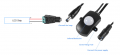
@Tonyr1084 and @sghioto thank you both so much but I don't think this is going to work with microswitches. This is to do with how the cupboards are and the doors. It will be easier to wire the PIRs (basically, I need to very specific about where I put the switch and the placing won't work with the door mechanism) Do you mind helping me with a wiring scheme for the PIRs, they have a male and female jack like this.
 

MisterBill2

Joined Jan 23, 2018
27,652
@Tonyr1084 and @sghioto thank you both so much but I don't think this is going to work with microswitches. This is to do with how the cupboards are and the doors. It will be easier to wire the PIRs (basically, I need to very specific about where I put the switch and the placing won't work with the door mechanism) Do you mind helping me with a wiring scheme for the PIRs, they have a male and female jack like this.
Those exact devices are the ones that I pointed out are totally unsuitable for the application, especially unsuited for one who is not expert in evaluating the functioning of non-documented devices. I was very specific in that post as to those exact items being a poor choice. Consider if there is anyway to identify the connections. I don't think that there is any way.
 

Tonyr1084

Joined Sep 24, 2015
9,744
Without technical data I couldn't tell you how to hook those up. And @MisterBill2 suggests that those are not well suited for your application. However, if you want to go that route - that's entirely up to you. All I DO know is that it operates on a range of DC voltages from 5 to 24 volts. Things none of us know is polarity or how much current it can manipulate. Which side is power in and which is power out. There may be other things to be considered as well. I wish you luck. If they're cheap enough you can experiment with one. If it blows out - well, that's part of the learning curve. This is where a data sheet along with a schematic of how to hook it up becomes important.
 

MisterBill2

Joined Jan 23, 2018
27,652
Try this for the LED strip.
Does the 12 volt supply have a male connector?
View attachment 336494
What I see looks to be correct, although it is not clear if those terminals are identified in any way.
This is exactly what I was seeing when I made my most recent comment.
Possibly it might work to wire two of those adapters in parallel, which would allow two sensors to control one light strip. BUT ONLY IF the wire lengths were correct.
Supplying power to both sensors from a single supply may be possible if the power source adapters are available.
 

Thread Starter

TogetherInElectricDreams

Joined Jan 23, 2019
242
The amazon listing was quite devoid of useful technical data. Which is what I always see from that place.
and @Tonyr1084 apologies. Being a noob I didn't realise my link wasn't helpful. What kind of info would be useful? I'll see if I can look something up. Your help and advice have been appreciated. Tony, I hear you on "if it blows out" that's what happened with a remote switch I was using, it blew out and I didn't realise why since then I started paying attention to wattages and the draw of things. I don't mind learning this stuff just don't know where to start to be honest. I appreciate forums like this, I can do stuff with instruction but couldn't work it out on my own, pre internet days I could only dream lol!
 
Top