Two delay timer off circuits 555 vs MOSFET

Ian0

Joined Aug 7, 2020
13,132
Huh? If the Arduino isn’t powered up, how can it switch on a power supply… or do anything.
But it would already be powered up, all that was required it for it to extend its operating time by 90 seconds, which it could do by switching on the power supply to itself for that duration.
 

Ian0

Joined Aug 7, 2020
13,132
I already suggested that. But the Nuts and Volts mindset would not do that sort of thing. YES, I am being critical of that publication!!
Apologies for not crediting you, but it's worth saying again as everyone seems to be wandering off down the "let's make it unnecessarily complicated" route.
 

Thread Starter

MB107

Joined Jul 24, 2016
400
If you are already using a processor to control the fan ON and OFF, why not add a small bit of additional code to add whatever delay you choose??
Or is the delay intended to be after the processor switches the fan off??
Sorry for the late response, I didn't realize this thread was still active. I did start out by tring code and I do believe it can work but I was getting overwhelmed with it a bit, mostly due to my lack of programing skills and the fact that its not just a straight forward delay after shut off, there were also other conditions that had to be met regarding ignition key on, for example I don't want the fan coming on after I just turn the key on to roll up the windows. My previous aftermarket controller did that and I found it very annoying.

Thanks
John
 

Thread Starter

MB107

Joined Jul 24, 2016
400
In the second circuit, the timing resistor is actually R1, not the pot. The pot will make a slight adjustment, but not much.
Am I missing something here, but a 470Ω resistor doesn't seem like a suitable representation of an automotive fan?
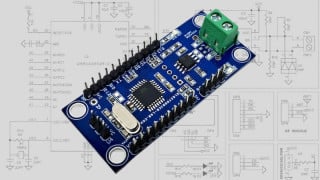
The second circuit has been tested and works fine and yes the R1 resistor plays a role. But the circuit as modified by crutschow works alot better and with a smaller capaciter. The 470Ω resister does not represent an automotive fan, It represents an Arduino Nano 33 BLE which controls the automotive fan via PWM signal.
 

Thread Starter

MB107

Joined Jul 24, 2016
400
One more time: Just what is the actual purpose of this timer?? If it is to keep the fan running after ignition switch off, what is the arduino doing? When does it control the fan operation??? There is a whole lot of explanation missing here and without that explanation the guesses are a waste of time.
The timer keeps the Arduino running after the key is turned off, which keeps the fan running after the ignition is tuned off. The Arduino controls all fan operation at all times via PWM signal. But it does not handle fan current (50Amps) at all.
 

Thread Starter

MB107

Joined Jul 24, 2016
400
I'd just use a Thermostat, ( Electronic or Mechanical ),
to run the Fan(s) until the monitored-Temps come down to an acceptable level.

If You have 2-Fans, run them in series during the cool-down period,
this will draw only 1/4 of the Power,
and will be more efficient,
and much more quiet,
and will only operate when needed.

This can be done with 3 common Automotive-5-Pin-type Relays, ( and the Thermostat ).
.
.
.
This particular fan does not lend itself to be controlled like that as would have been the case with my old 18 Amp aftermarket fan. This is a Mercedes 600w PWM controlled FAN. The fan is directly connected to the battery using huge 6ga cables. The fan is turned on and controlled using a 10Hz PWM signal to the fan motor.
 

Thread Starter

MB107

Joined Jul 24, 2016
400
That can be a concern with high current loads, but here he is likely controlling an automotive fan relay, where that should not be a problem.
Exactly. But not a relay its an Arduino with a measured 30ma current draw. The Arduino only provides a tiny 10Hz PWM signal to the huge fan.
 

Thread Starter

MB107

Joined Jul 24, 2016
400
The Arduino could switch on a power supply from the battery to power itself up, and then disconnect its own power supply when it has timed out.
These concepts may be investigated at a later date. One of the things I want to look into is putting the Arduino into sleep mode. But I need to get better with my programming to try either out.
 

LowQCab

Joined Nov 6, 2012
5,101
I'm guessing the PWM-Fan needs a Switched-Ground,
if that's the case, a very simple, secondary, Analog-PWM signal,
is easy to generate to Run the Fan at a preset-Speed, with a simple mechanical Thermostat.
Or, if You want to get fancy, You can use an Electronic-Sensor, instead of The Thermostat.
All of which will only operate with the Ignition Off.

If the Fan does not Run with the PWM-Input Grounded, a couple more Diodes will be required,
and testing for the maximum PWM-Voltage will need to be done,
but it's almost guaranteed to be 5-Volts.

Actually, You should already know the Fan's PWM Input requirements because
( I assume ) You already have a working Circuit driving it ???
.
.
.
 

Thread Starter

MB107

Joined Jul 24, 2016
400
I'm guessing the PWM-Fan needs a Switched-Ground,
if that's the case, a very simple, secondary, Analog-PWM signal,
is easy to generate to Run the Fan at a preset-Speed, with a simple mechanical Thermostat.
Or, if You want to get fancy, You can use an Electronic-Sensor, instead of The Thermostat.
All of which will only operate with the Ignition Off.

If the Fan does not Run with the PWM-Input Grounded, a couple more Diodes will be required,
and testing for the maximum PWM-Voltage will need to be done,
but it's almost guaranteed to be 5-Volts.

Actually, You should already know the Fan's PWM Input requirements because
( I assume ) You already have a working Circuit driving it ???
.
.
.
You are correct, I already have a working circuit for the fan, it is automotive voltage ~14v switched to ground. I know your an anolog guy and I appropriate that, but using the Arduino Nano 33 BLE allowes me to read the temperature data on my cell phone. A pretty unique feature for tuning the system.
 

LowQCab

Joined Nov 6, 2012
5,101
It sounds like You just need some programming advice ........
Sorry, I'm not the guy for that,
but there are lots of other folks here that might be up for a unique challenge.
.
.
.
 

Thread Starter

MB107

Joined Jul 24, 2016
400
It sounds like You just need some programming advice ........
Sorry, I'm not the guy for that,
but there are lots of other folks here that might be up for a unique challenge.
.
.
.
Yes I have to admit my programming skills are a bit lax, but one of the things I realized was that with the programming I was doing I was keeping the Arduino running at all times and these circuits here make that unnecessary. Although the use of sleep mode does alleviate that somewhat it also is something I need to figure out. So for the moment I have designed the circuit with jumpers that I can use to eliminate the timing circuit if I decide to go down that route in the near future.

In any case the question originally posted was which strategy was the better 555 timer or MOSFETs. I believe the consensus is the MOSFETs. Going forward I will be configured to try out all other strategies.

Thanks
John
 
Top