Facebook
 Google
 GitHub
 Linkedin

I recently built a slayer exciter and want to step it up into an SSTC (antenna version). I want to start small and low power so I figure a 12V or 19V supply should be fine.
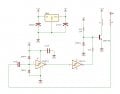
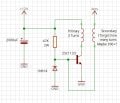
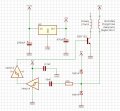
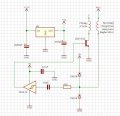
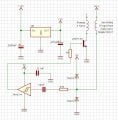
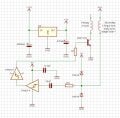
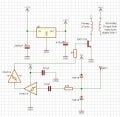
I tried a few different circuits, but none worked. A few of the circuits I tried are down below (if I remember them correctly). The only circuit that worked was the slayer exciter. I'll also post that below. The goal is to make something that runs similar to this, but without using mains voltage and more simple with a single transistor/ MOSFET driving the primary coil.
I haven't tried an interrupter yet. I assume the circuit would've worked without it.
I tried different R1 values in a bunch of ranges but nothing worked (100-1k ohm range, 10k-30k ohm range, 100k+ ohm)
I tried a few different circuits, but none worked. A few of the circuits I tried are down below (if I remember them correctly). The only circuit that worked was the slayer exciter. I'll also post that below. The goal is to make something that runs similar to this, but without using mains voltage and more simple with a single transistor/ MOSFET driving the primary coil.
I haven't tried an interrupter yet. I assume the circuit would've worked without it.
I tried different R1 values in a bunch of ranges but nothing worked (100-1k ohm range, 10k-30k ohm range, 100k+ ohm)
Attachments
-
 63.2 KB Views: 9
 -
 92.5 KB Views: 10
 -
 91.1 KB Views: 6
 -
 88.5 KB Views: 5
 -
 98.9 KB Views: 7
 -
 91.5 KB Views: 6