Transistor protection

Thread Starter

Lordcx

Joined Nov 28, 2018
8
Dear all
I have designed a circuit for cold mist generation using 1.7Mhz piezoelectric. the system works as spectated but the problem is that by drawing 400mA transistor gets hot after some minuets with a 23*30mm heat sink and some times it burns out and I could not understand why!! Any suggestion to protect transistor or all system improvement?
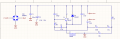
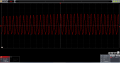
Attached is the schematic and voltage measurement at points "pizzo out +" and "pizzo out -". Also the test input DC voltage is after rectifier bridge is 34VDC and it draw 400mA.

Regards,
Mas
 

Attachments

Thread Starter

Lordcx

Joined Nov 28, 2018
8
How much power is the transistor dissipating?
Do you have a way to measure the temperature?
23 x 30 mm does not sound like much of a heatsink.
I do not have any measurement devices for this task but I used a very large heat sink and fan and it could keep transistor cold but the burning out the transistor is still the main problem. any suggestion?
 

eetech00

Joined Jun 8, 2013
4,704
Dear all
I have designed a circuit for cold mist generation using 1.7Mhz piezoelectric. the system works as spectated but the problem is that by drawing 400mA transistor gets hot after some minuets with a 23*30mm heat sink and some times it burns out and I could not understand why!! Any suggestion to protect transistor or all system improvement?
Attached is the schematic and voltage measurement at points "pizzo out +" and "pizzo out -". Also the test input DC voltage is after rectifier bridge is 34VDC and it draw 400mA.

Regards,
Mas
The waveform means nothing without X/Y values.
 

MrSoftware

Joined Oct 29, 2013
2,273
You need to scope the gate on the transistor and do some math to figure out how fast it's turning on and off and how much time it's spending partially-on. My first guess is it's spending most of its time partially-on, which the resistance will be relatively high causing it to generate a lot of heat. If this is the case, the fix would be to turn it on and off faster, maybe use a gate driver. You want a square wave on the gate, fully on or fully off.
 

LadySpark

Joined Feb 7, 2024
194
Dear all
I have designed a circuit for cold mist generation using 1.7Mhz piezoelectric. the system works as spectated but the problem is that by drawing 400mA transistor gets hot after some minuets with a 23*30mm heat sink and some times it burns out and I could not understand why!! Any suggestion to protect transistor or all system improvement?
Attached is the schematic and voltage measurement at points "pizzo out +" and "pizzo out -". Also the test input DC voltage is after rectifier bridge is 34VDC and it draw 400mA.

Regards,
Mas
I'm thinking its more of a thermal runaway issue with the TIP41 and a 3.3 to 4.7 ohm resistor added at the emitter will solve it.
 

panic mode

Joined Oct 10, 2011
4,871
the wave form shows slow rising/falling edges resembling distorted sine wave.
and this is why transistor gets hot - you get significant value of both voltage and current at the same time and - all the time. as a result you get thermal loses since power is P=V*I

if you had square wave oscillator, only V or I would be significant at any time, so V*I product would be low.
 
Last edited:

panic mode

Joined Oct 10, 2011
4,871
when transistor is fully on, Vce is small even though the current is large. so V*I product is a small value (low power)

when transistor is off, Vce is high but current is very small. so product is still very small.

but in your case, transistor is never fully on or fully off. this means that neither voltage across transistor nor current though it is very low.... and when both are large enough, their product is huge.

this is why in switching applications, you want transistor to turn on or off as quickly as possible... to avoid the analog regime. the shorter the turn on/turn off times, the less time transistor is stressed and dissipating heat...

so do not use oscillator with analog output (Colpitts/Clapp...). use square wave oscillator.
 
Last edited:

LadySpark

Joined Feb 7, 2024
194
I do not have any measurement devices for this task but I used a very large heat sink and fan and it could keep transistor cold but the burning out the transistor is still the main problem. any suggestion?
I think its Its the same problem when you use them as an audio amplifier, which is they are prone to thermal runaway. That is why I gave you the solution I came up with when I built a little amp with a Tip41c. On transistors made for switching output drivers have the same circuit you have came up with, but with the exception of a resistor from base to emitter to prevent over driving as well as the reversed biased diode from collector to emitter. A 2SD1880 is an example of this type of transistor. Tip 122 is similar to a D1880 with the exception its darlington pair internally and is used to drive relay and other solenoid coils directly from TTL logic. But a Tip41C is just a transistor without diode and drive protection resistor. So, you have to build the current limiting and protection externally like any other plain transistor.
 

MrSoftware

Joined Oct 29, 2013
2,273
I do not have any measurement devices for this task but I used a very large heat sink and fan and it could keep transistor cold but the burning out the transistor is still the main problem. any suggestion?
Just to correct the thinking here; the problem is not that you can't get rid of the heat, the problem is that it's getting hot to begin with. A design change will fix this, as mentioned above.
 

LowQCab

Joined Nov 6, 2012
5,101
There's more than one way to skin a Cat.

Are You married to this particular Circuit topology ?
Are You trying to learn something possibly valuable by thrashing this Circuit into submission,
or are You leaning more towards just getting the job done with a simple Circuit that just works ?
.
.
.
 

Thread Starter

Lordcx

Joined Nov 28, 2018
8
Thank you all for your suggestions and sorry for my late response, I tried to think and implement all your suggestions before reply.

Can you post a datasheet and part number for the transducer?
unfortunately there is no official datasheet for such Chinese made transducer

I'm thinking its more of a thermal runaway issue with the TIP41 and a 3.3 to 4.7 ohm resistor added at the emitter will solve it.
adding resistor to emitter did not helped

I must have not been awake when I replied earlier, I read your BJT symbol as a MOSFET. Is there a particular reason you chose a BJT instead of a solution using a MOSFET?
TIP41c was the only switch that I currently have.

the wave form shows slow rising/falling edges resembling distorted sine wave.
and this is why transistor gets hot - ....
when transistor is fully on, Vce is small even though the current is large. so V*I product is a small value (low power)
......
good point to learn for me, thanks
I think its Its the same problem when you use them as an audio amplifier, which is they are prone to thermal runaway. That is why I gave you the solution I came up with when I built a little amp with a Tip41c. On transistors made for switching output drivers have the same circuit you have came up with, but with the exception of a resistor from base to emitter to prevent over driving as well as the reversed biased diode from collector to emitter. A 2SD1880 is an example of this type of transistor. Tip 122 is similar to a D1880 with the exception its darlington pair internally and is used to drive relay and other solenoid coils directly from TTL logic. But a Tip41C is just a transistor without diode and drive protection resistor. So, you have to build the current limiting and protection externally like any other plain transistor.
I tried to play with diode, resistor from base to emitter, but signal won't changed significantly.

Just to correct the thinking here; the problem is not that you can't get rid of the heat, the problem is that it's getting hot to begin with. A design change will fix this, as mentioned above.
sure it is, I try to redesign it using 1557 timer and IRF3205

There's more than one way to skin a Cat.

Are You married to this particular Circuit topology ?
Are You trying to learn something possibly valuable by thrashing this Circuit into submission,
or are You leaning more towards just getting the job done with a simple Circuit that just works ?
.
.
.
thank you for your feedback..
for a professional guy like you it may be a trash circuit but for a newbie like me it is a lot of work. in the question body I asked a suggestion for circuit improvement bcz I know it is not perfect nor good. So if you have any useful suggestion, it is welcome.
 

panic mode

Joined Oct 10, 2011
4,871
you do not seem to appreciate effort that went into supporting you. everything shared is useful and would fix the problem. if you are looking for something else, please state what would be useful according to you.

1. reduce supply voltage.
2. use larger heatsink
3. use different type of oscillator (square wave)
4 change biasing of this transistor to reduce current.
5. add current limiting resistor (it can work but not my favorite as it only shifts some of the heat from one component to another). as with everything this need to be sized correctly.
6 ...

and if you need assistance, try working with us and provide some feedback, so we know what you are really dealing with. you were asked questions but you never answered them. why?

1. share piezo element type/model/datasheet
2. post oscillograms that have axes labeled. we do not see time scale or amplitude or range of the signal.
3. post additional ones (base of transistor, supply)
etc.

oh, and you are welcome.
 

LadySpark

Joined Feb 7, 2024
194
adding resistor to emitter did not helped
Then you have too much positive feedback that is inducing too much base current over time. I got some time today to really look at your circuit in finer detail Ac analysis is going to reveal where its running away. But I wonder why your piezo is reverse polarity as the signal output is the emitter. And it could be a loading effect like the signal needs to go through the 100 ohm resistor to the piezo. But I'm going to look at the base resistor, the DC current through the base as well as the AC current going through the base.

Another thing I'm going to look at is the shunt capacitor across the transistor. Because it can induce current if not sized correctly and I even question if it is really needed.

.
 

LowQCab

Joined Nov 6, 2012
5,101
The very first item that must be well understood is ....... what is this Piezo-Transducer expected to do.
What is it's purpose in Life ?

Piezo-Transducers are usually "resonant" devices to one degree or another,
and their Resonant-Frequency will also depend upon the
qualities of the "Fluid" that they are being operated in, ( Air, Gases, Liquids ).
Therefore, the Frequency that they are operated at may be critical to achieve the best results,
or, they may have no effect at all at a "non-ideal" or "non-resonant" Frequency,
and, at the same time, they may "self-destruct", or completely fail,
if too much Power is applied at the ideal-Resonant-Frequency.

So, even if your Circuit is stable, and operating properly,
there is no guarantee that your project will achieve the end-result that You expect.

A Piezo-Element must be selected by specifications to perform in a well-defined-manner,
then the Circuit that will cause it to operate in that manner can be designed.
.
.
.
 
Top