Facebook
 Google
 GitHub
 Linkedin
hello, I have "novice level" electrical knowledge and am doing some self learning stuff here - wanted to use transistors not FETS.
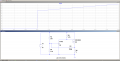
have tested on everycircuit and does seem to work.
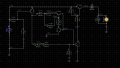
I made a transistor based circuit that cuts current when voltage drops below 10.8 or so volts (the intent is to cut voltage when 12v supply starts to drop).
you can see I have a differential circuit here such that a voltage range doesnt chatter the circuit on and off rapidly - once off, voltage has to be 11.8 to come back on or so.
I'm curious what the methodology would be for sizing transistor resistors to the base - both for pulldowns and for the main current limiting resistor to each base.
I did some reading, but for scenarios like this I didn't quite understand.
probably a solid difference between "works" functionally and WORKS correctly.
Several of these transistors are setup to be darlington units if that matters.
would like to size for a theoretical max amp draw of 5 amps from the main load
have tested on everycircuit and does seem to work.
I made a transistor based circuit that cuts current when voltage drops below 10.8 or so volts (the intent is to cut voltage when 12v supply starts to drop).
you can see I have a differential circuit here such that a voltage range doesnt chatter the circuit on and off rapidly - once off, voltage has to be 11.8 to come back on or so.
I'm curious what the methodology would be for sizing transistor resistors to the base - both for pulldowns and for the main current limiting resistor to each base.
I did some reading, but for scenarios like this I didn't quite understand.
probably a solid difference between "works" functionally and WORKS correctly.
Several of these transistors are setup to be darlington units if that matters.
would like to size for a theoretical max amp draw of 5 amps from the main load
Attachments
-
 57.9 KB Views: 24
Last edited: