Facebook
 Google
 GitHub
 Linkedin

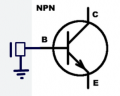
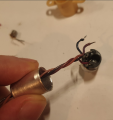
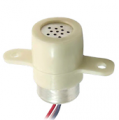
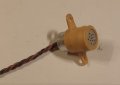
I took this TO-18 transistor from a russian made microphone that was used in a toy car, ambulance hand clap commanded.
I had this component from when I was a kid, and misteriously damaged the car. Great toy, forever in my memory.
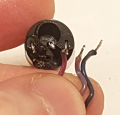
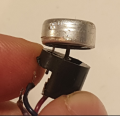
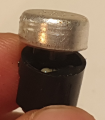
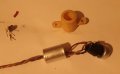
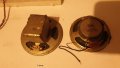
Anyway... I had this michrophone thrown away in the box and today I said to open it up and see whats inside, because it was a bit too big for a simple microphone.
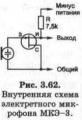
And this transistor was hooked up inside, next to the microphone. And it had 3 wires to it, whats why it sparked my curiosity.
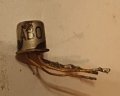
You can count 4 legs on this tr, one is already cut from factory.
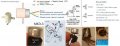
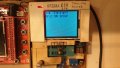
I tried to measure with DMM on diode to check if its PNP or NPN and I couldnt figure it out like that. SO I unsolder it and put it to my tr tester there to be shocked to my core that is not showing any tr reading. Yes I repeated several tests, in the case this was my device bugging out but it was a consistent reading like the one in the picture.
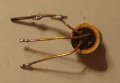
One of the legs was too short to insert it into my tester so you can see I soldered a small piece of wire to help it connect properly.
It's markings is a CLEAR: AB0 ...or ABO ...or that B is a russian V? so AVO or AV0 ?
I searched on www and nothing.
It was using 4 big fat batteries... so it must have been some 6V probably to power the entire board which was big and complex. It was quite a big toy, I remember I was carrying it with my arm around it as a child, and that was it's end.
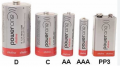 Probably like that D model. They hold like a week or so. I remember I couldn't permit to change its batteries for a very long time. Thats why I "looked" inside it, probably as a child.
- What do you think? is this a bad transistor? Or its a very weird component?
- In my experience, when I was testing literally Hundreds of scrapped transistors -long ago- , some of them I remember were showing this kind of diode reading (not exactly like this but some configuration of diodes). I throw them away or I think I store some of them in my miscellaneous diode drawer, to use them in the future, to confuse everyone and everything on what the hell that cct is doing...hahaha.
I had this component from when I was a kid, and misteriously damaged the car. Great toy, forever in my memory.
Anyway... I had this michrophone thrown away in the box and today I said to open it up and see whats inside, because it was a bit too big for a simple microphone.
And this transistor was hooked up inside, next to the microphone. And it had 3 wires to it, whats why it sparked my curiosity.
You can count 4 legs on this tr, one is already cut from factory.
I tried to measure with DMM on diode to check if its PNP or NPN and I couldnt figure it out like that. SO I unsolder it and put it to my tr tester there to be shocked to my core that is not showing any tr reading. Yes I repeated several tests, in the case this was my device bugging out but it was a consistent reading like the one in the picture.
One of the legs was too short to insert it into my tester so you can see I soldered a small piece of wire to help it connect properly.
It's markings is a CLEAR: AB0 ...or ABO ...or that B is a russian V? so AVO or AV0 ?
I searched on www and nothing.
It was using 4 big fat batteries... so it must have been some 6V probably to power the entire board which was big and complex. It was quite a big toy, I remember I was carrying it with my arm around it as a child, and that was it's end.
Probably like that D model. They hold like a week or so. I remember I couldn't permit to change its batteries for a very long time. Thats why I "looked" inside it, probably as a child.- What do you think? is this a bad transistor? Or its a very weird component?
- In my experience, when I was testing literally Hundreds of scrapped transistors -long ago- , some of them I remember were showing this kind of diode reading (not exactly like this but some configuration of diodes). I throw them away or I think I store some of them in my miscellaneous diode drawer, to use them in the future, to confuse everyone and everything on what the hell that cct is doing...hahaha.
Last edited: