Too much voltage from boost converter.

Thread Starter

esgeroth

Joined Nov 28, 2012
20
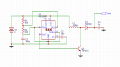
I've followed some schematics for creating a boost converter using a 555 timer. I would like to boost a 3.7v 18650 cell to 12 volts. My circuit seems to work but my output is over 70 volts. I've tried to change out some of the components, different values for the resistors or larger/smaller inductor, but I only get a difference of 1 or 2 volts. The only thing that changes the output significantly is the timing capacitor on the 555 timer circuit, but I have to put a rather large capacitor here to make much of a difference. I've tried using an online calculator for the 555 timer as well as for a boost converter circuit since my own understanding and calculations are probably off.
https://learn.adafruit.com/diy-boost-calc/the-calculator
http://www.ohmslawcalculator.com/555-astable-calculator
How can I adjust my circuit to get 12 volts out?
 

Attachments

Thread Starter

esgeroth

Joined Nov 28, 2012
20
The load will be a 12 volt 320mA solenoid. Would a zenar diode provide the necessary feedback loop? Or do I need something that will adjust the duty cycle of the 555 timer?
 

crutschow

Joined Mar 14, 2008
38,386
The load will be a 12 volt 320mA solenoid. Would a zenar diode provide the necessary feedback loop? Or do I need something that will adjust the duty cycle of the 555 timer?
Have you tried it with that load?

R1 and R2 are too small in value.
The should be about ten times their value with C1 being 1/10th its value.

You need a resistor in series with the base of Q1 to avoid overdriving Q1's base.

The 555 does not lend itself well to PWM control using feedback
It would be much better to use a dedicated boost converter chip for this purpose, which has the regulation built in.
 

MrAl

Joined Jun 17, 2014
13,677
I've followed some schematics for creating a boost converter using a 555 timer. I would like to boost a 3.7v 18650 cell to 12 volts. My circuit seems to work but my output is over 70 volts. I've tried to change out some of the components, different values for the resistors or larger/smaller inductor, but I only get a difference of 1 or 2 volts. The only thing that changes the output significantly is the timing capacitor on the 555 timer circuit, but I have to put a rather large capacitor here to make much of a difference. I've tried using an online calculator for the 555 timer as well as for a boost converter circuit since my own understanding and calculations are probably off.
https://learn.adafruit.com/diy-boost-calc/the-calculator
http://www.ohmslawcalculator.com/555-astable-calculator
How can I adjust my circuit to get 12 volts out?
Hi,

The best way to adjust it is to throw it out and start with a new circuit as others have said :)

But yeah that is a cute little circuit. That would be OK for constant load and input perhaps, but one thing you must realize is that you can NOT run that kind of circuit without a load. It absolutely MUST have a load. For that particular circuit the load should also be constant, and the input voltage should be constant too, or else not vary too much. It depends how much your intended load can take a variation in that 12v supply output. That's because the circuit has no regulation.

Because some of us do this as a hobby too, you may wish to fool around with it a little. For example, you may want to experiment with feeding back a little of the output to the CV pin of the 555. I'd have to look at the data sheet again to figure out if that would work as is or you would have to invert the output of the 555 first, but you get the idea. It would have to be set up just right though, and that still may not provide the best regulation you can get as you would with a chip dedicated to doing a boost converter.

This feedback scheme can be tried in a circuit simulator too, perhaps someone here would want to try it. Keep in mind though that you may have to invert the output first. I know other people like to try to use the 555 also as i see this kind of circuit come up from time to time.

Either way, good luck with it.
 

dl324

Joined Mar 30, 2015
18,242
I've followed some schematics for creating a boost converter using a 555 timer.
You combined information from two different sources, each seemingly valid in it's own right, and created a circuit that can't regulate voltage.

The boost calculator in the first URL assumed you were using a microcontroller to monitor the output voltage and adjust drive to the switch. That's the feedback loop.

There are a lot of junk circuits on the WEB. If you're going to use circuits designed by others, you need to be able to understand how they work. If you don't, you need to use circuits that have been peer reviewed by someone who does.
 

ian field

Joined Oct 27, 2012
6,536
I've followed some schematics for creating a boost converter using a 555 timer. I would like to boost a 3.7v 18650 cell to 12 volts. My circuit seems to work but my output is over 70 volts. I've tried to change out some of the components, different values for the resistors or larger/smaller inductor, but I only get a difference of 1 or 2 volts. The only thing that changes the output significantly is the timing capacitor on the 555 timer circuit, but I have to put a rather large capacitor here to make much of a difference. I've tried using an online calculator for the 555 timer as well as for a boost converter circuit since my own understanding and calculations are probably off.
https://learn.adafruit.com/diy-boost-calc/the-calculator
http://www.ohmslawcalculator.com/555-astable-calculator
How can I adjust my circuit to get 12 volts out?
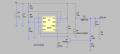
The easy way is to make it burst mode regulation - voltage sensing turns on a transistor that pulls the reset pin down. You need a bigger output reservoir capacitor and you'll still get sawtooth slow ripple.

You can make it PWM with separate charge and discharge resistors and steering diodes - its tricky to design for voltage controlled PWM.

The textbook 555 PWM uses 2 of them (or a 556). You trigger a monostable with a variable frequency astable - the higher the frequency; the more time its on.
 

Thread Starter

esgeroth

Joined Nov 28, 2012
20
I've already ordered components to test with other methods. I have some MC34063A on the way but I won't have them for another month. Just trying to experiment with what I have on hand at the moment. I also have some atmega328 microcontrollers so I will experiment with that path as well.
There isn't much of a learning experiment in throwing together a circuit that has been peer approved. I'm just attempting some experimentation until my other parts arrive.

I replaced the resistors and capacitor with more typical values found in a 555 timer circuit. R1 and R2 are 1k and c1 is 10nf. I tested with a 100ohm resistor as a simulated load and the voltage on the output reads only 15v. So I can see that the output is heavily dependent on the load.
I'll try the burst mode regulator. I downloaded ltspice and simulated the schematic provided and it looks nice.
 

RichardO

Joined May 4, 2013
2,270
That might be a bit jittery - I'd replace R8 with a Zener in series with a much lower resistor. It would be simpler than generating a clean reset from the sensed value with a Schmitt trigger.
Yes, the Zener diode would produce a much more accurate and stable output voltage. I am not sure what you mean by "jitter". As you mentioned earlier, there is a lot of ripple.

You are right. The Reset signal has a lot of "trash" on it. The trash does not seem to have any obvious effect on the operation of the circuit. I am guessing that it might increase the quiescent current current of the CMOS 555 but I have never measured it to find out since it has never been an issue to me.
 

Thread Starter

esgeroth

Joined Nov 28, 2012
20
I've finally built this circuit. It works nice and is limited to 12.6 volts. I had to make a couple of adjustments. I had to use a 22uH inductor because I don't have a 20uH. I replaced c3 with a 1nf instead of 270pf as I didn't get any boost with 270pf. I wonder if the 555 timer cant produce the higher frequency with the lower input voltage since it's usual minimum is 4.5v. Either that or the transistor I used (tip41c) doesn't switch fast enough and is being left open or closed.

I also tried running a 10 watt led with it but it doesn't seem to be able to keep up. It lights up but the output voltage drops to about 8v. How do I calculate how much current I should be able to draw through this circuit? Any ideas on getting a bit more voltage through?

I also just got some attiny85 microcontrollers so I will start making another boost converter with one of those.
 
Top