TL431 not working properly as tunable negative reference by the datasheet

MrAl

Joined Jun 17, 2014
13,716
Hello , I need to tune my voltage around this value , for tuning I do need two resistors.did my currents in post 16 are ok ?
Thanks .
Hi,

Do you mean you want to get -2.5v output?
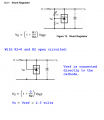
If so, I believe you can connect the Vref pin directly ground but only in your negative output voltage circuit. That should give you -2.5 volts output as long as you have enough input voltage. You should also test with some load on the output also.

What current are you talking about, and where are you measuring it?
If you mean the cathode current that can be from 1ma to 100ma as per one of the data sheets.
 

Attachments

Last edited:

MrAl

Joined Jun 17, 2014
13,716
Hello , I need to tune my voltage around this value , for tuning I do need two resistors.did my currents in post 16 are ok ?
Thanks .
I thought I did not reply to this yet so I provided a second reply, but I did add some more information that might help you here too.

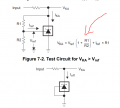
If you need 2.5v then you do not need those two voltage setting resistors. That's because the 431 device has a 2.5v reference inside, so you do not need to change the feedback. You still need to run the reference input to the cathode though, as usual, but it can be a direct connection.

After playing with the math for this a little I noticed it's a little harder to calculate the cathode current. You have to place all of the resistors and load resistance in parallel (R2+R3 is considered one resistor, and R2 has an equivalent resistance which for 2.5ua could just be 1Megohm). That way you can subtract that current from the input current.
It helps to use a series resistor in series with the cathode of maybe the anode. As the math works out, now when you calculate the cathode current that resistor drops out of the equation and it becomes dependent on only the other resistors, as would be the case if you took the time to do the parallel resistor calculation. For example, if the voltage across that resistor was v2 and the other side v1, then we know the voltage drop is v2-v1. The current then must be (v2-v1)/Rs where Rs is that extra resistor. However, because Rs also ends up in the numerator and it multiplies all the other terms, it immediately cancels out when you go to calculate the cathode current. v2 and v1 have resistances in them too and Rs ends up multiplying both like:
(Rs*v2-Rs*v1)/Rs=(v2-v1)*Rs/Rs which of course simplifies to Ik=v2-v1. Note that these voltages also have associated resistances say Rv1 and Rv2 then it would look better:
Ik=(v2/Rv2)-(v1/Rv1)
where those resistances can be somewhat complicated and so the voltages are not that immediately apparent.
This is all using Nodal Analysis for the entire circuit.

If you would like to go over the math behind this I would be happy to help, here or in PM's.
 

Thread Starter

yef smith

Joined Aug 2, 2020
1,461
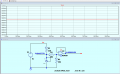
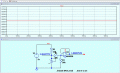
Hello , given the following configuration my TL431 gives me -2.5V
So I cannot get -2V -1V from this device? the smallest absolute value is -2.5V?
Thanks.

1738746349453.png
1738746172135.png
1738746199030.png
 

Thread Starter

yef smith

Joined Aug 2, 2020
1,461
Hello Ericgibs , Is there a component like TL431 which could be configured for positive and negative reference voltages (low noise)
but its Vref is 0.5V for example?
Thanks.
 

MrAl

Joined Jun 17, 2014
13,716
Hello , given the following configuration my TL431 gives me -2.5V
So I cannot get -2V -1V from this device? the smallest absolute value is -2.5V?
Thanks.

View attachment 341982
View attachment 341980
View attachment 341981
Hi,

If you need a voltage between 0v and +2.5v or a voltage between 0v and -2.5v then I don't think you can use a TL431 device. However, if you do not need to have a common ground, then you might be able to use TWO of them to get any voltage between 0v and 2.5v or a voltage between 0v and -2.5v.

Here is another idea...
What you could do if you needed 1.0 volts is to wire one to put out 2.5v and the other to put out 3.5v, then use the output of both of them as your 1v source. The 2.5v would be the new ground, and the 3.5v output would be the 1v output. If you needed -1.0 volts, then use the 3.5v output as the new ground and the 2.5v output as the 1v output.
You'd have to make sure you don't draw too much current as usual, and if you are using those series biasing resistors you have to make sure they are low enough to handle the required current levels and still maintain BOTH output levels.
 

Thread Starter

yef smith

Joined Aug 2, 2020
1,461
Hello Mral,I need all the range between 0 and -2.5 in single ended with respect to GND.
How do you reccomend to use TL431 for this purpose.
I am trying to understand the method you reccomended .
Could you draw it so I could simulate it and see how its functioning?
Thanks.

Hi,

If you need a voltage between 0v and +2.5v or a voltage between 0v and -2.5v then I don't think you can use a TL431 device. However, if you do not need to have a common ground, then you might be able to use TWO of them to get any voltage between 0v and 2.5v or a voltage between 0v and -2.5v.

Here is another idea...
What you could do if you needed 1.0 volts is to wire one to put out 2.5v and the other to put out 3.5v, then use the output of both of them as your 1v source. The 2.5v would be the new ground, and the 3.5v output would be the 1v output. If you needed -1.0 volts, then use the 3.5v output as the new ground and the 2.5v output as the 1v output.
You'd have to make sure you don't draw too much current as usual, and if you are using those series biasing resistors you have to make sure they are low enough to handle the required current levels and still maintain BOTH output levels.
 

MrAl

Joined Jun 17, 2014
13,716
Hello Mral,I need all the range between 0 and -2.5 in single ended with respect to GND.
How do you reccomend to use TL431 for this purpose.
I am trying to understand the method you reccomended .
Could you draw it so I could simulate it and see how its functioning?
Thanks.
Hi,

OK, I'll try to draw something up later today.
 

Thread Starter

yef smith

Joined Aug 2, 2020
1,461
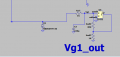
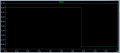
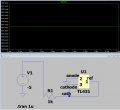
Hello Eric, I have tried to foolow your method and creat similarly -2.5V withough using resiators purely on direct connection how ever I just managed to forward bias an inner diode.
Where did I go wrong in creating a -2.5V with direct connection?
Ltspice files are attached.
Thanks.

1742217973571.png
 

Attachments

MrAl

Joined Jun 17, 2014
13,716
Hello Mral,I need all the range between 0 and -2.5 in single ended with respect to GND.
How do you reccomend to use TL431 for this purpose.
I am trying to understand the method you reccomended .
Could you draw it so I could simulate it and see how its functioning?
Thanks.
Hello again,

Here are two ways you could try doing it. The second is simpler but you should check the values to make sure they are in the right range. Also, the second circuit with RLoad2 can only work right if the 12 volt input is already regulated. The first circuit would work without a regulated input, but the output can not be ground referenced with that one.
Note that I adjusted R1 and R8 to get exactly 2 volts output with both circuits, just for an example.
Also note that C2 is twice the value of C1, but you should check the data sheet for the best value capacitor for one of those, then make that C1 and double it for C2. C3 should also be chosen based on the recommendations from the data sheet.

Are you now saying you ONLY need 0 to -2.5 volts output?
 

Attachments

sparky 1

Joined Nov 3, 2018
1,218
The suggestion to scrap the zener and use a TL431 to produce a negative supply seems plausible. Next
The accuracy with TL431 is compared to the zener still not best but a few mV off will probably be ok, all the other circuit details are not given.
Since the project does'nt move at all with TL431 possibly a module dedicated to just making a negative supply.
The post asks for circuit help but it lacks all the pertinent details.

The TL7660 is converter for negative supply, it has worked for others who take advantage of good negative power design.
Without all the details it is best guess. I do much research and simulation and many times I find after all that there is a better way,
The TL7660 has a good reputation and can be found in applications that are quite useful and simplicity having low parts count.
The replicator needs to gather all the correct parts and start soldering and not pre-modify a well-engineered circuit.
Use the recommended specifications on the data sheet.

TL7660 datasheet
 
Last edited:

MrAl

Joined Jun 17, 2014
13,716
Hello Mral,I need all the range between 0 and -2.5 in single ended with respect to GND.
How do you reccomend to use TL431 for this purpose.
I am trying to understand the method you reccomended .
Could you draw it so I could simulate it and see how its functioning?
Thanks.
Hello again,

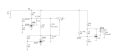
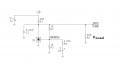
Here is a reference circuit that should give you a negative output that you can vary.
As pictured, R4 is adjusted to 1.51k which provides an output of -2.006v in simulation. You should be able to get a range of voltages that way, although this assumes you also have a +5v regulated source along with your negative supply. If you don't have a +5v supply or something positive like that, then we would have to change the circuit a little more.
I am not sure what your output current level requirements are so I just chose some resistor values randomly to start with.

As to the capacitor value, stay at 0.01uf or less, or at 5uf or greater. The cap value in the schematic is just to get the sim to work.
Something like this: 0<C<=0.01uf, or 5uf<=C, so for example 0.001uf to 0.01uf, or 5uf, 10uf, etc. Try to stay away from values 0.01uf to 5uf.
 

Attachments

Last edited:
Top