Facebook
 Google
 GitHub
 Linkedin

We had the special BAT-PHONE with the FO button.
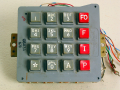
https://en.wikipedia.org/wiki/Autovon
We could call The Flash but the President could tell us to F--- Off, he needed to talk to The Flash.AUTOVON included four message precedence levels: Routine, Priority, Immediate and Flash, and had an additional capability called Flash Override.[3] These levels were activated using the buttons in an additional column of the keypad, which produced the dual-tone multi-frequency (DTMF) signals A, B, C, and D:
Flash Override was not designated as a precedence level, but a capability designed to allow the President of the United States or other National Command Authority to preempt any other traffic in the network in an emergency.
- A (697/1633 Hz): Flash Override (FO)
- B (770/1633 Hz): Flash (F)
- C (852/1633 Hz): Immediate (I)
- D (941/1633 Hz): Priority (P)
Flash and Flash Override is embedded in the Internet.
We ran CRITICOM at the station in the Keys (Legacy of the Cuban Missile Crisis). It's the only thing that can override the Presidents FO in an emergency.
https://en.wikipedia.org/wiki/Criticomm
The Critical Intelligence Communications network, or CRITICOMM, is designed to flash to the American President and a handful of other senior officials intelligence alerts and warnings of the highest priority—an imminent coup in a Middle East sheikdom, for example, or the assassination of a world leader, or the sinking of a Soviet sub. It is the goal of NSA to have such a CRITIC message on the President's desk within ten minutes of the event. An example of a CRITIC message being sent is the USSS Pueblo that was captured by North Korea. CTO2 Don McClarren, who was on the ship at the time, notified the Comms Center in Kamiseya, Japan of the attack. After being received by the Comms Center, the message was passed to CTO3 Paul Allen USNSG who then transmitted it using a Teletype Model 33.
Last edited: