Facebook
 Google
 GitHub
 Linkedin

In my PCB design, I have 0402 components connected to polygons. To reduce the risk of tombstoning, I connected them using thermal relief.
My guiding principle is that if heat dissipation is not symmetrical on both sides of the component, and the component is 0603 or smaller, thermal relief should be applied. I differentiate between three cases:
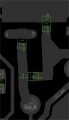
Both pads are connected to polygons. (See Image 1: C14, C15, C16, C17)
Only one pad is connected to a polygon. (See Image 1: R15)
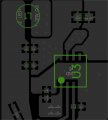
Neither pad is connected to a polygon. (See Image 2: C12, R11)
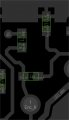
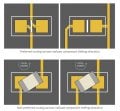
In the third case, I made an effort to route the traces symmetrically to the component to ensure even heat distribution. This follows recommendations I found online to prevent tombstoning—see Image 3 (top: preferred routing, bottom: non-preferred).
Another consideration is whether the components will be soldered or desoldered manually, such as jumpers.
Additionally, I assume that for TH components, thermal relief should always be used when they are connected to a plane/polygon.
My Questions:
Are my assumptions correct? Should thermal relief be applied in each of these cases?
If thermal relief is used for thermal reasons, is it important that the number of connections (or their total width) be symmetrical?
When considering symmetry, should factors like polygon size, nearby vias, and other thermal paths be taken into account? Is this generally based on estimation or engineering judgment?
Thanks in advanced for any answer,
Eyal
My guiding principle is that if heat dissipation is not symmetrical on both sides of the component, and the component is 0603 or smaller, thermal relief should be applied. I differentiate between three cases:
Both pads are connected to polygons. (See Image 1: C14, C15, C16, C17)
Only one pad is connected to a polygon. (See Image 1: R15)
Neither pad is connected to a polygon. (See Image 2: C12, R11)
In the third case, I made an effort to route the traces symmetrically to the component to ensure even heat distribution. This follows recommendations I found online to prevent tombstoning—see Image 3 (top: preferred routing, bottom: non-preferred).
Another consideration is whether the components will be soldered or desoldered manually, such as jumpers.
Additionally, I assume that for TH components, thermal relief should always be used when they are connected to a plane/polygon.
My Questions:
Are my assumptions correct? Should thermal relief be applied in each of these cases?
If thermal relief is used for thermal reasons, is it important that the number of connections (or their total width) be symmetrical?
When considering symmetry, should factors like polygon size, nearby vias, and other thermal paths be taken into account? Is this generally based on estimation or engineering judgment?
Thanks in advanced for any answer,
Eyal