Texas power grid problems

strantor

Joined Oct 3, 2010
6,875
Are you ok, what happeded? Many people I spoke with on the phones helping with home security issues were without power but, I don’t get to hear back as to how they are getting by, I can only imagine what you had to deal with, but I know it’s nothing compared to reality. Glad your back up on the forums. Stay Safe, hope it‘s not to much to restore normal life.

kv

Edit: I believe in preparedness, I will get a new hot water heater soon, add a whole house system RO (reverse osmosis system) but, in the end I’ll have 60 gal of clean water to drink in the event none can be obtained, I replaced my main line a couple years ago, plus re-piped, I know at that point I would have clean water, also extending the life of my hot water heater. This is my wake up call, I’ll work on increasing my food storage. Again hope all is well with you and yours.
Man, where to start? Life has been a country song lately. My dog didn't die though.

My story is too long to type. It would take 30 minutes to give the entire account out loud without interruptions. I'll just give the outline below. But first let me say that nobody in my family and nobody I know has been injured, sick, or starved. Only gravely inconvenienced.
  1. Our house is 100% electric. No gas out here in the boonies and our fireplace is out of commission. We went >72hrs without power.
  2. In advance of the freeze I cracked all the faucets so the lines wouldn't freeze but I'm on a well so when we lost power we lost water, and the lines froze.
  3. I have a generator that should have been capable of running the well but it only ran a couple hours before one of the windings burnt out and I was down to 120V.
  4. We flushed the toilets with water bucketed in from our above ground redneck swimming pool.
  5. Our only space heater was too much for the remaining generator winding.
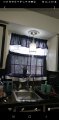
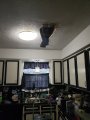
  6. On day 3 power came back on, but only long enough to turn on the well and fill the space above my kitchen with water turning my light fixtures into pretty waterfalls, then it was off again.
  7. Rolling blackouts on day 4.
  8. The alternator in my truck gave out.
  9. On day 2 communications went out. Cell phones didn't work, no internet, cable was offline. We don't have a landline but I suspect it would have been out too, if we had.
  10. Something has changed with the level/shape of my house. Some doors close differently now than they did a week ago. I don't think we froze long enough for frost heave, but maybe the interior of the house dipping below 40f for the first time in 40 years caused thermal expansion/contraction/drift of the actual structure? Idk.
  11. I connected a generator to my sister's breaker panel at her request, turned off her main breaker, and once power was back the main breaker would not turn back on. It had failed. I attempted to replace the main breaker during the next blackout and power was restored before I was done. I had to connect the unfused main power live.
  12. No stores were open for anything that I needed throughout this ordeal. Generator plugs, plumbing fittings, gasoline, food, etc. I had use what I had in unconventional ways, and beg/borrow when that failed.
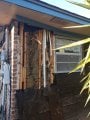
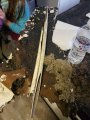
  13. have a giant hole in my kitchen ceiling and I have removed the exterior wall of my house to access the pipes there.
  14. When stores opened back up they were out of everything we needed within hours. When gas stations opened back up there were lines all the way out to the highway and gas was sold out within hours.
  15. I have repaired all the plumbing with an unconventional array of fittings and I have a contractor scheduled to replace the ceiling later today.
Lessons learned:
  1. Climate change is a thing. Weather events are now possible in TX that weren't before. Best to start winterizing our houses in the way that is done up north.
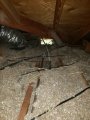
    1. Add insulation to the attic.
    2. Put in better windows.
    3. Insulate pipes
    4. ???? A little help here? I'm a bit out of my element.
  2. Our grid is not as solid as we once thought. Best from now on to be prepared for extended outages year-round. In addition to the normal hurricane season preparations, the following should be observed:
  3. Keep a stockpile (or at least a spare) of:
    1. Plumbing fittings, solder, flux
    2. Propane
    3. Many gallons of gasoline
    4. Breakers
    5. Twist lock plugs
    6. PEX tubing & copper pipe
    7. Heavy gauge cords
  4. Do not use PVC for water supply lines
  5. Drain & blow out well pump tank and supply lines with compressed air in advance of a hard freeze
  6. Have your fireplace ready for use even if you don't think you'll ever need or want to use it.
  7. Have a backup to the backup generator.
  8. Have some kind of long range walkie talkie or radio for communication with anyone nearby that you might need to talk to.
  9. Invest in a good quality generator that won't fail when needed most, and one big enough to run the well and the heater (not necessarily at the same time).
  10. The Maglite ML150LR is quite possibly the best flashlight ever made. It is bright enough to see well over 100yds and the battery lasted throughout the entire ordeal. When the kids used it, they never put it back on the charging cradle. When I used it (and put it back on the charging cradle) the charging cradle had been disconnected.
  11. The mapp gas torch with auto-igniting trigger is a life saver. Great investment. I should remind it how much I love it.
  12. Fill bathtubs with water so you don't have to go out to the pool.
  13. Install a generator transfer switch so you don't have to make impromptu wiring changes to the breaker panel outside in the biting cold.
  14. Organize your stuff so you can find it when you need it. I probably have everything I needed the past few days but just couldn't find it.
  15. This isn't fair. If we have to prepare for blizzards then N. Dakota should have to prepare for hurricanes. <joke>
Thanks for your concern. We are OK. Mostly back to normal. We were caught with our pants down but will adapt and be ready for this from now on.
 

Attachments

wayneh

Joined Sep 9, 2010
18,104
Strantor in post #25 indicates that they are surprised to see a post from someone in the UK re the situation in Texas.

It would appear that the President of the USA is also concerned.

https://www.bbc.co.uk/news/world-us-canada-56129833
Declaring a disaster is politician-speak for opening the wallets of taxpayers, usually to pay for other people's bad decisions to build homes in flood plains, near the shore in hurricane zones, on muddy hillsides, etc. In this case, to fail to plan for rare hazards. This "disaster" was avoidable. It was judged a prudent risk not to do so. Whoever made that risk-management decision should be the one held responsible. Getting bailed out just shows the next guy how to make the hard decision.
 

wayneh

Joined Sep 9, 2010
18,104
  1. Insulate pipes
  2. ???? A little help here? I'm a bit out of my element.
  3. Do not use PVC for water supply lines
  4. Drain & blow out well pump tank and supply lines with compressed air in advance of a hard freeze
Damage due to frozen pipes is a huge concern. Here in northern Illinois, I believe code is to bury any water-carrying pipe a minimum of 48" underground. That's to the top of the pipe. That depth varies by location of course and I don't know if it's meant to be a 1-in-1000 level of protection or what. It's not unusual for pipes to break around here after a couple weeks below 0°F. I was stunned the first time we travelled in the south as a kid. Water pipes in the open air, just laid on the ground. (The chickens and pigs roaming free in the houses was also an eye-opener but that's a story for another day.)

Pipes indoors have to be inside the insulated space. Sounds easy enough but you have imperfections such as where the sillcocks for outdoor hoses pass to the outside. Those are built to drain if installed properly but even then, the part that should stay warm may not be far enough away from the cold. We don't heat our basement so it's probably 50-something down there. If it's -20°F outside, it's not hard to see how the sillcock in the coldest corner of the basement might be its risk. (Yes, I've had to replace it.)

This winter has been unusual for forming ice on rooftops. Engineers build everything around here in anticipation of snow loads, but I wonder how close we are to trouble. I have over a foot of solid ice covering much of my roof. It's like having a shallow pond on top the house. Of course all that water will be trying to run in under my shingles whenever the thaw begins. The downspouts are probably frozen top to bottom, and I have no idea how deep into the earth the ice goes. Gutter drains are barely buried at all, so I know they're all plugged.

Losing power around here means instant panic about water pipes. Nothing else will cause as much trouble as quickly.
 

SamR

Joined Mar 19, 2019
5,488
Probably the recent declaration of Tx as a disaster zone will help them out with said bills?
It means the government will loan you money to help repay your proven losses due to emergency abatement or structural repairs due to the emergency after they have been paid for by the owner. The only freebies you might get are empty sandbags, ice, a bed (or spot on the floor) in an evacuation center, an MRE, or water. Hearing "I am with the government and here to help you" is not always a good thing to hear. There is always a great deal of fraud and abuse after declaring an emergency disaster area.
 

cmartinez

Joined Jan 17, 2007
8,762
Hearing "I am with the government and here to help you" is not always a good thing to hear.
Right ... I've heard that exact sentence before, but with a different ending:

"I am with the government and here to help you with your taxes"

Not a good thing to hear... at all
 

nsaspook

Joined Aug 27, 2009
16,322
Isn't this where joedy999 would say, "capitalism at work"?
I talked to my mom again, she pays a typical fixed-rate plan like most people so her bill will not increase. It's a news story that as usual leaves out important facts to make a sexy story. Only the few (from a pool of millions that didn't) that signed up to pay wholesale prices might see a change in the bills due to wholesale price spikes. A few, voluntarily, in the state of Texas, took chances to play the wholesale price game and lost.

https://apnews.com/article/texas-high-electric-bills-explained-aa77ff97be48bf2c8fabfdc2e4a6d08c
 

Lo_volt

Joined Apr 3, 2014
370
I talked to my mom again, she pays a typical fixed-rate plan like most people so her bill will not increase. It's a news story that as usual leaves out important facts to make a sexy story. Only the few (from a pool of millions that didn't) that signed up to pay wholesale prices might see a change in the bills due to wholesale price spikes. A few, voluntarily, in the state of Texas, took chances to play the wholesale price game and lost.

https://apnews.com/article/texas-high-electric-bills-explained-aa77ff97be48bf2c8fabfdc2e4a6d08c
Yup, the wholesale price plans were strictly a gamble. If one removes the freeze bill as an outlier, I wonder how much those customers saved?

Just note that gasoline will start to go bad after a few months of storage so you need to treat it with a stabilizer (once a year is recommended).
Best to use the stabilizer and rotate through, i.e. use the oldest stuff to cut your lawn (they do have those in Texas right?)
 

hrs

Joined Jun 13, 2014
530
I heard they let Jeff Skilling out and he incorporated a company called Veld in Texas where he will explore new and exciting ways to gamble with energy.
:eek:
 

strantor

Joined Oct 3, 2010
6,875
Just note that gasoline will start to go bad after a few months of storage so you need to treat it with a stabilizer (once a year is recommended).
Yeah I have many gas cans that stay full through hurricane season and I line them up oldest to newest. Oldest gets used first, mostly in the lawn mower (I burn 3-5 gal each time I mow). No gas stays here more than 6-8 months. I don't keep much gas over winter because I'm not mowing, I stop filling gas cans toward the end of summer. I will just refill them once more at the end of summer and be sure to use them all up before refilling once the grass starts growing again.
 

SamR

Joined Mar 19, 2019
5,488
If you can find it, Marine gasoline has no ethanol and is more stable than automotive pump gas. Even without the road taxes it tends cost a bit more than automotive gas and is 90 octane plus it's leaded. Marina here was around $2.50/gal a month ago. Coleman fuel is also very stable but only 50-55 octane and also alcohol-free.
 
Top