Testing Switching Transistors

Thread Starter

bwilliams60

Joined Nov 18, 2012
1,450
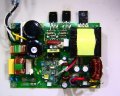
I am currently working on a Samlex SEC-1235 switch mode power supply and I have no DC voltage output. It should be in the area of 13.6 VDC. I am to the point that I believe I have a bad switching transistor. I have tested it like a bipolar but it does not make sense to me. Is there another way to test them? The two readings are different from each other which would confirm my suspicions but would like to know more about them.
 

Thread Starter

bwilliams60

Joined Nov 18, 2012
1,450
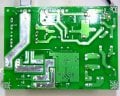
Sorry I haven't been able to find a schematic for this supply. If someone has one and would like to share. I would be grateful. Thanks in advance. I will try to take pictures of it tomorrow and post them to the page.
 

b1u3sf4n09

Joined May 23, 2014
113
Did you already investigate the possible causes as laid out by the product manual?

"PROBLEM : The output voltage is 0 V or very low

PROBABLE CAUSE SUGGESTED REMEDY:
Input voltage is very low Check that the input voltage is 120VAC

The unit is in current limit condition Check the output terminals are not
due to overload caused by large reactive shorted. Remove the load. If the
loading or by the output being short output voltage gets restored, the
circuited load is shorted or is offering large
reactive impedance.

Unit is shut down due to over Check that the fan has not failed or
temperature. the vent openings are not blocked

PROBLEM : Output voltage drops as soon as the load is switched on

PROBABLE CAUSE SUGGESTED REMEDY:

The unit is going into current Reduce the load current
limit protection mode to less than the current limit value.
Motors, pumps, compressors, relays,
incandescent and halogen lamps and
large capacitors in the input section of
the DC devices draw very high inrush
or starting currents of up to 10 times
their normal operating currents.
Ensure that these inrush/starting
currents are below the current limit
value of the power supply."
 

to3metalcan

Joined Jul 20, 2014
263
The transistor is likely to be a MOSFET. It won't diode test the same way a BJT will...but you can still probably tell if it's blown if any if the terminals are shorted to one another.
 

Thread Starter

bwilliams60

Joined Nov 18, 2012
1,450
Did you already investigate the possible causes as laid out by the product manual?
There is no load hooked up to this unit. I have traced voltage to the rectified side of the bridge rectifier and found 345 VDC, which puzzles me but nonetheless, it's there. I seem to lose it going through these switching transistors but unsure how to test. They do have different readings on diode test and one looks like it has a small pinhole where smoke escaped but hard to tell with the naked eye. I am going to put it under magnification tomorrow to see if I am correct. I will post the pics.
 

Thread Starter

bwilliams60

Joined Nov 18, 2012
1,450
Tom_s, this looks very similar to mine. The unit does not have to have a load to have an output gerty. I have a similar unit and it sits at 13.7 vDC with no load attached. I am almost certain that the transistors, or at least one, is shot.
 

ian field

Joined Oct 27, 2012
6,536
I am currently working on a Samlex SEC-1235 switch mode power supply and I have no DC voltage output. It should be in the area of 13.6 VDC. I am to the point that I believe I have a bad switching transistor. I have tested it like a bipolar but it does not make sense to me. Is there another way to test them? The two readings are different from each other which would confirm my suspicions but would like to know more about them.
If its a bipolar transistor, it should test like 2 back to back diodes. The B/E junction could show a little bit of reverse leakage if your meter's test voltage is more than about 5V - there should be no leakage whatsoever from C/E.

A MOSFET can be a little confusing because testing for gate leakage can leave a charge on the gate capacitance (The longer it takes to leak away - the better the MOSFET). Charge on the gate capacitance can switch the MOSFET on or off, so drain conduction can depend on the polarity of your last gate test - if you leave a negative gate charge (on a N-channel MOSFET) there should be no drain conduction.

The MOSFET has a parasitic "body diode" from drain to source that is not forward biased with the correct polarity on the drain.
 

Cal Rico

Joined May 1, 2012
15
It is an NPN bipolar. High Speed, High voltage. I just Goggled on DuckDuck go the part number. came up with
the link: http://www.alldatasheet.com/view.jsp?Searchword=SC3320
and below is one of the datasheets (there are always multiple versions of the same transistor part these days). Despite the variations, for testing the specs are usually the same or very similar.
Be sure to desolder at least one leg. before testing.
 

Attachments

Thread Starter

bwilliams60

Joined Nov 18, 2012
1,450
If they are both NPN bipolar, then they are both bad. Time to order up some new ones and that could be a chore. Not finding a lot of matches online. Anybody know where to buy these in North America?
 

Thread Starter

bwilliams60

Joined Nov 18, 2012
1,450
Thanks ISB123. Will begin my search tomorrow am. The number on them doesn't come right up so looking for similar transistors. I have a newer power unit from same company, might check and see if they are using something new and improved.
 

ian field

Joined Oct 27, 2012
6,536
If they are both NPN bipolar, then they are both bad. Time to order up some new ones and that could be a chore. Not finding a lot of matches online. Anybody know where to buy these in North America?
Sounds like its a half-bridge circuit, that means the 2 transistors in series across the rectifier/reservoir capacitor - even if one tested good, it would be advisable to replace both together.
 

Thread Starter

bwilliams60

Joined Nov 18, 2012
1,450
Ian, if you look at post #8, you can see how they are hooked into the circuit. I would say they are in parallel, is that correct? I'm still trying to understand what the left side of the circuit does and how it does it. I am fairly new to electronics as far as understanding how the components react with each other. Is it normal for there to be 345 VDC after the rectifier? What is the purpose of this?
 

ian field

Joined Oct 27, 2012
6,536
Ian, if you look at post #8, you can see how they are hooked into the circuit. I would say they are in parallel, is that correct? I'm still trying to understand what the left side of the circuit does and how it does it. I am fairly new to electronics as far as understanding how the components react with each other. Is it normal for there to be 345 VDC after the rectifier? What is the purpose of this?
They're not parallel, one has its collector to positive and the other emitter to negative.

Its pretty standard as switchers go.

The driver transistors are single-ended push pull with a center tapped primary on the driver transformer.
 

Thread Starter

bwilliams60

Joined Nov 18, 2012
1,450
Thank you Ian, appreciate the feedback and the lesson. Slowly learning, very slowwwwly.

Since these transistors are blown, I like cause and effect so what might have been the cause of their destruction and what else should I be looking at?

Does anybody have a good source for these transistors? What is the Chinese company that everyone on here talks about?
 
Last edited:
Top