testing pulse delay in saturation and active states of a NPN

Thread Starter

yef smith

Joined Aug 2, 2020
1,446
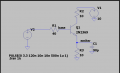
Hello,I want to test the delay of a pulse when NPN is saturated and non saturated state.
I know it depends on the level of the pulse.
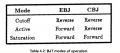
From the datasheet and abothe manual i have tried to recreate the state oj the junctions.
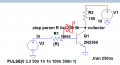
At first EB junction must be forward. I have tried to build the circuit below.
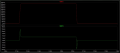
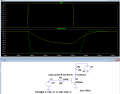
As you can see the BE junction is active,also you can see the Vce is very high.
Base current and collector current are attached.
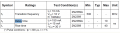
How do i know if my NPN is saturated or active acording to the datasheet attached?
LTspice file is attached.
Datasheet for 2N2369 Motorola Transistors | Octopart
View and download the latest Motorola 2N2369 Transistors PDF Datasheet including technical specifications

https://www.ece.mcgill.ca/~grober4/...PICE/chapter4/Chapter 4 BJTs web version.html
1718374509838.png

1718374537958.png
1718374750616.png
1718374772748.png

1718374787885.png
1718374807408.png
 

Attachments

crutschow

Joined Mar 14, 2008
38,320
The device is saturated when the Vce is ≤Vbe.

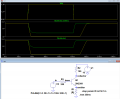
Here's the sim showing saturated and unsaturated switching behavior by using two different base resistor values:

1718378968980.png
 

Attachments

ronsimpson

Joined Oct 7, 2019
4,647
If you put a Schottky diode from Base to Collector, it will keep you out of saturation. When the C gets 0.4V below B the diode steels the excess base current and holds the transistor just out of saturation. The transistor will be much faster.
1718384193370.png
The turn off delay time is very much related to how hard you over drive the transistor, how long the transistor has been in saturation, and how you turn off the base.

I have worked on speeding up power transistor for 40+ years and have built machines that measure "storage delay". There are testers on the market that I designed part of that measure dynamic and static values like this. There are testers that are no longer on the market that do this also, but we no longer make them ( PNP and NPN ).

I normally do not work with small transistor like that but the principal is the same. Ask questions.
 

crutschow

Joined Mar 14, 2008
38,320
f you put a Schottky diode from Base to Collector, it will keep you out of saturation. When the C gets 0.4V below B the diode steels the excess base current and holds the transistor just out of saturation. The transistor will be much faster.
That helps a lot with general purpose transistors that have a long storage delay, not so much with high-speed switching transistors, such as the 2N2369.
 

ronsimpson

Joined Oct 7, 2019
4,647
That helps a lot with general purpose transistors that have a long storage delay, not so much with high-speed switching transistors, such as the 2N2369.
For years I have used the highest voltage power transistor I can get. The HV silicon is slow. A 1000V or 1500V transistor might have 2uS of storage delay. That is after doing everything I can think of to seed it up. About 4 years ago I switched to GAN MOSFETs and they are real fast.
 

crutschow

Joined Mar 14, 2008
38,320
Below is the modified circuit which varies the emitter resistor instead of the base resistor, to show a better comparison between unsaturated (green traces) and saturated (yellow traces) switching:
Note the lack of turn-off storage delay for the unsaturated case.

1718392084607.png
 

Attachments

Last edited:
Top