Task about kT/C

Thread Starter

Stepanich

Joined Oct 3, 2020
3
Hello!

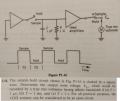
Please explain the calculation procedure of sample-and-hold circuit noise.

In this book
01.png


There is an example:
02.png

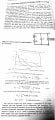
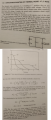
There is a theory before this example:
03.png

Answer given at the end of the book:
04.jpg

Help me to understand how to calculate SAH noise at given different integration times. I began with calculation kT/C noise = sqr(1,38e-23*298/1e-12)=64e-6 V. But I don't understand what I have to do further.

Thank You.
 

Papabravo

Joined Feb 24, 2006
22,082
According to 1-58 and the statement that follows:
"Note that the output rms noise voltage is independent of the source resistance and only depends on the temperature and the capacitance."
I think the integration has already been done for you.
The mystery here is how the sampling frequency, represented by period T (not temperature, good choice of symbols by textbook author) affects the basic measurement of the noise voltage.
 

Thread Starter

Stepanich

Joined Oct 3, 2020
3
The mystery here is how the sampling frequency, represented by period T (not temperature, good choice of symbols by textbook author) affects the basic measurement of the noise voltage.
Yes, my question is how period T affects the measurement of the noise voltage. It’s seems to me that there is a square root function but I want to understand why.
 

Papabravo

Joined Feb 24, 2006
22,082
Yes, my question is how period T affects the measurement of the noise voltage. It’s seems to me that there is a square root function but I want to understand why.
If you follow the text you see that the square root function is the last step in the process of computing a "root mean square" value. The integration computes the "mean square" value of the noise voltage. The square root gives you the RMS value of the noise voltage. I can't see the part of the text that talks about the effect of the sampling period. The text you showed doesn't talk about sampling period at all, and the crappy copy you posted is very hard to read accurately.
 

Delta Prime

Joined Nov 15, 2019
1,311
Hello there:)
Some discussion about the characteristics of the noise voltage at the output of the S/H
circuit is in order.
Integrating the PSD from w=0 to infinity, you can show that the total noise power is of the same magnitude as that calculated from standard kT/C analysis., for simplicity
You can use kT/C analysis to analyze the noise from track phase. Then the continuous-time
noise will be calculated and compared to the noise present from the sampling phase.
the charge-
redistribution structure, if the application requires high frequency or high resolution, the
continuous-time noise will not be negligible and may actually become the major contributort tothe total noise. :)
 

Thread Starter

Stepanich

Joined Oct 3, 2020
3
Hello everybody!

I attached the theory in better quality:
05.jpg
My question is still actual. What should I do with the base kT/C noise (64 uV) to get values listed in answers (637 nV, 20 uV, 31,6 uV)? If I take a root square of 1 us period I get 64e-6*sqr[1e-6] = 64 nV instead of 637 nV. If I take a root square of 1 ms period I get 64e-6*sqr[1e-3] = 2 uV instead of 20 uV. It is seen that error is one order. What I do wrong?
 
Top