Tacky flux selection and hazards

Thread Starter

henzstotter

Joined Sep 28, 2019
3
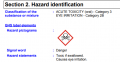
I am looking to buy a tacky flux for bga reballing for laptop work and was between the Amteck nc-559-v2 and the CircuitWorks No-Clean Tacky Flux. The latter one has a skull and bones label and states that is a cancerogenic and toxic if ingested. The former has just a single warning label. I do have ventilation but i am still a bit worried about inhaling any fumes. Would there be any significant difference between the two as far as performance and isn't the CircuitWorks one a bit too dangerous for use?

thanks
 

dl324

Joined Mar 30, 2015
18,359

Thread Starter

henzstotter

Joined Sep 28, 2019
3
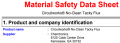
I have read the MSDS and i thought that the circuitworks one doesn't specify whether inhalation is inhaling the fumes or just smelling the product(?). If ingesting it is toxic, wouldn't inhaling its fumes also be toxic? I know i am worrying about these things too much but that's just me in general.
By the way here is amtec's msds: https://www.tme.eu/Document/736594f5fa6ebf0293e9ce5b5accd649/SDS-Tacky Flux-008 (All) - rev 4.pdf and circuitworks' SDS: https://www.chemtronics.com/content/msds/CW8500_Canada (CA) SDS HPR 2015_English (US).pdf

thanks for the replies
 

jpanhalt

Joined Jan 18, 2008
11,087
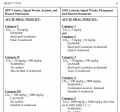
I think what you are seeing in those two msds/sds sheets is a difference in standards. OPP is the American standard (40CFR156 : https://www.govinfo.gov/app/details/CFR-2011-title40-vol24/CFR-2011-title40-vol24-part156 ). GHS is an international standard from the UN ("Globally Harmonized Sustem").

Here's a comparison: https://www.epa.gov/sites/production/files/2015-09/documents/ghscriteria-summary.pdf

Note:
2. OPP only uses one symbol, the skull and crossbones for severe acute toxicity and
products containing methanol at concentrations above 4%. The GHS uses symbols for all
hazard classes (but not all categories).

Source: loc.cit. (above)
upload_2019-9-29_5-56-57.png

The main difference is that the Chemtronics is "no clean" and does not have rosin (a natural product). Amteck flux is rosin based. The point I was trying to make was to compare performance for the job needed, not any minimal difference in toxicity if eaten. I pay little attention to warning symbols on consumer stuff, such as Proposition 65 warnings, because they generally do not relate to infrequent use. And, of course, what is for sale in the US tends to be self-regulated by our tort system. Out of the consumer realm, of course, there is some really dangerous stuff that one needs to take precautions with.

As for no-clean versus rosin flux, development of no-clean was promoted to reduce the environmental impact of the solutions used to clean PCB's by manufacturers. It is also used to allow easier testing during assembly (Google history of no-clean fluxes). Initially, simply more dilute rosin was used. I believe rosin is still preferred by many when the soldered board can be cleaned.

As for your dilemma, if you can clean after reballing, I would use the rosin-based flux.
 

Thread Starter

henzstotter

Joined Sep 28, 2019
3
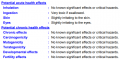
I read the datasheets a bit more and found that the products have no ACUTE INHALATION TOXICITY warning and therefore there is no apparent fume, vapor danger. Right? I guess i'll be buying the amtech anyway.

toxic.PNG t2.PNG
 

jpanhalt

Joined Jan 18, 2008
11,087
I read the datasheets a bit more and found that the products have no ACUTE INHALATION TOXICITY warning and therefore there is no apparent fume, vapor danger. Right? I guess i'll be buying the amtech anyway.

View attachment 187084 View attachment 187085
I think that is accurate. Remember, acute toxicity does not include allergic reactions. Many things can cause severe allergic reactions, like peanuts, but that is not included in calculating the the acute toxicity dose for peanuts.

I use Kester SP-44 paste flux for leaded solder. There are probably many equivalent rosin-based fluxes.
 
Top