SUCCESS STORIES: Repair thermoelectric cooler

MisterBill2

Joined Jan 23, 2018
28,615
It would make more sense for the fan to blow the air at the cooler so that the cooler can absorb the heat from it.
These coolers work by pumping heat out of the enclosure, they do not "generate cold". "COLD" is the absence of heat, not a presence of coldness.
 
Big thanks to everyone who contributed to this thread.

The symptoms on mine were:
  • The display would turn on and display the current temperature
  • All buttons in the front worked
  • The fans never started and the temperature never went down

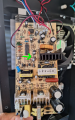
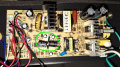
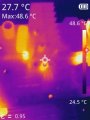
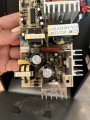
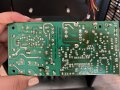
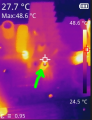
I fixed it by swapping out C8, after reading about it here and also noticing that it was running warm on my thermal camera:
1690564576511.png

Removed C8:
1690564473077.png

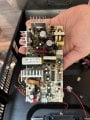
Replaced it with two 100uF, 25V capacitors in series (that's what I had on hand):
1690564667484.png

Since this is just a free fix for a friend, it's good enough.

Thanks again!
 

Attachments

melona7

Joined Aug 15, 2023
3
Hello. Looking for some advice on where to start for fixing my AKDY WC0021 dual-zoned wine cooler, which has two MP-012 PCB140411k2 110 boards. The temp display in the front works fine for both zones, but the top zone stopped cooling and the fan is unobstructed but not running. The board has a red and green light, but neither of them are on (not even blinking) on the top board.

I don't have any tools - only a soldering iron - and I didn't see anything obviously burnt out, so I was going to just start by replacing the C8, 47μF 25V., but not sure which one that is on my board nor if that is an advice applicable to my board (it was listed as the #1 culprit for FX-101 or FX-102).

I don't really have too much understanding of circuit boards, other than doing some assembly as a child on a radio kit, so any help would be appreciated!

IMG_5911 Large.jpeg

IMG_5907 Large.jpeg

IMG_5909 Large.jpeg
 

Thread Starter

wayneh

Joined Sep 9, 2010
18,184
I made the mistake of not noting the fan direction before removal. Do the interior fans (cold side of the TEC) blow air away from the TEC and towards the refrigerator door, or the inverse? I'm fairly confident it blows away from the TEC, just wanted to confirm.
I've spoken to heat exchanger design companies and the consensus is that the fan should blow air INTO a heat sink, not suck it out. It's pretty simple, really, the heat exchange medium is air and it becomes more effective at moving heat when it's at a higher pressure and thus density. With a fan blowing into a sink, there will be more mass of air passing the fins - by virtue of the air being at a little higher pressure - and thus greater transfer of heat to the air. The blades of the fan can't get quite as much purchase in "suck" mode. This causes them to spin a bit faster, which lessens the effect of being in the "wrong" direction.

You will NOT find agreement on this amongst the CPU cooling crowd. There are anecdotal reports of fan orientation being better in suck mode. I'm skeptical, but I'm also pretty sure it can and does happen under the right circumstances.
 

Thread Starter

wayneh

Joined Sep 9, 2010
18,184
I don't have any tools - only a soldering iron - and I didn't see anything obviously burnt out, so I was going to just start by replacing the C8, 47μF 25V., but not sure which one that is on my board nor if that is an advice applicable to my board (it was listed as the #1 culprit for FX-101 or FX-102).
If it were me, I'd go ahead and replace ALL the electrolytic caps, at least all the smaller, cheaper ones. Your biggest cost is going to be shipping, so ordering a few more caps adds nothing. Of course it takes more time.

But unless you have the chops to desolder and reinstall the caps, replacing the entire board might be a better option. They're not expensive, if you can find them, and are a bargain compared to the time you'll spend sourcing parts, ordering, and soldering.
 

pjs32000

Joined May 17, 2023
13
I've spoken to heat exchanger design companies and the consensus is that the fan should blow air INTO a heat sink, not suck it out. It's pretty simple, really, the heat exchange medium is air and it becomes more effective at moving heat when it's at a higher pressure and thus density. With a fan blowing into a sink, there will be more mass of air passing the fins - by virtue of the air being at a little higher pressure - and thus greater transfer of heat to the air. The blades of the fan can't get quite as much purchase in "suck" mode. This causes them to spin a bit faster, which lessens the effect of being in the "wrong" direction.

You will NOT find agreement on this amongst the CPU cooling crowd. There are anecdotal reports of fan orientation being better in suck mode. I'm skeptical, but I'm also pretty sure it can and does happen under the right circumstances.
Appreciate the follow up, love the "suck mode" terminology, lol. I had installed it in suck mode because of the way the wires were routed I thought that might be how it came originally, the wires seemed to route better in that orientation. It did still cool properly since in either direction the fan will circulate the air, but perhaps it's not working as efficiently as it could. I might still have it consistent with the original design, the OEM may have gotten it wrong from the start.

I'm not motivated to disassemble it for such a minor thing as I don't think it will cause issues, especially since once the chamber is cooled maintaining the set temperature is probably negligible in terms of efficiency as compared to the initial cooling from room temperature where the fans and Peltier are working harder. If I ever have to take it apart in the future for something I may flip it around.
 

melona7

Joined Aug 15, 2023
3
If it were me, I'd go ahead and replace ALL the electrolytic caps, at least all the smaller, cheaper ones. Your biggest cost is going to be shipping, so ordering a few more caps adds nothing. Of course it takes more time.

But unless you have the chops to desolder and reinstall the caps, replacing the entire board might be a better option. They're not expensive, if you can find them, and are a bargain compared to the time you'll spend sourcing parts, ordering, and soldering.
Awesome, thanks! I'm pretty sure I can desolder and reinstall them all, and may try that route just for fun. If that doesn't work, then I will go with the board replacement route.

This is a 220 board and I need a 110... but it lists 2 other board numbers (PCB120102K3 and PCB171027k1). Are any of these boards interchangeable? Mine is PCB140411k2, but if I find the other two boards, I can use those instead?
 

MrAl

Joined Jun 17, 2014
13,904
Appreciate the follow up, love the "suck mode" terminology, lol. I had installed it in suck mode because of the way the wires were routed I thought that might be how it came originally, the wires seemed to route better in that orientation. It did still cool properly since in either direction the fan will circulate the air, but perhaps it's not working as efficiently as it could. I might still have it consistent with the original design, the OEM may have gotten it wrong from the start.

I'm not motivated to disassemble it for such a minor thing as I don't think it will cause issues, especially since once the chamber is cooled maintaining the set temperature is probably negligible in terms of efficiency as compared to the initial cooling from room temperature where the fans and Peltier are working harder. If I ever have to take it apart in the future for something I may flip it around.
Hi,

Suck mode may work when there are no air spaces between the heatsink and fan, but keep in mind that when the fan has to suck instead of blow the heat from the heatsink gets to the fan motor as well as the bearings. In blow mode, the fan never gets the heat from the heatsink.
 
New contributor here looking for some help om a 48 bottle Wine Enthusiast Dual Zone wine cooler. Cleaned it and checked fans, heat sinks and control boards and all fans run, both inside pushing air over the Peltier block and the 4 fans on the back blowing across the heat sinks that exhaust to the sides of the cabinet. PCB show both solid green and red lights, no burned or loose components but after 24 hours one side has the temp down to 68 deg and the other side down to 74 with a room ambient temp of 76 deg. I can feel the hot air exhausting out the sides, the zone at 68 shows exhaust temp of 102, the other side is 88.

Questions: -
1. What are the fans speeds supposed to be of the 2 internal fans and the 4 fans at the back?
2. Could a bad C8 be causing a low voltage on the fans therefore slower that needed to be effective at pushing the air?
3. I haven't checked voltage yet on the 2 fan daughter boards yet but will do that tomorrow when I take it apart again.
4. Anything else I may be overlooking?

Thanks in advance for any suggestions or tips?

BTW anyone tried going to a higher CFM fan for the 4 rear fans? Seems stock is supposed to be 1800 -2300 RPM for about 10-15CFM. There are other 80mm fans that do 3000 RPM for 32CFM.
 

WBahn

Joined Mar 31, 2012
33,357
I've spoken to heat exchanger design companies and the consensus is that the fan should blow air INTO a heat sink, not suck it out. It's pretty simple, really, the heat exchange medium is air and it becomes more effective at moving heat when it's at a higher pressure and thus density. With a fan blowing into a sink, there will be more mass of air passing the fins - by virtue of the air being at a little higher pressure - and thus greater transfer of heat to the air. The blades of the fan can't get quite as much purchase in "suck" mode. This causes them to spin a bit faster, which lessens the effect of being in the "wrong" direction.

You will NOT find agreement on this amongst the CPU cooling crowd. There are anecdotal reports of fan orientation being better in suck mode. I'm skeptical, but I'm also pretty sure it can and does happen under the right circumstances.
I think blowing is likely better, but not for the reason given. But rather when blowing you have a much higher mass flow rate of air due to the entrained air being pulled in from the sides at the exit of the fan. The air in the stream is actually at a lower pressure than the air surrounding it, which causes it to pull in that air and entrain it.
 

MrAl

Joined Jun 17, 2014
13,904
I think blowing is likely better, but not for the reason given. But rather when blowing you have a much higher mass flow rate of air due to the entrained air being pulled in from the sides at the exit of the fan. The air in the stream is actually at a lower pressure than the air surrounding it, which causes it to pull in that air and entrain it.
Hi,

I think you need louver to get that effect. That would be to stop air from spreading outward which is what happens when a fan blows out into a room with nothing but the fan itself. In a fan/heatsink arrangement, if the fan is very close to the heatsink maybe we would see that effect but i cant be sure about that. If the heatsink is further away from the fan, the air flow will be reduced. That means there may be an ideal distance without adding louvers.
Maybe you have some more information about this.
 

MrAl

Joined Jun 17, 2014
13,904
New contributor here looking for some help om a 48 bottle Wine Enthusiast Dual Zone wine cooler. Cleaned it and checked fans, heat sinks and control boards and all fans run, both inside pushing air over the Peltier block and the 4 fans on the back blowing across the heat sinks that exhaust to the sides of the cabinet. PCB show both solid green and red lights, no burned or loose components but after 24 hours one side has the temp down to 68 deg and the other side down to 74 with a room ambient temp of 76 deg. I can feel the hot air exhausting out the sides, the zone at 68 shows exhaust temp of 102, the other side is 88.

Questions: -
1. What are the fans speeds supposed to be of the 2 internal fans and the 4 fans at the back?
2. Could a bad C8 be causing a low voltage on the fans therefore slower that needed to be effective at pushing the air?
3. I haven't checked voltage yet on the 2 fan daughter boards yet but will do that tomorrow when I take it apart again.
4. Anything else I may be overlooking?

Thanks in advance for any suggestions or tips?

BTW anyone tried going to a higher CFM fan for the 4 rear fans? Seems stock is supposed to be 1800 -2300 RPM for about 10-15CFM. There are other 80mm fans that do 3000 RPM for 32CFM.
Hello there,

In general the faster the blade turns the more air is expelled in any given time, and the cooling effect is increased as the air moves faster across the heatsink. There is probably some limit but i doubt it comes into play with a regular fan and heatsink.

You can get some fans that are relatively small yet still blow an enormous amount of air. You can usually tell by the current rating and the voltage of the fan. For example, a 12v fan that draws 0.2 amps will blow a lot less air than a 12v fan that draws 2 amps, although a 24v fan that draws 1 amp may be roughly the same as the one that is 12v and draws 2 amps. This is obviously related to the wattage rating of the fan.
 

WBahn

Joined Mar 31, 2012
33,357
Hi,

I think you need louver to get that effect. That would be to stop air from spreading outward which is what happens when a fan blows out into a room with nothing but the fan itself. In a fan/heatsink arrangement, if the fan is very close to the heatsink maybe we would see that effect but i cant be sure about that. If the heatsink is further away from the fan, the air flow will be reduced. That means there may be an ideal distance without adding louvers.
Maybe you have some more information about this.
Louvers are not necessary. To see the effect, take a large trash bag (say, 33 gal) and try to blow it up like a balloon by putting your mouth directly against a small opening formed by wrapping your fingers around the mouth of the bag. Blow and blow and blow and after dozens of breaths you have barely made any headway. Now hold the bag about a foot away from your mouth with both hands keeping the mouth of the bag open about a foot and a half and blow just once, getting as much speed as you can by making just a small opening in your mouth, straight down the center of the bag. In a single breath, the bag can be filled nearly full.

This is why hot air balloons don't set the fan right at the balloon opening, but rather set it back something like ten feet from the opening. Almost all the air going into the balloon did NOT go through the fan, but rather got entrained from the sides into the low pressure airstream coming out of the fan.
 

MisterBill2

Joined Jan 23, 2018
28,615
Prior to making changes with the fans, the first thing to do is feel the heat sinks and see if they feel similar temperatures. That is fairly simple and it can provide a useful clue about the electrical functioning of the system. Actually measuring the systems will provide an even better evaluation, but that is more complex and takes much longer, as well as requiring a suitable thermometer.
But the very first question of mine is this: Did the cooler ever work correctly?? If yes, then diagnostics are in order, if not, it may just be an inferior design or construction.
Many years ago I purchased new a cooler that never met my cooling needs, which were to keep food cool enough to delay spoilage while traveling and camping. (with mains power available at the campsite). The cooler depended exclusively on convection, having no provisions for fans. The results were rather dismal and the cooling was never adequate.
 

Thread Starter

wayneh

Joined Sep 9, 2010
18,184
2. Could a bad C8 be causing a low voltage on the fans therefore slower that needed to be effective at pushing the air?
Not sure about the fan speed but I don believe a failed capacitor could prevent adequate power to the cooling units themselves. You might try unplugging the TECs and observe what happens then. Do the fans turn faster and move more air? Do the LEDs look different?

In other words, the primary failure mode of these power supplies is so well documented that I'd assume that's the problem unless/until convincing data comes in to suggest a different problem.
 

MisterBill2

Joined Jan 23, 2018
28,615
Measuring the voltage across the Peltier diode device should give a reasonable bit of information about the operation effectiveness, and be simpler than measuring the current.
 
Measuring the voltage across the Peltier diode device should give a reasonable bit of information about the operation effectiveness, and be simpler than measuring the current.
There isn't really a Peltier type construction in these wine coolers... The fans inside the cooler aren't even in direct contact with the internal heatsink....
 
Thread starter Similar threads Forum Replies Date
SgtWookie Off-Topic 4
Top