Ssr circuit to run a fridge compressor

Thread Starter

stryped

Joined Sep 17, 2023
136
The diodes will be in parallel, shunting the 5 volt DC input connection of the SSR. Use diodes rated for at least one amp steady current. The zener diode needs to point to the positive terminal of the SSR 5 volt control input, the other diode points in the opposite direction. thus there will be a positive 5 volts across the input to the SSR when the condenser fan is powered. You can use a resistor instead of the motor, and a direct mains connection instead of the controller module, for experimenting. That will assure that any mistakes will be far less costly.
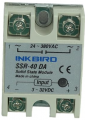
The SSR will be one rated for controlling a 10 amp load, using a 5 volt DC control signal.
Any way to see a drawing to understand how to wire?
 

Thread Starter

stryped

Joined Sep 17, 2023
136
I plan to use an ac to ac Ssr to control an electromechanical relay on a refrigerator compressor. I would like to use an MOV across the output terminals of the Ssr to protect it from over voltage (and possible kickback from the electromechanical relay?)
Can anyone suggest the size/ parameters I need? Also, is it possible there is a type that would fail open instead of closed?
Any help is appreciated! This is the specifications of the compressor:
1/3- hp
Displacement 7.7cc
From 100W to 671W Cooling (341 to 2289BTUs) ASHRAE : 220w - 751btu
110-120VAC
50-60Hz
R134A
Low Back Pressure
PTC Starting Relay
Motor Type CSIR
Includes electricals, grommets and sleeves.

Cooling capacity ASHRAE
-35C (-31F) - 100w - 341btu
-30C(-22F) - 130w - 444btu
-25C(-13F) - 169w - 577btu
-23.3C(-10F) - 220w - 751btu - input power 165W - current 2.40 Amps - COP 1.35 - EER 4.55
-20C(-4F) - 275w - 938btu
-15C(5F) - 344w - 1174btu
-10C(10F) - 430w - 1467btu
-5C(23F) - 537w - 1832btu
0C(32F) - 671w - 2289btu
Certification : UL Underwriters Laboratories Recognized
Nationally Recognized Testing Laboratories (NRTL)
 

Thread Starter

stryped

Joined Sep 17, 2023
136
I plan to use an ac to ac Ssr to control an electromechanical relay on a refrigerator compressor. I would like to use an MOV across the output terminals of the Ssr to protect it from over voltage (and possible kickback from the electromechanical relay?)
Can anyone suggest the size/ parameters I need? Also, is it possible there is a type that would fail open instead of closed?
Any help is appreciated! This is the specifications of the compressor:
1/3- hp
Displacement 7.7cc
From 100W to 671W Cooling (341 to 2289BTUs) ASHRAE : 220w - 751btu
110-120VAC
50-60Hz
R134A
Low Back Pressure
PTC Starting Relay
Motor Type CSIR
Includes electricals, grommets and sleeves.

Cooling capacity ASHRAE
-35C (-31F) - 100w - 341btu
-30C(-22F) - 130w - 444btu
-25C(-13F) - 169w - 577btu
-23.3C(-10F) - 220w - 751btu - input power 165W - current 2.40 Amps - COP 1.35 - EER 4.55
-20C(-4F) - 275w - 938btu
-15C(5F) - 344w - 1174btu
-10C(10F) - 430w - 1467btu
-5C(23F) - 537w - 1832btu
0C(32F) - 671w - 2289btu
Certification : UL Underwriters Laboratories Recognized
Nationally Recognized Testing Laboratories (NRTL)
Also, it has 15 locked rotor amps.
 

MisterBill2

Joined Jan 23, 2018
27,504
You do not need protection for the SSR controlling the motor because the SSR is not an instant switch-off device. Mostly they switch off as the current passes through zero, so there is no means for the fast change in current. Mechanical contacts are quite different.
 

Janis59

Joined Aug 21, 2017
1,894
I am very suspicious is that thingy an SSR at all. I have worked some years at evenings after University job at the refrigerator workshop to have a more coins, thus I have repaired sth about 10 000 refrigerators and NONE had the SSR at that place.

The standard is one-phase motor (however very rarely may stay three-phase motor) with resistive ignition bobbin. Thus find the three feet combination those having the largest resistance and middle of them will be "GND". Those having the tiniest resistance from GND will be "Work" bobbin and having the largest resistance will be "ignition" bobbin. May make a measurement of current while fridge is working. If it is larger than specified on the label, means critical wear and rotor is tearing into stator. No way other as throw it out. Sorry, but nowadays motors are built with SINGLE bearing keeping rotor from one side only. Therefore the tiniest wear and this problem happens.

Other defect - the startup relay is not releasing the ignition wire when normal rpm are gained. Reason a) wear rotor against stator b) abnormal work cycle, for example excessive amount of refrigerant or contrary, too smalla amount of refrigerant, what resulting in turn/stop timing not as must be 1:3 but say 3:1 - and then motor is overheating thus resulting into partial short-circuit between winding turns. c) happened partial short-circuit in windings thus the compressor must be changed d) defect in itself the ignition relay. These relays may happen be ElMag type - when few turns in series with work coil shows short circuit (about 5...10 Amps) then ferrite pulls in the contacture what switches on the ignition coil, therefore motor starts to revolve and current diminishes to 0.5...2.5 Amps and contacture releases. The most widespread defect is melted thermoplast coil former. Dumb engineers - the plastics are bit more wider choices as thermoplasts alone!

Second way to organize it is very similarly made contacture what are driven by electrostrictive ceramics. Most often that piezoelement is gone to become exploaded. Just buy it and shift, it cost between 2 and 5 Eur only. Must be chosen according work current, nor smaller nor larger currents arent acceptable.

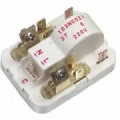
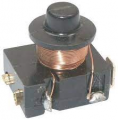
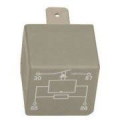
Here how looks the ignition relay 1695991981584.png 1695991993314.png 1695992023928.png1695992037365.png

So, if the defect is amount of freon (or other refrigerant), the most best way to add is to add the small lip pipe to entry pipe into compressor - to solder it in (propane plus oxigen torch and copper-phosphorus solderwire) the few inches capillary pipe piece from other fridge (capillary column stays wound down the cooler box over the silicagel filter bubble). Why? Because to close the 6 mm pipe demands the special instrument, but 0.6 mm hole in 3 mm capillary tube may be stopped with ordinary pliers and then soldered with phosphorus wire for longevity. How to know right amount? May use the weight specified on the label of fridge but that is very approximate criterion.

The best is after vacuumizing the system screw over the capillary the screw/strictive T-nipple over thread and rubber inside connector added to gas bottle with refridgerant. Need to note it is very bad idea to take off the bottle the gaseous fraction - it makes selective evaporation of single mixture consistuent, therefore the bottle must be mount with head down thus the liquid fraction is used whole as it is and via the same narrow capillary pipe to filling not be too fast. In middle of T-nipple must be connected manometer.

Gas tap must be opened when motor is revolving and then pressure at which refridgerant boils at -24 C is the best place when bottle tap must be closed. From memory I remember only now prohibited R-12, for it the best value was +0.25 atm where 0.15 atm was harsh underfilling and 0.4 atm was hard overfilling. For Your refridgerant must exist the tables or producer datasheet etc. All the re-filling takes about 5 minutes.
 

MisterBill2

Joined Jan 23, 2018
27,504
I am very suspicious is that thingy an SSR at all. I have worked some years at evenings after University job at the refrigerator workshop to have a more coins, thus I have repaired sth about 10 000 refrigerators and NONE had the SSR at that place.

The standard is one-phase motor (however very rarely may stay three-phase motor) with resistive ignition bobbin. Thus find the three feet combination those having the largest resistance and middle of them will be "GND". Those having the tiniest resistance from GND will be "Work" bobbin and having the largest resistance will be "ignition" bobbin. May make a measurement of current while fridge is working. If it is larger than specified on the label, means critical wear and rotor is tearing into stator. No way other as throw it out. Sorry, but nowadays motors are built with SINGLE bearing keeping rotor from one side only. Therefore the tiniest wear and this problem happens.

Other defect - the startup relay is not releasing the ignition wire when normal rpm are gained. Reason a) wear rotor against stator b) abnormal work cycle, for example excessive amount of refrigerant or contrary, too smalla amount of refrigerant, what resulting in turn/stop timing not as must be 1:3 but say 3:1 - and then motor is overheating thus resulting into partial short-circuit between winding turns. c) happened partial short-circuit in windings thus the compressor must be changed d) defect in itself the ignition relay. These relays may happen be ElMag type - when few turns in series with work coil shows short circuit (about 5...10 Amps) then ferrite pulls in the contacture what switches on the ignition coil, therefore motor starts to revolve and current diminishes to 0.5...2.5 Amps and contacture releases. The most widespread defect is melted thermoplast coil former. Dumb engineers - the plastics are bit more wider choices as thermoplasts alone!

Second way to organize it is very similarly made contacture what are driven by electrostrictive ceramics. Most often that piezoelement is gone to become exploaded. Just buy it and shift, it cost between 2 and 5 Eur only. Must be chosen according work current, nor smaller nor larger currents arent acceptable.

Here how looks the ignition relay View attachment 303757 View attachment 303758 View attachment 303759View attachment 303760

So, if the defect is amount of freon (or other refrigerant), the most best way to add is to add the small lip pipe to entry pipe into compressor - to solder it in (propane plus oxigen torch and copper-phosphorus solderwire) the few inches capillary pipe piece from other fridge (capillary column stays wound down the cooler box over the silicagel filter bubble). Why? Because to close the 6 mm pipe demands the special instrument, but 0.6 mm hole in 3 mm capillary tube may be stopped with ordinary pliers and then soldered with phosphorus wire for longevity. How to know right amount? May use the weight specified on the label of fridge but that is very approximate criterion.

The best is after vacuumizing the system screw over the capillary the screw/strictive T-nipple over thread and rubber inside connector added to gas bottle with refridgerant. Need to note it is very bad idea to take off the bottle the gaseous fraction - it makes selective evaporation of single mixture consistuent, therefore the bottle must be mount with head down thus the liquid fraction is used whole as it is and via the same narrow capillary pipe to filling not be too fast. In middle of T-nipple must be connected manometer.

Gas tap must be opened when motor is revolving and then pressure at which refridgerant boils at -24 C is the best place when bottle tap must be closed. From memory I remember only now prohibited R-12, for it the best value was +0.25 atm where 0.15 atm was harsh underfilling and 0.4 atm was hard overfilling. For Your refridgerant must exist the tables or producer datasheet etc. All the re-filling takes about 5 minutes.
@Janis: Go back and read the start, and then look at the attached service sheet. The compressor motor is a BLDC Brushless DC motor, driven by an inverter circuit board assembly.
The reason for the solid state relay is that the electronic control computer assembly does not claim to be able to supply enough current to operate a power relay adequate for the replacement compressor. So an SSR that draws very little AC power is needed to control the compressor power relay.
THE TS Knows what they are talking about! It is not a case of a failed starter relay, it is a case of a failed motor driver circuit module.
 
Top