Squarewave vs. squarewave on digital and analog 'scopes

nsaspook

Joined Aug 27, 2009
16,347
That does not explain two things:
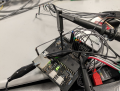
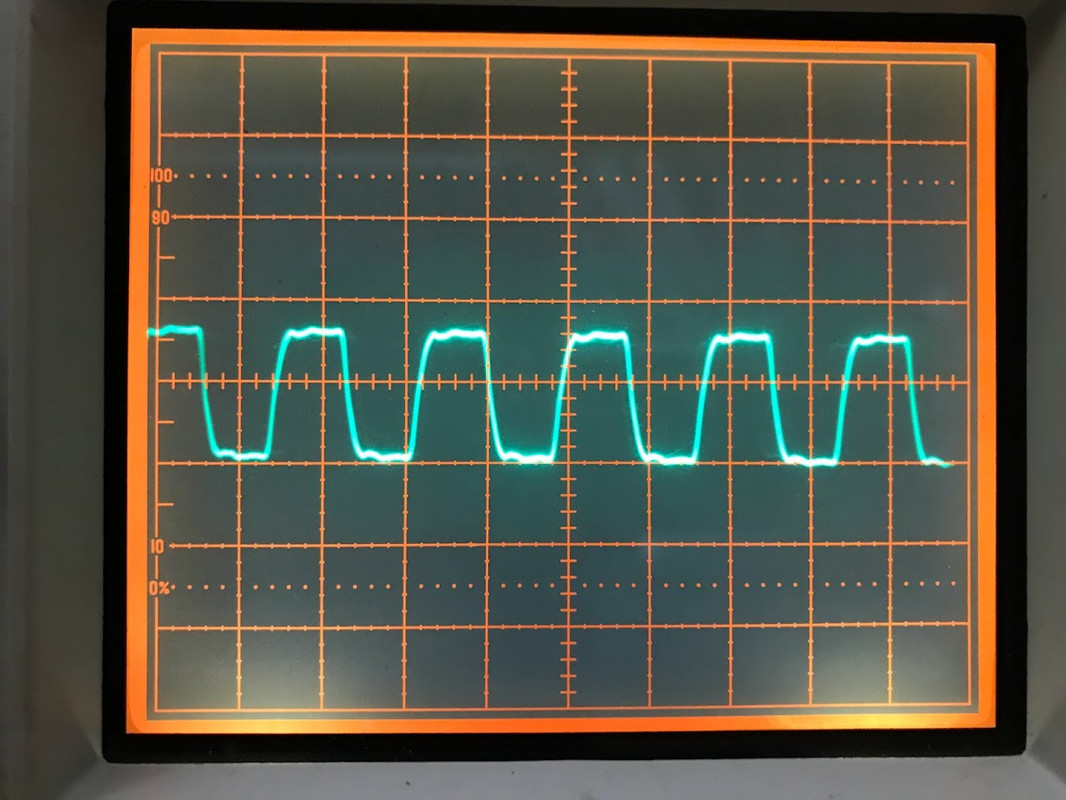
1)the 27 Mhz osc is connected as directly and as cleanly as possible, see photo ; 2) Why the Tek 465 is relatively quiet.
Maybe I missed it but where is the RF choke and bypass filter for the power pins on the chip and maybe a decent ground plane that shields RF energy. Maybe the TEK signal display is the one that's bad.
 

Ya’akov

Joined Jan 27, 2019
10,259
Maybe I missed it but where is the RF choke and bypass filter for the power pins on the chip and maybe a decent ground plane that shields RF energy. Maybe the TEK signal display is the one that's bad.
I am having a hard time following the troubleshooting technique being employed here which seems to be trying to prove the Siglent is bad rather than get at the root cause—but that could certainly be just me and the relative inattention to the thread.

My initial reaction was something like (relatively) poor transient response of the TEK, possibly related to the higher effective sample rate of the DSO which is a higher bandwidth scope. I wonder what the calibrator waveform looks like...
 

WBahn

Joined Mar 31, 2012
32,933
So, to recap, you use a signal from a DDS and you get pretty clean signals, but the 200 MHz scope shows more high-frequency artifacts than the 100 MHz scope. Not surprising.

Then you have an oscillator without proper bypassing and long power leads and the signal is considerably worse on both scopes, but again the 200 MHz scope shows more high-frequency artifacts than the 100 MHz scope. Again, not too surprising.

Many scopes have a bandwidth limit option. Have you looked at the waveform with that turned on? The limit might be too aggressive to be useful.
 

MrChips

Joined Oct 2, 2009
34,887
Another thing that can be easily missed is the ground connection on the probe clip.
The connecting wire on the ground clip is intentionally very flexible and is often broken close to the ends where it flexes a lot.
If this wire is broken then you have no ground connection at the probe. This will definitely manifest as ringing in HF signals.
 

Ya’akov

Joined Jan 27, 2019
10,259
Another thing that can be easily missed is the ground connection on the probe clip.
The connecting wire on the ground clip is intentionally very flexible and is often broken close to the ends where it flexes a lot.
If this wire is broken then you have no ground connection at the probe. This will definitely manifest as ringing in HF signals.
Probing with the probe tip ground clip can eliminate issues related to faulty ground leads or the parasitics of the ground connection. Did the TS ever try reconfiguring the group and making more regular and rigorous connections to the DUT? I can’t find that anywhere.
 

nsaspook

Joined Aug 27, 2009
16,347
I linked to a TEK scope ground app-note here: https://forum.allaboutcircuits.com/...digital-and-analog-scopes.194489/post-1830265

Most of us know it's the nature of the beast to have scope probe artifacts. If you want perfect digital signals on a display then use a MSO to see the digital version of what that analog signal looks like.
1687802310696.png
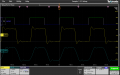
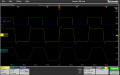
Tek039.pngTek040.png

Small changes in grounds or signal wires can easily cause measurement artifacts unless you use something like ground springs and bare probe points to reduce loops.
1687802755098.png
 

Thread Starter

13hm13

Joined Jun 1, 2023
75
Most of us know it's the nature of the beast to have scope probe artifacts. If you want perfect digital signals on a display then use a MSO to see the digital version of what that analog signal looks like.
I don't know what your pictured setup is. I don't have anything like it in my kit.
And ,finally, It looks nothing like my experiment so apples and oranges.
I think you have the same Siglent. As i suggested earlier, perhaps set up a simple apples-to-apples. Get a 4-pin osc. Power it with a simple bench-top PSU (3-4vdc), probe with your SDS 1202. I showed a pic of this earlier.
This will help me determine whether I have a defective SDS 1202 on my end.
 

nsaspook

Joined Aug 27, 2009
16,347
I don't know what your pictured setup is. I don't have anything like it in my kit.
And ,finally, It looks nothing like my experiment so apples and oranges.
I think you have the same Siglent. As i suggested earlier, perhaps set up a simple apples-to-apples. Get a 4-pin osc. Power it with a simple bench-top PSU (3-4vdc), probe with your SDS 1202. I showed a pic of this earlier.
This will help me determine whether I have a defective SDS 1202 on my end.
It's apples and oranges to you but likely not to most of us.
1687804984012.png
I've got bins of many types of 4-pin osc modules but I don't see the point of duplicating your poor test conditions measurements. IMO what you are seeing is normal for the equipment you have and the measurement setup you have.
 

Thread Starter

13hm13

Joined Jun 1, 2023
75
It's apples and oranges to you but likely not to most of us.
View attachment 297139
I've got bins of many types of 4-pin osc modules but I don't see the point of duplicating your poor test conditions measurements. IMO what you are seeing is normal for the equipment you have and the measurement setup you have.
So why even post such a reply if you refuse to prove your remark? : "duplicating your poor test conditions measurements. " requires that you/anyone replicate my experiment. Show your work, as I have. Do not armchair speculate or theorize on potential flaws.
 

WBahn

Joined Mar 31, 2012
32,933
So why even post such a reply if you refuse to prove your remark? : "duplicating your poor test conditions measurements. " requires that you/anyone replicate my experiment. Show your work, as I have. Do not armchair speculate or theorize on potential flaws.
It's not up to others to duplicate your work. You came here with a problem and several of us have pointed out deficiencies in your test setup, based on combined experience that measures in the decades, perhaps over a century. You are certainly free to ignore the advice, but the prudent thing to do would be to see if the advice you've received addresses the problem you are having.
 

Thread Starter

13hm13

Joined Jun 1, 2023
75
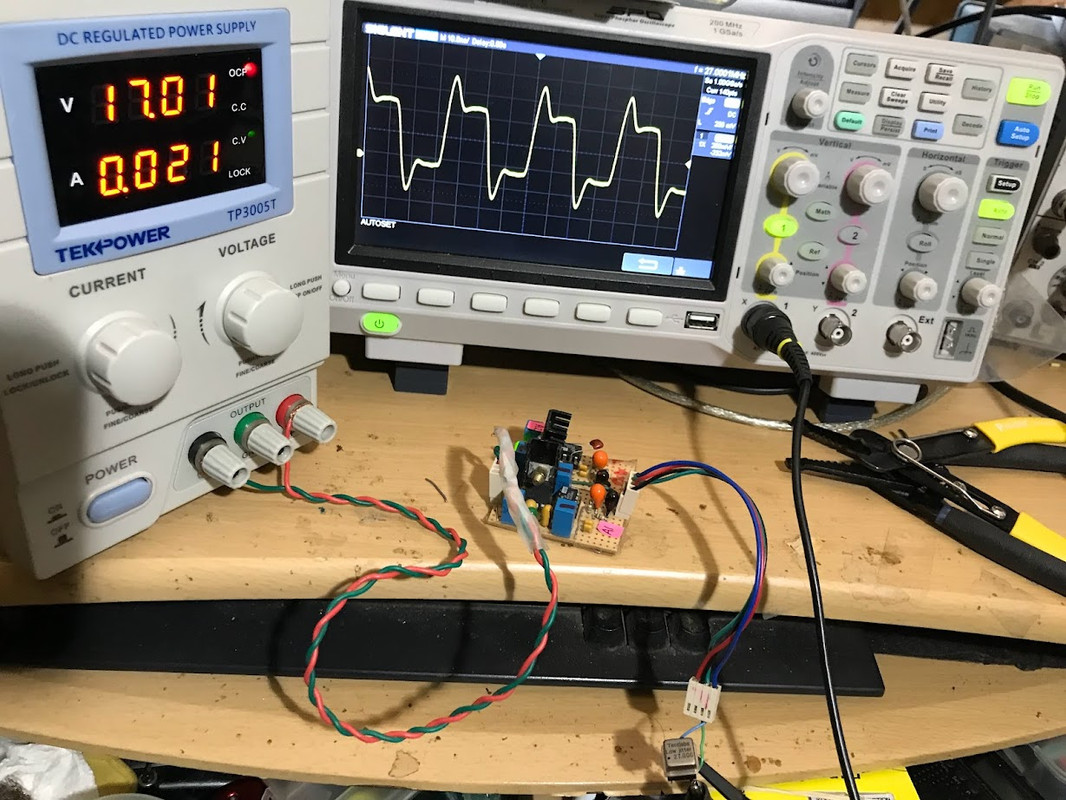
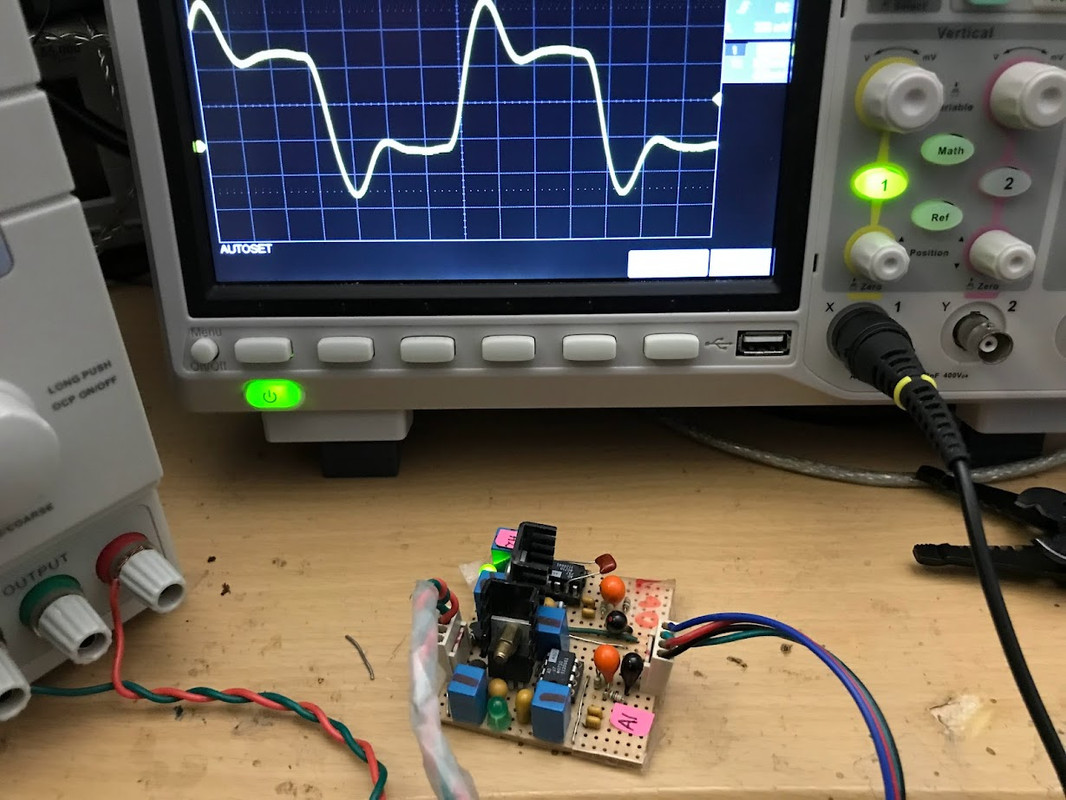
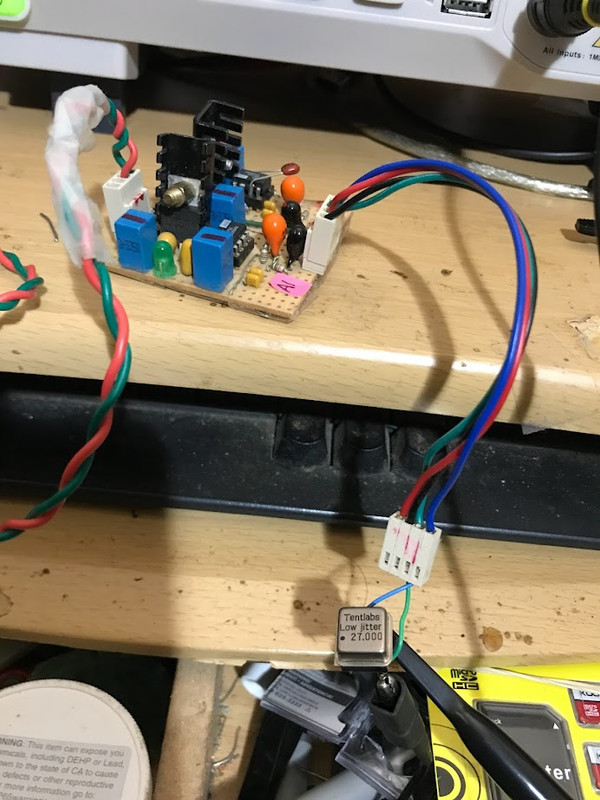
Showing my work ...

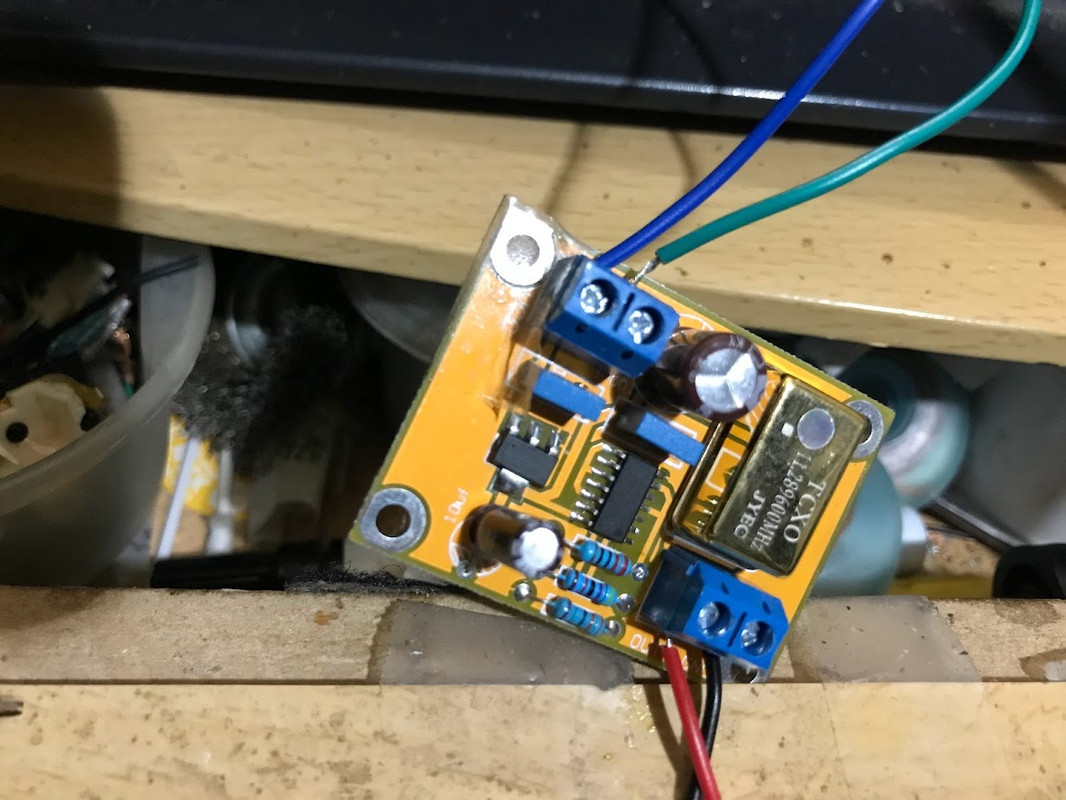
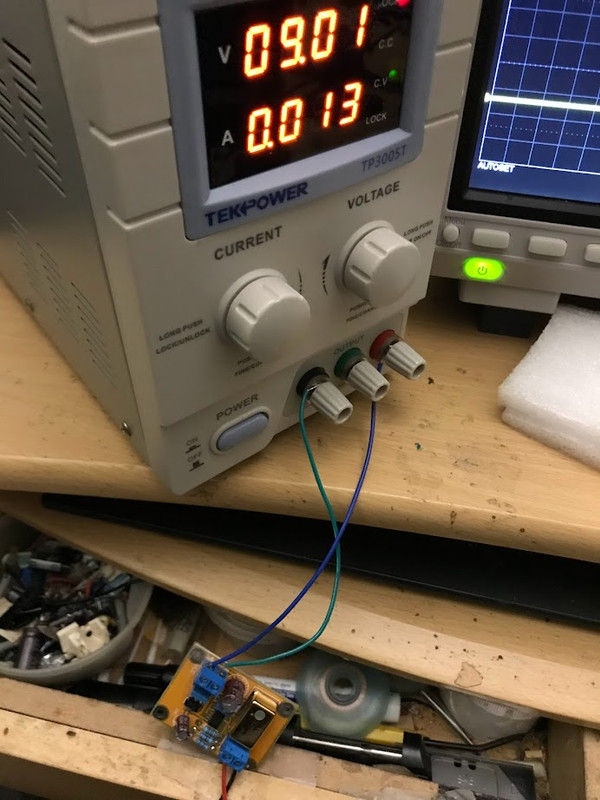
I used a very clean, high-fidelity regulator that I built; it outputs very low-noise 5Vdc (the optimal input voltage is 15-18vdc, as shown). It is meant for audiophile use.
I connected the 27Mhz osc to this clean reg, and soldered in very short power leads as close as possible to the 4 pins.

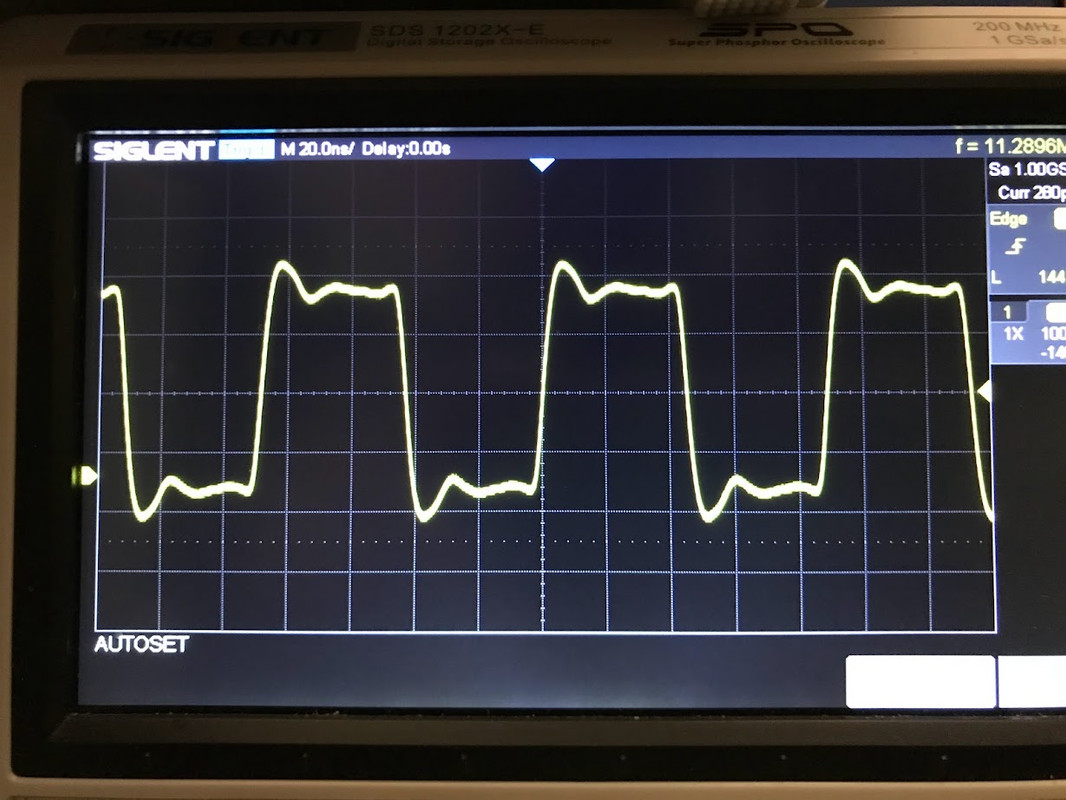
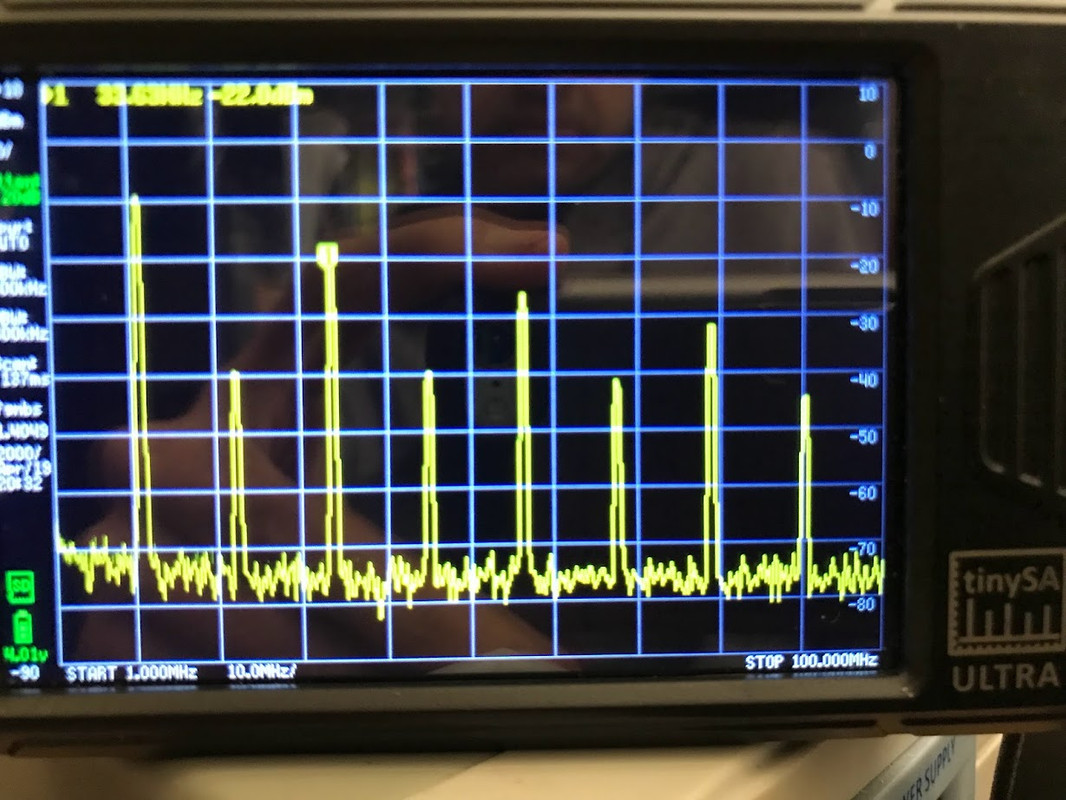
Results ...


WBahn

Joined Mar 31, 2012
32,933
Showing my work ...

I used a very clean, high-fidelity regulator that I built; it outputs very low-noise 5Vdc (the optimal input voltage is 15-18vdc, as shown). It is meant for audiophile use.
I connected the 27Mhz osc to this clean reg, and soldered in very short power leads as close as possible to the 4 pins.
And without the, per the manufacturer's recommendation, "an additional RF choke ("bead"). This will prevent radio interference, and should be used in combination with a decoupling capacitor closely positioned to the XO module."
 

Ya’akov

Joined Jan 27, 2019
10,259
The new setup seems to have eliminated some parasitics and so the ringing. But the under- and over-shoot is still there. Could be capacitance of the probe ground lead which is still a big piece of wire between the output and the scope.

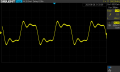
Figure A is an 11 MHz square wave from a Siglent SDG 2042-X function generator connected to a Siglent SDS 1204X-E oscilloscope using a 50Ω, 1M BNC to minigrabber cable, clip to the scope’s suppled probe set to 10x.

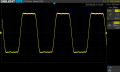
Figure B is the same source connected using a BNC to scope probe adapter directly from the output connector.

clipped.png
figure A

plugged.png
figure B
The Siglent scopes are quite good and the distortion is not happening in the scope.
 

Thread Starter

13hm13

Joined Jun 1, 2023
75
Figure A is an 11 MHz square wave from a Siglent SDG 2042-X function generator connected to a Siglent SDS 1204X-E oscilloscope using a 50Ω, 1M BNC to minigrabber cable, clip to the scope’s suppled probe set to 10x.
Hmmm ... I did post about 50-ohm impedance in the other thread. Not sure it's related. And, IAC, a non-issue for the analog Tek.
But if my Siglent is painting the real picture of the DIGITAL world, then that is more concerning because I'm dealing with digital lines of the audio D/A processor.
And without the, per the manufacturer's recommendation, "an additional RF choke ("bead"). This will prevent radio interference, and should be used in combination with a decoupling capacitor closely positioned to the XO module."
The other osc. I used (11.288, based on the sn74vlvc1g04 datasheet ckt) did employ a ferrite bead -- look carefully at those photos. In fact, I experimented with all sorts of bypass and decoupling caps and R's to tamp down that spike. No go.
 

schmitt trigger

Joined Jul 12, 2010
2,111
May I suggest that, if you have an acquaintance who owns a good scope, that you borrow it and see what the waveform looks like?

Then you have a 3rd option.
 
Last edited:

Thread Starter

13hm13

Joined Jun 1, 2023
75
May I suggest that, if you have an acquaintance who owns a good scope, that you borrow it and see what the waveform looks like?

Then you have a 3rd option.
Very interesting reply, and I gave you a LIKE because of what you IMPLY.
The experiment it a very easy one; surely the tens of thousands of AAC forum'ers reading this thread have all the IDENTICAL supplies and test equip in their immediate lab or workshop to verify my results. And, yet, it is suggested that I borrow a good scope from an outside acquaintance. If I did just that, and posted similar findings from an outside acquaintance, why should anyone here inside the ACC universe accept those exterior results?
I think I understand, though: "Arena", the Gorn and that episode (18), followed by "Tomorrow Is Yesterday" (episode 19).
Very interesting.
 

Ya’akov

Joined Jan 27, 2019
10,259
Very interesting reply, and I gave you a LIKE because of what you IMPLY.
The experiment it a very easy one; surely the tens of thousands of AAC forum'ers reading this thread have all the IDENTICAL supplies and test equip in their immediate lab or workshop to verify my results. And, yet, it is suggested that I borrow a good scope from an outside acquaintance. If I did just that, and posted similar findings from an outside acquaintance, why should anyone here inside the ACC universe accept those exterior results?
I think I understand, though: "Arena", the Gorn and that episode (18), followed by "Tomorrow Is Yesterday" (episode 19).
Very interesting.
Frankly, this is nonsense. You have been holding yourself as an outsider and consistently ignoring attempts to help. You complain about people not being simpatico yet you make yourself very abrasive.

My reproduction of the important bits of your set up was to show you that parasitics alone can and will cause the problems you are seeing by leading to an impedance mismatch. That one instrument is much more sensitive to the mismatch than the other is an interesting observation but a distraction.

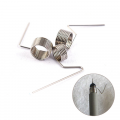
If you want to use the Siglent—a much more a capable instrument—then you have to match the impedance. The first step in this is to eliminate the (relatively) large loop of wire that is the probes ground. Your probes came with a little spring that can be placed over the ground contact when the minigrabber hook of the probe is removed.

It makes the distance from probe to ground very small. You need to manually probe with that ground connection before you can say you tried the solution that everyone has been offering you.

The distortion you are seeing: overshoot, undershoot, and ringing are classic signs of impedance mismatch and poor probing. If you won’t even try to test the theory that it is the source of the problem, what more can be expected from us? The suggestion that you borrow a scope was made because it might show you that it is exactly the same on the other scope and so you‘ll take the advice being offered.

You can’t expect us to go against our own experience because you don’t like the answers being given. Nor should you expect us, due to some vague obligation, do what you think is a good troubleshooting step on our own time when you won’t do what we think will provide the solution, first.
 
Top