[SOLVED] Capacitor to extend LED blink length

Thread Starter

mike__MecE

Joined Feb 20, 2022
92
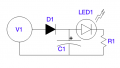
The LED receives a 10ms pulse (48VDC) and I would like to use a capacitor to extend the length it is illuminated.

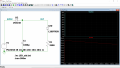
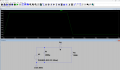
Why is the simulation is not responding to the capacitor, regardless of the capacitance. Is there an issue with the schematic? Thanks
1733971912942.png
 

AnalogKid

Joined Aug 1, 2013
12,043
Is there an issue with the schematic?
Yes.

When V1 goes to 0 V at the end of the pulse, it still is a zero-ohm impedance. It discharges C1 just as fast as it charged it. A simple solution is in post #2.

Note that I am *not* an LTS wiz; others around here can confirm this or not.

ak
 
Last edited:

MrChips

Joined Oct 2, 2009
34,626
If you expected to see the blink duration dependent on the capacitor value and the load current, remove the load (LED and series resistor) and run the simulation showing just the capacitor voltage.
 

Tonyr1084

Joined Sep 24, 2015
9,744
Hi,
Insert diode in series with the V1, anode to V1. 1N5401 or similar
When V1 goes to 0 V at the end of the pulse, it still is a zero-ohm impedance. It discharges C1 just as fast as it charged it. A simple solution is in post #2.
What these two learned experts are saying is this:
Screenshot 2024-12-12 at 7.55.29 AM.png
In this configuration C1 will charge with the pulsed voltage. When the pulse is gone C1 will continue to illuminate LED1 until its voltage drops below some threshold and will drop at some rate. If you're flashing the LED faster than C1 discharges the LED will never go out.
 

Tonyr1084

Joined Sep 24, 2015
9,744
Here's a short YT video I made some time ago answering another AAC user's question. It's not the same circuit, but it demonstrates how a cap can charge fast, then, depending on the current draw, how long the LED will remain illuminated. In the video you can see the diminishing light.
 

Thread Starter

mike__MecE

Joined Feb 20, 2022
92
Yes.

When V1 goes to 0 V at the end of the pulse, it still is a zero-ohm impedance. It discharges C1 just as fast as it charged it. A simple solution is in post #2.

Note that I am *not* an LTS wiz; others around here can confirm this or not.

ak
Thank you! I didn't realize the capacitor would discharge through the voltage source.
 

Thread Starter

mike__MecE

Joined Feb 20, 2022
92
If you expected to see the blink duration dependent on the capacitor value and the load current, remove the load (LED and series resistor) and run the simulation showing just the capacitor voltage.
The solution was to add a diode to stop the capacitor from discharging via the voltage source. Thanks for your input!
 

Thread Starter

mike__MecE

Joined Feb 20, 2022
92
What these two learned experts are saying is this:
View attachment 337796
In this configuration C1 will charge with the pulsed voltage. When the pulse is gone C1 will continue to illuminate LED1 until its voltage drops below some threshold and will drop at some rate. If you're flashing the LED faster than C1 discharges the LED will never go out.
Thank you, it's working. I understand the need for the diode in the simulation.
 

Thread Starter

mike__MecE

Joined Feb 20, 2022
92
Here's a short YT video I made some time ago answering another AAC user's question. It's not the same circuit, but it demonstrates how a cap can charge fast, then, depending on the current draw, how long the LED will remain illuminated. In the video you can see the diminishing light.
That's great, thanks! My circuit uses a pulse from a MOSFET which is protected from reverse current so I did not immediately think of the need for the diode as others suggested for the simulation.
 
Top