Facebook
 Google
 GitHub
 Linkedin
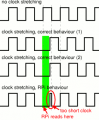
I have looked into I2C specifications, but there are few questions that I don't understand clearly. I understand clock stretching is a mechanism in the I2C communication protocol where a target device (slave)temporarily pauses communication by holding the clock line (SCL) low until it is ready to continue.
However, I'm interested to know about its practical applications. What are the scenarios or situations where clock stretching is commonly applied? Additionally, are there any limitations or drawbacks associated with clock stretching in I2C communication, and in what situations is it not recommended or not supported?
However, I'm interested to know about its practical applications. What are the scenarios or situations where clock stretching is commonly applied? Additionally, are there any limitations or drawbacks associated with clock stretching in I2C communication, and in what situations is it not recommended or not supported?
Attachments
-
733.4 KB Views: 3