Solenoid help please!

Thread Starter

Cyrus Mingley

Joined Apr 18, 2020
92
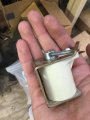
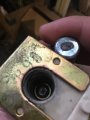
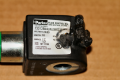
Trying to find the voltage of this solenoid. I’m new to the solenoid scene and I’m wondering if I’m going to explode this when I plug it into the wall. I’m guessing it’ll be fine but just want to be sure. I ran 12v through it from a power supply and the rod stuck to the bottom, but it had to get pretty close before I would feel any attraction. I wanted to use it in a locking mechanism but I’m not sure if it has enough draw range to do it, it would need to lift a rod about an inch off the ground, maybe less.image.jpgimage.jpg
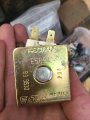
image.jpg
 

Reloadron

Joined Jan 15, 2015
7,889
The amount of travel is called the stroke. That coil looks more like it was for a valve body than a linear solenoid and it sounds like linear solenoid is what you want. Linear solenoids come in two primary flavors of pull and push and sounds like you want a pull type. They have a Force normally expressed in ounces unless of course you are across the pond from me in which case grams or similar units of measure. The coils also may be rated for intermittent or full time. For example 1 min On and 3 min Off would be a 25% duty cycle, always on or indefinitely On would be a 100% duty cycle. Lastly as mentioned the coils come in AC and DC and bad things can happen when DC is applied to an AC coil.

Cooked Coil.png

According to those who installed it, "it worked fine for a little while. :)

Hard to tell what the working voltage of your coil is it could be 12, 24, 120 or 240 volts or any odd voltage in between. I would just consider getting a solenoid designed around what you need. We don't even know if what you have is an AC or DC coil.

Just My Take
Ron
 

Thread Starter

Cyrus Mingley

Joined Apr 18, 2020
92
The amount of travel is called the stroke. That coil looks more like it was for a valve body than a linear solenoid and it sounds like linear solenoid is what you want. Linear solenoids come in two primary flavors of pull and push and sounds like you want a pull type. They have a Force normally expressed in ounces unless of course you are across the pond from me in which case grams or similar units of measure. The coils also may be rated for intermittent or full time. For example 1 min On and 3 min Off would be a 25% duty cycle, always on or indefinitely On would be a 100% duty cycle. Lastly as mentioned the coils come in AC and DC and bad things can happen when DC is applied to an AC coil.

View attachment 205809

According to those who installed it, "it worked fine for a little while. :)

Hard to tell what the working voltage of your coil is it could be 12, 24, 120 or 240 volts or any odd voltage in between. I would just consider getting a solenoid designed around what you need. We don't even know if what you have is an AC or DC coil.

Just My Take
Ron
Great, thanks for the answer. What’s the difference between mine and a linear pull one?
 

Reloadron

Joined Jan 15, 2015
7,889
Great, thanks for the answer. What’s the difference between mine and a linear pull one?
The one you show looks more like a valve body coil, like the toasted one I pictured. I may be totally wrong on that. I can tell you this much. An AC coil solenoid will work on DC but for example if I take a coil designed for 24 VAC 60 Hz and apply 24 VDC you see the results above but if I apply a lesser DC voltage it will work, how much less is a matter of experimentation. Now if you do have a pull type solenoid and it has enough force you could slowly work up the coil voltage and see how it behaves. On another note and this comes with no guarantee you can measure the DC Resistance of the coil you have. An AC coil designed for 120 VAC about the size of what you have is typically a 10 watt coil having a DC resistance of about 110 ~ 120 Ohms. The best method would be to slowly increase the voltage to the coil and see how it behaves.

Ron
 
Top