Facebook
 Google
 GitHub
 Linkedin
Hello, I'm new here.
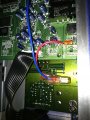
So I had a lose potentiometer on an electronic keyboard. Opened it up and got inside to the PCB of the potentiometer. The problem was it was wiggling and would mis dial by just touching it. So I figured I've soldered in the past, so I will just remove the current solder and solder it back afresh. This is when hell started to progressively break lose. First, the solder wouldn't melt from a 60 watt iron, except when pressing firmly against the joints, in which case only a spot right around the solder iron tip would melt, so there was no way of cleaning up the joint. What ended up happening was I placed the iron tip on top of a potentiometer's 'leg' on the opposite side of the pcb, and held some solder next to the leg, thinking the heat would transfer to it, but it didn't really, or it did but the solder curled up rather than flow. Thought I did everything right by tinning the iron tip and dipping it in flux, albeit some weird type of flux.
I should mention that I had some flux, but it was hard as dry clay. The flux package reads "service welding flux". I figured flux is flux so I dipped the iron into it quickly, but am not sure if it did any good. It kinda looks like it got burnt on the iron. And solder wouldn't wrap around the tip, but not sure if that's because the solder wire was quiet thin, or if it's because of a wrong flux.
So even after holding the iron on top of the leg for several seconds the solder next to the leg still wouldn't melt (forget about the old solder that seemed like something else), so I resorted to holding solder right to the iron tip hoping it would at least melt it and add some to the old joint. Well, the joints now look rough and spiky, for one. For some reason nothing I did would melt the solder smoothly. Cleaning the iron with a sponge didn't seem to help any, nothing I did helped, which is one part of the problem.
So I thought that the PCB has some coating, which flux would normally remove, and had read that you can use some solvent to remove it. I sprayed some 70% isopropyl around the potentiometer's joints, which seemed to leave permanent spots on the PCB. I then went back to brute soldering just to get the darn potentiometer to at least stick. The final solder joint looked very ugly, but the joints did seem to hold the unit in place. So the isopropyl seemed to have done more harm than good since the old joints still wouldn't melt except right beneath the iron tip after a few seconds of pressing it against the joint.
That is when the next problem happens. When I switched on the keyboard to test, the potentiometer didn't wiggle but didn't work at all.
So my questions are:
1. What kind of solder is that factory made kind? Is it the solder or a coating that prevents it from melting? How would you remove it?
2. Since the potentiometer stopped working, would you say it's because the isopropyl damaged the circuit lines, or do you think the potentiometer got overheated when I held the iron on its legs for up to 10 seconds straight (since the heat just wouldn't transfer to and melt the solder), and that that is the more likely reason for it not working?
I hope for the latter, since replacing a potentiometer is cheaper than a new PCB, if I can just figure out how to remove the old solder joints.
So I had a lose potentiometer on an electronic keyboard. Opened it up and got inside to the PCB of the potentiometer. The problem was it was wiggling and would mis dial by just touching it. So I figured I've soldered in the past, so I will just remove the current solder and solder it back afresh. This is when hell started to progressively break lose. First, the solder wouldn't melt from a 60 watt iron, except when pressing firmly against the joints, in which case only a spot right around the solder iron tip would melt, so there was no way of cleaning up the joint. What ended up happening was I placed the iron tip on top of a potentiometer's 'leg' on the opposite side of the pcb, and held some solder next to the leg, thinking the heat would transfer to it, but it didn't really, or it did but the solder curled up rather than flow. Thought I did everything right by tinning the iron tip and dipping it in flux, albeit some weird type of flux.
I should mention that I had some flux, but it was hard as dry clay. The flux package reads "service welding flux". I figured flux is flux so I dipped the iron into it quickly, but am not sure if it did any good. It kinda looks like it got burnt on the iron. And solder wouldn't wrap around the tip, but not sure if that's because the solder wire was quiet thin, or if it's because of a wrong flux.
So even after holding the iron on top of the leg for several seconds the solder next to the leg still wouldn't melt (forget about the old solder that seemed like something else), so I resorted to holding solder right to the iron tip hoping it would at least melt it and add some to the old joint. Well, the joints now look rough and spiky, for one. For some reason nothing I did would melt the solder smoothly. Cleaning the iron with a sponge didn't seem to help any, nothing I did helped, which is one part of the problem.
So I thought that the PCB has some coating, which flux would normally remove, and had read that you can use some solvent to remove it. I sprayed some 70% isopropyl around the potentiometer's joints, which seemed to leave permanent spots on the PCB. I then went back to brute soldering just to get the darn potentiometer to at least stick. The final solder joint looked very ugly, but the joints did seem to hold the unit in place. So the isopropyl seemed to have done more harm than good since the old joints still wouldn't melt except right beneath the iron tip after a few seconds of pressing it against the joint.
That is when the next problem happens. When I switched on the keyboard to test, the potentiometer didn't wiggle but didn't work at all.
So my questions are:
1. What kind of solder is that factory made kind? Is it the solder or a coating that prevents it from melting? How would you remove it?
2. Since the potentiometer stopped working, would you say it's because the isopropyl damaged the circuit lines, or do you think the potentiometer got overheated when I held the iron on its legs for up to 10 seconds straight (since the heat just wouldn't transfer to and melt the solder), and that that is the more likely reason for it not working?
I hope for the latter, since replacing a potentiometer is cheaper than a new PCB, if I can just figure out how to remove the old solder joints.

 Flux used for welding will probably not work. Not all flux is the same. You need flux for electrical soldering.