Soft start for split phase motor

Thread Starter

Kinoton

Joined Jan 20, 2014
52
Hi,
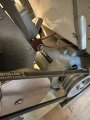
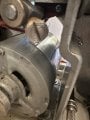
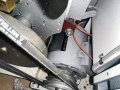
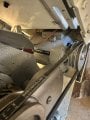
I am working on a cinema projector from the 1970’s and have discovered that it uses a 60w 4pole split phase motor . It has a very abrupt start which is not great for the film. I wanted to introduce a soft start . My original thought was to use a VFD but I don’t think this is ok with this type of motor . I don’t think There is the physical space to install a 3ph motor so I was wondering if there is another solution, a variac isn’t practical . Any help or advice will be very gratefully received ! Jon
 

Attachments

LowQCab

Joined Nov 6, 2012
5,101
An Incandescent-Light-Bulb, and a Timer Circuit, should do the trick, with the least expense and fuss.

The Wattage of the Bulb, and the Delay-Time to shorting-out the Bulb, will determine the character of the start.

You can also replace one or both Pulleys with custom-made, and very-heavy, "Flywheel-Pulleys".
.
.
.
 

Thread Starter

Kinoton

Joined Jan 20, 2014
52
An Incandescent-Light-Bulb, and a Timer Circuit, should do the trick, with the least expense and fuss.

The Wattage of the Bulb, and the Delay-Time to shorting-out the Bulb, will determine the character of the start.

You can also replace one or both Pulleys with custom-made, and very-heavy, "Flywheel-Pulleys".
.
.
.
That sounds interesting. How would that be wired into the mains input to the projector ? Thanks for your reply
 

LowQCab

Joined Nov 6, 2012
5,101
A Porcelain, or plastic, Incandescent-Bulb-Holder would be wired in series with the Motor,
then a SSR ( Solid-State-Relay ), would be connected across the terminals of the Bulb-Holder,
then a simple 555-Timer, or a generic industrial-Timer-Module, would switch the SSR "On",
shorting-out the Light-Bulb, and therefore, supplying full-Power to the Motor after 0.XX seconds.

The Wattage-rating of the Bulb will determine how hard the initial "kick" will be to the Motor.

This is assuming the standard ~120-Volt supply Voltage which You did not specify.

For ~208-Volts, 2-Bulb-Holders may be placed in series, using 2-Bulbs to accommodate the higher Voltage..

The Bulb(s) will not get hot in the few seconds that they will be "On", and they should last indefinitely.

I haven't bought a Light-Bulb in many years.
They may be hard to find now, but I would hazard a guess and say that
WWGrainger-Supply, or McMaster-Carr, will have what You need.
I would start-out with a 150-Watt-Bulb, but You may need to go to a 200-Watt-Bulb to get
adequate start-up-Torque.
You didn't state the Voltage and Amperage required by the Motor, so I'm having to make a wild guess.
If more "kick" is needed, 2-Light-Sockets can be wired in parallel and 2 or 4 Bulbs employed.
.
.
.
 

schmitt trigger

Joined Jul 12, 2010
2,056
LowQ’s advice is an excellent one.
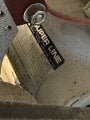
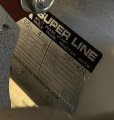
But you need to provide a close up, focused photo of the motor’s plate, to accurately suggest an adequate wattage incandescent bulb.
Right now it is too blurry to distinguish the characteristics.
 

schmitt trigger

Joined Jul 12, 2010
2,056
The motor is small enough for you to use a 60 or 75 watt bulb.
You could substitute that with a resistor, but large wattage resistors would cost several times the cost of a light bulb.
You can still purchase incandescent lamps in the website 1000bulbs dot com
 

Thread Starter

Kinoton

Joined Jan 20, 2014
52
The motor is small enough for you to use a 60 or 75 watt bulb.
You could substitute that with a resistor, but large wattage resistors would cost several times the cost of a light bulb.
You can still purchase incandescent lamps in the website 1000bulbs dot com
I’m thinking a resistor might be better as I could put it all in an enclosure. Do you know what value resistor I would need ? Would there be any risk to the starting winding in the motor with a slow start ? Thanks for your advice , it’s very much appreciated.
 

crutschow

Joined Mar 14, 2008
38,423
I’m thinking a resistor might be better as I could put it all in an enclosure.
The inrush current limiter I suggested is basically a negative temperature-coefficient variable resistor, with a high resistance when cold, and a much smaller resistance at its operating temperature.
It's the only device you would need.
 

Thread Starter

Kinoton

Joined Jan 20, 2014
52
I can see you needing it in the common for each winding, IOW in the common termination connected for each winding.
Thanks for that , so just to clarify , the inrush current limiters I’ve seen have three wires , one of them needs to go to both the starter and main winding common terminal?
 

LowQCab

Joined Nov 6, 2012
5,101
No matter what You use to soften the Motor start-up, it must be adjustable for Current and Time.
There's no "magic-box" that's going to automatically do exactly what You want.
Light-Bulbs are relatively cheap, and buildable, and serviceable, by any Handyman.
The learning-curve is very easy, and the Timer can be replaced by a single Push-Button.

Also, it has no been established that there is an actual problem that needs to be fixed.
How many Films have actually been destroyed ?, or do You just worry that they "might-be" damaged ?

35mm Projectors are usually pretty well designed,
I've maintained one and run it many times without incident.
.
.
.
 

Thread Starter

Kinoton

Joined Jan 20, 2014
52
Hi ,

unfortunately this particular model is known for its ‘snatch’ start up , a regrettable design feature in an otherwise well thought out projector . All my other machines are three ph vfd controlled . Breaking a film on start up isn’t a huge problem but the damage polyester film stock could do to the machine/motor is a concern as it’s incredibly strong and the problem is it won’t break ! not a problem with old acetate movies. Thanks to everyone for their very helpful suggestions , I’ve got a much better idea now of how to proceed . Best wishes
 

crutschow

Joined Mar 14, 2008
38,423
If you want to try an inrush current-limiter, you might start with this one.
It initially has a 60Ω resistance and drops to <2Ω at the motor operating current.
It has a thermal time-constant of 9 seconds, so should give a nice slow motor start.
 
Last edited:

Thread Starter

Kinoton

Joined Jan 20, 2014
52
If you want to try an inrush current-limiter, you might start with this one.
It initially has a 60Ω resistance and drops to <2Ω at the motor operating current.
It has a thermal time-constant of 9 seconds, so should give a nice slow motor start.
Thanks Crutschow , that sounds good . Would the the less than 2ohm at op current affect the motor running speed in any way , as any drop in speed would be noticeable in the audio reproduction. I was looking for a slow start of around 2 seconds , so I just need to find one with a thermal time constant of 2seconds ? Thanks again
 

awright

Joined Jul 5, 2006
92
The inrush current limiter I suggested is basically a negative temperature-coefficient variable resistor, with a high resistance when cold, and a much smaller resistance at its operating temperature.
It's the only device you would need.
Actually an incandescent light bulb has LOW resistance when cold and a much HIGHER resistance when hot, i.e., a positive temperature coefficient. I just measured the cold resistance of a 15 watt 120 volt bulb in my junk box at 80 ohms. To be 15 watts at operating temperature its hot resistance would have to be around 960 ohms. I think a n incandescent bulb is the opposite of what Kinoton needs to soften his startup.
I think a negative tempco inrush limiter would be better.
 

LowQCab

Joined Nov 6, 2012
5,101
When using an Incandescent-Light-Bulb,
the Bulb should be shorted-out by a "delay-On" Timer, ( calibrated in 1/10ths of a Second ),
or,
it can be manually inserted into the Motor-Circuit with a Normally-Closed-Push-Button wired across the Bulb.

The disadvantage of the manual-Push-Button version is it requires 2-hands to "soft-start" the Projector.
The Timer version requires a mechanical-Relay, or a SSR ( Solid-State-Relay ).

An Inrush-Current-Limiting-Resistor can be treated in the same manner as the Bulb version,
but they act quite differently, which could be good or bad.

The initial "kick" from the cold Filament of the Bulb
may be required to initially overcome Motor and Driveline Friction and Inertia.
The relatively slow "ramp-up" of the ICL Resistor may actually be too slow.

ICL-Resistors are not rated in "Time" per-se, but a graph of Time vs Motor-Current vs ICL-Initial-Resistance,
so the Time will vary depending upon the actual Load created by Friction, Inertia, and other Motor behavior,
so the ramp-up Time would require quite a bit of experimentation with different part-numbers.

Only Time and experimentation will tell the full story.
.
.
.
 
Top