SMPS - 54% efficiency

Thread Starter

Electro Kid

Joined Apr 23, 2017
18
Hello,

I have a little problem.
I chose a project for school which I've managed to get working...
All the circuitry before and after the SMPS is working properly,
my only concern here is, that the SMPS is only working at an efficiency of around 54%.

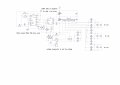
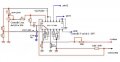
I've added my schematics for the SMPS part... feel free to use it even though its not good :)

I would apriciate any help or suggestions to bump the efficiency higher!

Ps. I can't feel any heat beeing generated... so where am I loosing all the power???
PPs. Sorry for my bad english, it's a bit rusty even though I'm 19...
125339[/ATTACH]
 

Attachments

Andrei Suditu

Joined Jul 27, 2016
52
Hello,

I have a little problem.
I chose a project for school which I've managed to get working...
All the circuitry before and after the SMPS is working properly,
my only concern here is, that the SMPS is only working at an efficiency of around 54%.


I've added my schematics for the SMPS part... feel free to use it even though its not good :)

I would apriciate any help or suggestions to bump the efficiency higher!

Ps. I can't feel any heat beeing generated... so where am I loosing all the power???
PPs. Sorry for my bad english, it's a bit rusty even though I'm 19...
125339[/ATTACH]
I don't know what to say.The snow circuit I have toyed with was a Ave tiny powered boost converter.I remember experienceing similar problems. Try looking at the inductor and the tl's working frequency.Use a scope if possible if not load the schematic in a simulator.It may help.
 

Andrei Suditu

Joined Jul 27, 2016
52
PS:Sorry for the typing.Using the phone.Any way you should also remember that a mosfet gate is capacitive.Check if the mosfet switch as they should at that frequency.
 

Thread Starter

Electro Kid

Joined Apr 23, 2017
18
well i have salvaged the core from an old atx which was working at aroung 50khz i baked the transformer, rewound it and glued it back together. So far... i have only poked at the tl494 and a bit further with the scope i got a pretty sweet looking frequency from that chip.The waveform at the gates of the mosfets the look alright too , not perfect but you'll never get a perfect squarewave...
 

DickCappels

Joined Aug 21, 2008
10,661
You feel things getting hot and wonder where the power is going. It is going into the things that are getting hot.

Other ideas
Some kind of current probe could show you whether the transformer is saturating or not.

Check the drain voltages and see whether the MOSFETS are saturating or coming out of saturation early.
 

Dodgydave

Joined Jun 22, 2012
11,395
Your circuit is wrong, the feedback transistor Q1 is just shorting out R5 to ground, there should be a pullup on this pin Dt, and you can omit Q1 and feed it directly with the opto-coupler output.

Personally i would ditch the comparator and use a Tl431 zener on the output to the opto-coupler led, and it should be fed back to the Tl494 on the comparator pins, 15,16 also your VR4, should using the Ref pin14, as a stable source, not the supply.

Examples here....

http://www.files.k5nwa.com/tpp/ApplicationNotes/TL494 circuit examples - page 2.htm
 
Last edited:

MrAl

Joined Jun 17, 2014
13,704
Hello,

I have a little problem.
I chose a project for school which I've managed to get working...
All the circuitry before and after the SMPS is working properly,
my only concern here is, that the SMPS is only working at an efficiency of around 54%.

I've added my schematics for the SMPS part... feel free to use it even though its not good :)

I would apriciate any help or suggestions to bump the efficiency higher!

Ps. I can't feel any heat beeing generated... so where am I loosing all the power???
PPs. Sorry for my bad english, it's a bit rusty even though I'm 19...
125339[/ATTACH]
Hi,

As Dick said, you look for the heat and investigate. You look at waveforms and try to match theory up with what you are measuring. When you see a small difference between theory and what you measure you let that go for a while, but when you see a large difference you have to change something.

Unfortunately there are a lot of things that can cause bad efficiency. 70kHz isnt that great of an idea to start with. The various parts have to work well at that frequency and that's not exactly easy to do.

The mosfets have to switch fast. This is a lot more important at 70kHz than at 20kHz for example.
The transformer has to have low loss in itself. The wire used in the transformer cant be too thick or else you have probably designed it based on tha current and wire thickness alone and so losses due to skin effect are setting in. The max wire size for this frequency is probably going to be around 24 gauge. If you go over that size that means that you have designed it for higher current and that means more loss. If you need higher current then using two or more strands of #24 AWG would be better.
Then there is also primary DC current to think about. If you end up with a net DC current that could eat up power and also cause core saturation.

But again first look and see if you can find what is heating up and see if you can figure it out from there.
It might take a lot of work to figure it out, or you may get lucky.
 

Thread Starter

Electro Kid

Joined Apr 23, 2017
18
DickCappels, i can't feel anthing getting hot thats why i cant understand where all the power is being dissapated...
only the mosfets are getting a bit worm but nothing near that powerfactor im missing...


DodgyDave, if DT is shorted to ground it will disable the chip and set both mosfets to low so that is working properly...
thanks to the link but when i use the comperator on the tl494 it will set the output to 0 thus one of the mosfets is during that time on, thats why ive come up with that solution, to turn both of the mosfest off.

MrAl, the only thing that is heating up is the mosfet but not even near those powerlosses!
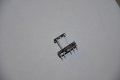
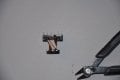
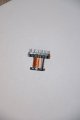
i'll attach pics of the transformer ive woun.
 

Thread Starter

Electro Kid

Joined Apr 23, 2017
18
first i have one half of the primary, then 3 secondarys, 1 feedback and the second half of the primary
transformer ratio 1:1:1:2:1 the feedback has double the windings to get a more precise voltage reading

there is a thin layer of isolation between every winding even though its not necsesarry at that voltage
 

Attachments

Dodgydave

Joined Jun 22, 2012
11,395
DickCappels, i can't feel anthing getting hot thats why i cant understand where all the power is being dissapated...
only the mosfets are getting a bit worm but nothing near that powerfactor im missing...


DodgyDave, if DT is shorted to ground it will disable the chip and set both mosfets to low so that is working properly...
thanks to the link but when i use the comperator on the tl494 it will set the output to 0 thus one of the mosfets is during that time on, thats why ive come up with that solution, to turn both of the mosfest off.

MrAl, the only thing that is heating up is the mosfet but not even near those powerlosses!
i'll attach pics of the transformer ive woun.
That's why you have 54% efficiency, cos you're using chip in the wrong way!!!
 

ian field

Joined Oct 27, 2012
6,536
Your circuit is wrong, the feedback transistor Q1 is just shorting out R5 to ground, there should be a pullup on this pin Dt, and you can omit Q1 and feed it directly with the opto-coupler output.

Personally i would ditch the comparator and use a Tl431 zener on the output to the opto-coupler led, and it should be fed back to the Tl494 on the comparator pins, 15,16 also your VR4, should using the Ref pin14, as a stable source, not the supply.
The TL431 *IS* a comparator - with its built in 2.5V reference its far easier to use.

The TL431 can sink up to 100mA - the comparator the TS used may not be that capable.
 
Top