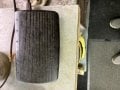
I have a very small tool cutter & grinder and it is ran from a sewing machine motor but I need to get rid of the foot control because my legs shake and it’s like revving the car can anyone please give me some advice.
Dell
OK, that is quite possible, BUT it has nothing to do with converting the motor into a potentiometer, or even a variable resistor. So the post title is grossly misleading.
What you should have asked for was "Help with speed control for a small sewing machine motor". THAT would have gained a large number of useful responses.
So the first question is about how you would operate the control. AND, do you want a foot control for ON/OFF to leave your hands free? OR will an ordinary switch like a light switch be OK for on/off control??
The very simple, cheap, and easy scheme is a light dimmer control, either knob or toggle.
I am guessing that the foot control is connected with a two wire cable that runs to the motor, and that the mains power also has a cable that runs to the motor.
Probably the best choice will be a rotary knob style of light dimmer..
If a knob to adjust the speed and switch on and off would be acceptable then respond and let me know.
Thanks for the prompt response, I am not up on electrical things I was only going by the help I received on here with converting my Jack industrial sewing machine motor to a potentiometer that I use to run my Pultra lathe.
Yes the motor has 2 X 2 wires one from plug to motor and the other from motor to foot control, I want speed control as it is at the moment but not by my foot as my leg shakes so it’s like a motor being revved, so yes I want on/off and speed control.
Dell
An exact replacement for the foot control will be a suitably power rated RHEOSTAT of similar resistance. Not at all "common", but still it would allow retaining the same motor performance as a foot-operated variable resistor.
AND BY NO MEANS is this changing the motor into a potentiometer!!! THAT is a totally incorrect and vastly misleading description. If you mean "Potentiometer CONTROL, say it! Requesting the impossible does get attention but not respect!
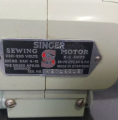
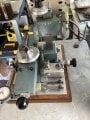
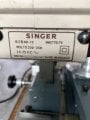
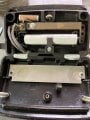
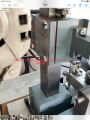
I have just replaced the spindle bearings and run it up but I don’t think the motor is man enough, it looks like it had a different motor originally as there is telltale where something was so now I need to ask a different question ( AC or DC ) should I start a new post or is here ok ? But here are the original pictures asked for.
Thanks for the help Dell
AND BY NO MEANS is this changing the motor into a potentiometer!!! THAT is a totally incorrect and vastly misleading description. If you mean "Potentiometer CONTROL, say it! Requesting the impossible does get attention but not respect!
OK, and the question as to if the motor is able to provide adequate performance is a fair question. Also not so simple to answer.
As for the size and type of motor, is the present sewing machine motor adequate? That is certainly a valid question.
Certainly there is some physical limit as to the size of motor that can be used, as well as requirements for speed and torque. I am guessing that variable speed is an absolute requirement, along with adequate torque to maintain the required speed for the various applications.
As for AC versus DC, for these types of motors either can work. For the motor shown in the first photo, possibly DC operation might be able to provide more torque, but at the expense of greater heating.
A different motor with greater capability is certainly an option, but at a cost that must be considered, especially for a new motor that would require a different type of speed control.
Well either the motor is shot or not man enough because I just touch the tool to the grinder and it stops, at the moment the equipment is US so I need to get a new motor and control, and I understand I will get more torque using DC and a motor to run to 6-8000 because it’s no good trying to grind HSS slowly especially as the grinding wheel is only 50mm, I have a couple of lathes and a mill so making mountings isn’t a problem .
The picture show where something was mounted previously possibly a different original motor .
Dell
If you are able to locate the original builder of the machine, if it was a commercial product, then you might be able to discover the specifications for the original motor, which will be a good starting point in searching for a replacement. At that point power, speed range, and possibly supply voltage requirements will also need consideration.
If you are able to locate the original builder of the machine, if it was a commercial product, then you might be able to discover the specifications for the original motor, which will be a good starting point in searching for a replacement. At that point power, speed range, and possibly supply voltage requirements will also need consideration.
OK, in that case it becomes more tedious to decide what the maximum torque needs to be and what the maximum speed needs to be. The tag in post #1 with 230 volts and 0.3 amps would be about 65 watts , about a tenth of a horsepower. . so a quarter HP motor would be over twice as much power, and a 1/3 HP motor a bit over three times as much. Then comes the consideration of speed. Both mills and lathes tend to have fixed steps available covering at least a 2:1 or 3:1 ratio. Belt changes plus a variable speed motor drive should cover almost whatever you night need. Although maybe not.
The last consideration is speed stability. Drives either have speed feedback or not. With speed feedback it holds the same speed no matter what the load, which could be useful but it can also get you in trouble if you fail to realize how hard the machine is working.
So I suggest that you will also need to talk with a machinist much more experienced than me. I know what I am doing but I do not claim to be a machining expert.
Thanks once again for your reply the grinding wheels are only 48mm diameter and I will only be grinding small tools possibly 6mm 1/4” max but mostly 3mm, I have ordered a motor & speed control off Amazon not sure if man enough but not expensive so it will give me an idea, the literature said for 24volts 7000RPM and suitable for a grinder but we will see.
Since this thread has evolved into a different solution, I suggest that we edit the title and lock the thread. Then we can start a new thread to continue the discussion with the new motor.

 Facebook
 Google
 GitHub
 Linkedin