Simple Theoretical question, 3 things in parallel

Ian0

Joined Aug 7, 2020
13,132
If it is done to an accuracy of 3 significant figures, then the current source is 15.0A which is actually 15.0±0.05A. and the Load is 400±0.5W and the voltage source is 26.6±0.05V, so now you cannot tell whether the battery is charging or discharging.
If the load is 400.5W and the battery is 26.55V the battery discharges by between 30mA and 130mA.
If the load is 399.5W and the battery is 26.65V then it could be charging by 40mA or discharging by 60mA.
 

k1ng 1337

Joined Sep 11, 2020
1,038
If it is done to an accuracy of 3 significant figures, then the current source is 15.0A which is actually 15.0±0.05A. and the Load is 400±0.5W and the voltage source is 26.6±0.05V, so now you cannot tell whether the battery is charging or discharging.
If the load is 400.5W and the battery is 26.55V the battery discharges by between 30mA and 130mA.
If the load is 399.5W and the battery is 26.65V then it could be charging by 40mA or discharging by 60mA.
Can you do me a solid and redo the math for 4 significant figures while showing your work algebraically? Everyone seems to follow slightly different steps and my profs refuse to give a straight answer about the rules.. I've had right answers by one method in a class that were wrong in another class. I put up a fight and got credit but significant figures are still a maddening concept for me to reconcile.:mad:
 

MisterBill2

Joined Jan 23, 2018
27,524
"Precision" would apply to the equipment used to make the accurate measurements with enough resolution. Hopefully they were precise measurements. In this case the whole thing was artificial and not related to the real world that most folks, including me, have to deal with.
Resolution, accuracy, and significant figures can be a real challenge, and certainly a way to go into cost over-runs in the real world.
 
Last edited:

k1ng 1337

Joined Sep 11, 2020
1,038
"Precision" would apply to the equipment used to make the accurate measurements with enough resolution. Hopefully they were precise measurements. In this case the whole thing was artificial and not related to the real world that most folks, including me, have to deal with.
Resolution, accuracy, and significant figures can be a real challenge, and certainly a way to go into cost over-runs in the real world.
I often see the terms precision and accuracy used interchangeably when they are refering to similar but different things. If we are talking about the significant figures of a value. I think this refers to the precision which is describing exactly what you just said because the precision (and accuracy) are dictated at the time of measurement divided by the number of samples. My textbook gives these as definitions:

Accuracy: How close a measurement is to the true value of the quantity measured. Example with true a value of 5: 4,5,5,5,6 - Fairly accurate but not very precise

Precision: How close two measurements agree with each other. Example with a true value of 5: 3,3,3,3,7 - Inaccurate but fairly precise.

The question in my mind is: how close do 3 and 3.0 agree with each other? and how close is 3 and 3.0 to the true value of 3.0?

I asked ChatGPT and it had this to say:

"Precision and accuracy are both concepts related to the reliability and correctness of measurements, but they have different meanings in relation to significant figures.

Precision refers to the level of consistency or reproducibility of a measurement. It indicates how closely repeated measurements of the same quantity agree with each other. In the context of significant figures, precision is reflected by the number of significant figures used to express a value. The more significant figures a measurement has, the more precise it is considered to be. For example, a measurement of 2.345 g is more precise than a measurement of 2.3 g because it includes more decimal places.

Accuracy, on the other hand, refers to how close a measured value is to the true or accepted value. It indicates the absence of systematic errors in a measurement. Accuracy is not directly related to significant figures but rather to the correctness of the measurement itself. For example, if the true value of a length is 10 cm, a measurement of 9.8 cm would be more accurate than a measurement of 8.5 cm.

In summary, precision is related to the number of significant figures used to express a value, indicating the level of consistency or reproducibility of measurements. Accuracy, on the other hand, refers to how close a measured value is to the true or accepted value, indicating the absence of systematic errors. While precision is reflected by the number of significant figures, accuracy is independent of significant figures and focuses on the correctness of the measurement itself."
 

MisterBill2

Joined Jan 23, 2018
27,524
Accuracy, repeatability, and resolution are useful terms. Precision in my vocabulary has no place other than to describe a general level of quality. " I have a precision caliper, it is accurate to +-0.001, with 5 digits of readability."
 

WBahn

Joined Mar 31, 2012
32,847
I often see the terms precision and accuracy used interchangeably when they are refering to similar but different things. If we are talking about the significant figures of a value. I think this refers to the precision which is describing exactly what you just said because the precision (and accuracy) are dictated at the time of measurement divided by the number of samples. My textbook gives these as definitions:

Accuracy: How close a measurement is to the true value of the quantity measured. Example with true a value of 5: 4,5,5,5,6 - Fairly accurate but not very precise

Precision: How close two measurements agree with each other. Example with a true value of 5: 3,3,3,3,7 - Inaccurate but fairly precise.

The question in my mind is: how close do 3 and 3.0 agree with each other? and how close is 3 and 3.0 to the true value of 3.0?

I asked ChatGPT and it had this to say:

"Precision and accuracy are both concepts related to the reliability and correctness of measurements, but they have different meanings in relation to significant figures.

Precision refers to the level of consistency or reproducibility of a measurement. It indicates how closely repeated measurements of the same quantity agree with each other. In the context of significant figures, precision is reflected by the number of significant figures used to express a value. The more significant figures a measurement has, the more precise it is considered to be. For example, a measurement of 2.345 g is more precise than a measurement of 2.3 g because it includes more decimal places.

Accuracy, on the other hand, refers to how close a measured value is to the true or accepted value. It indicates the absence of systematic errors in a measurement. Accuracy is not directly related to significant figures but rather to the correctness of the measurement itself. For example, if the true value of a length is 10 cm, a measurement of 9.8 cm would be more accurate than a measurement of 8.5 cm.

In summary, precision is related to the number of significant figures used to express a value, indicating the level of consistency or reproducibility of measurements. Accuracy, on the other hand, refers to how close a measured value is to the true or accepted value, indicating the absence of systematic errors. While precision is reflected by the number of significant figures, accuracy is independent of significant figures and focuses on the correctness of the measurement itself."
Even though this is the kind of thing where you would expect ChatGPT to do a really good job (and I'd say that, overall, it did a pretty good job), the fact that all it is doing is stringing words together based on the statistical probability of a given word following the words before it rears its head here in the conflation of precision and number of digits shown.

If I eyeball a ball bearing and guess that it has a diameter of 1.5" and then want to know what the volume is, I plug it into the formula for volume in my calculator and I get

V = 1.7671458676442586966352369030947 in^3

Well, according to ChatGPT, I have tons of precision because look at all of those "decimal places".

I actually have no idea what "decimal places" are -- I know what is meant by "decimal place value", and hence a statement like "five decimal places to the right of the decimal point" has a well-defined meaning.

At least the ChatGPT spewage included the term "significant figures" a lot, which is not surprising since that phase would be expected to appear in close proximity to a large fraction of places where the terms 'accuracy' and 'precision' appear near each other.

The ChatGPT response also makes the claim that if a measured value is close to the true value that this indicates that absence of systematic errors. That's pretty much rubbish, but is a not-too-surprising pasting together of words that you would expect to see in discussions of these topics.

Okay, enough of the ChatGPT rant.

'Resolution' and 'precision' are more commonly confused than 'accuracy' and 'precision' -- especially in the age of digital displays.

This is really evident in commercial grade bathroom scales. Buy a cheap scale and it will frequently have a resolution of 0.2 lb. But step on it ten times and you are likely to get results that vary 10 lb or more from min to max, so it's precision is no where near its resolution. Well-designed measurement systems try to match the resolution to the precision, both so that it doesn't present a false sense of quality in the measurement, but also because there is not point to spending the money to display a result any significant degree greater than the precision of the system justifies. Makes and marketers of cheap crap, though, understand that a large fraction of the public will automatically equate displayed resolution with both accuracy and precision, and thereby be willing to pay more money for, in most cases, an even worse product.
 

WBahn

Joined Mar 31, 2012
32,847
Can you do me a solid and redo the math for 4 significant figures while showing your work algebraically? Everyone seems to follow slightly different steps and my profs refuse to give a straight answer about the rules.. I've had right answers by one method in a class that were wrong in another class. I put up a fight and got credit but significant figures are still a maddening concept for me to reconcile.:mad:
This would seem to indicate graders that don't grasp the fundamental concepts of reporting calculated results and are trying to stick too rigidly to an inappropriate mantra.
 

k1ng 1337

Joined Sep 11, 2020
1,038
Accuracy, repeatability, and resolution are useful terms. Precision in my vocabulary has no place other than to describe a general level of quality. " I have a precision caliper, it is accurate to +-0.001, with 5 digits of readability."
Hmm.. for fun I asked:

"

  • why is it called a precision caliper
  • A caliper is a measuring tool used to measure the distance between two opposite sides of an object. It typically consists of two jaws or arms that can be adjusted to fit around the object being measured. The term "precision caliper" is used to emphasize the high level of accuracy and precision that this particular type of caliper offers.

    The word "precision" in "precision caliper" refers to the instrument's ability to provide measurements with a high degree of accuracy and consistency. Precision calipers are designed and manufactured to meet strict standards and tolerances, ensuring that the measurements they provide are as precise as possible.

    These calipers often have finer measurement increments, allowing for more precise readings compared to standard calipers. They may also incorporate additional features such as a vernier scale or a digital display, which further enhance their precision and ease of use.

    The term "precision caliper" is used to distinguish this type of caliper from other measuring tools that may have different levels of accuracy or are designed for different purposes. By using the term "precision," it conveys the specific capabilities and intended use of the caliper in accurately measuring dimensions and providing precise readings."

This would seem to indicate graders that don't grasp the fundamental concepts of reporting calculated results and are trying to stick too rigidly to an inappropriate mantra.
It was about the treatment of conversion factors in long expressions. I was told the best way to calculate is to input the entire expression into the calculator and round once at the end. Of course this isn't always convenient or possible so I always bring in all the digits displayed by the calculator from the previous calculation which is a major pain. This way my answer is more precise then what is asked for by several digits. Example: 3.234359949293 becomes 3.23.

Also, I asked the chat bot the question after I typed my speech. I thought it was funny because it agreed with me so I posted it. I know they are unreliable but are still a great study tool.
 

WBahn

Joined Mar 31, 2012
32,847
It was about the treatment of conversion factors in long expressions. I was told the best way to calculate is to input the entire expression into the calculator and round once at the end. Of course this isn't always convenient or possible so I always bring in all the digits displayed by the calculator from the previous calculation which is a major pain. This way my answer is more precise then what is asked for by several digits. Example: 3.234359949293 becomes 3.23.
You only need to carry enough digits in the intermediate calculations so that the residual differences don't propagate to the point of affecting the reported answer due to accumulated roundoff error in the arithmetic.

For the vast majority of calculations, this is satisfied by working with two sig figs more that will eventually be reported, keeping in mind that some computations, such as subtraction and exponentials/logarithms, are very sensitive small errors.

Unless you do infinite-precision arithmetic, it is not possible to perform the math in such a way as to guarantee that accumulated errors can't affect the reported result. This is an intrinsic result of the fact that the reported result is quantized. So way that the result, using a whole bunch of sig figs, came out to 12.345000000000000128479237. You might find that increasing or decreasing the number of sig figs by one would result in 12.34499999999999996254175. These two results are clearly in extremely close agreement, yet reported to four sig figs one would be 12.35 and the other would be 12.34. If an assignment wanted results reported to four sig figs and the grader considered one of those correct and the other wrong, the grader doesn't know what they are doing.
 

Ramussons

Joined May 3, 2013
1,568
Good quesiton

For the sake of the argument, lets say its an electronic load set at 400 watts
for constant power
If it is an Active Smart load drawing 400 Watts, the current drawn will depend on the Voltage Input. Lower voltage => Higher current.
Since it is a Current Source, the only independent variable is the Battery Voltage that will dictate the Source Voltage, and thus the Load current.
 

Ian0

Joined Aug 7, 2020
13,132
This is what a former colleague called a "suppressed zero problem". When there are two similar parameters each with a small error, the error in their difference is enormous. As an example, if you connect a 5.1V zener across the output of a 7805, how much current flows?

This is not a hypothetical question, but a genuine modern real-world problem.
The load is some LED lights, the LEDs themselves run at constant current, and their forward voltage is constant* so the power is constant. They are supplied by buck regulators, so that as the supply voltage increases the supply current decreases to keep the power constant. ΔI/ΔV<0 negative incremental resistance.
The supply is a simple current limited float charger with the load in parallel with the battery, similar to how most alarm panels are wired.
All works fine until the first power cut. If the battery voltage falls below a certain point, when it tries to recharge the load current is greater than the charger current, and it can never recover as the load current increases as the battery current falls.
Replace the LEDs by filament lamps and the load current falls as the battery voltage falls, and the charger can always recover the battery.

*they are isothermal LEDs: this problem doesn't need any more variables.
 

MisterBill2

Joined Jan 23, 2018
27,524
Only theoretical LEDs are "constant current" devices. The current varies with voltage, just not in a linear sort of manner. So as the LED supply voltage drops the current also drops. at some lower point the current drops more as the voltage drops. So the LED is not even close to that stable resistor load. Of course over very narrow ranges even a sharp curve is "flat"as the length approaches zero.
The result being that as the voltage falls the current does drop, and the unfortunate batter charger might have a chance, except that the power has failed at the start of this exercise problem. So when the supply voltage drops to 4 volts the LEDs are not drawing much current and the CMOS logic can continue to function for quite some time.
 

Ian0

Joined Aug 7, 2020
13,132
Only theoretical LEDs are "constant current" devices. The current varies with voltage, just not in a linear sort of manner. So as the LED supply voltage drops the current also drops. at some lower point the current drops more as the voltage drops. So the LED is not even close to that stable resistor load. Of course over very narrow ranges even a sharp curve is "flat"as the length approaches zero.
The result being that as the voltage falls the current does drop, and the unfortunate batter charger might have a chance, except that the power has failed at the start of this exercise problem. So when the supply voltage drops to 4 volts the LEDs are not drawing much current and the CMOS logic can continue to function for quite some time.
I am referring to LED luminaires with internal current regulators.
“They are supplied by buck regulators, so that as the supply voltage increases the supply current decreases to keep the power constant. ΔI/ΔV<0 negative incremental resistance.”
 

MisterBill2

Joined Jan 23, 2018
27,524
OK, I was thinking of LEDs like 12 volt bulb style.
Certainly those LED "emergency" lights are a problem, no question there. The flaw starts with the specifications which lead to the wrong design, which certainly leads to the unfortunate results, as described.
IF, instead, the lights were directly powered from a separate mains powered supply, and only switched to battery power, at a lower intensity, upon mains power, the power draw would immediately be less. And then, upon mains power being restored, the LEDs were switched back and the battery charge could begin, there would be no problem at all.
 

k1ng 1337

Joined Sep 11, 2020
1,038
You only need to carry enough digits in the intermediate calculations so that the residual differences don't propagate to the point of affecting the reported answer due to accumulated roundoff error in the arithmetic.

For the vast majority of calculations, this is satisfied by working with two sig figs more that will eventually be reported, keeping in mind that some computations, such as subtraction and exponentials/logarithms, are very sensitive small errors.

Unless you do infinite-precision arithmetic, it is not possible to perform the math in such a way as to guarantee that accumulated errors can't affect the reported result. This is an intrinsic result of the fact that the reported result is quantized. So way that the result, using a whole bunch of sig figs, came out to 12.345000000000000128479237. You might find that increasing or decreasing the number of sig figs by one would result in 12.34499999999999996254175. These two results are clearly in extremely close agreement, yet reported to four sig figs one would be 12.35 and the other would be 12.34. If an assignment wanted results reported to four sig figs and the grader considered one of those correct and the other wrong, the grader doesn't know what they are doing.
That was and still is the issue for me. Consider this problem:

X = A / BC
Z = X / 2D
A = 9.0000
B = 7.0000
C = 2.0000
D = 6.0000
Z = ? to 5 significant figures

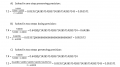
sf.png

Assuming I did my math correctly, example B gained an error of +0.000001 because of rounding in the second step. This clearly shows a big problem when dealing with significant figures. It really comes down to knowing the exact steps the person took when solving as uncertainty is easily compounded.
 

WBahn

Joined Mar 31, 2012
32,847
Again, the goal is to not lose information because of rounding in the arithmetic of intermediate steps, and this is generally accomplished by carrying at least two additional sig figs for intermediate computations (keeping in mind those sensitive operations that I mentioned).

So, using your example:

X = A / BC
Z = X / 2D

First off, these do not match the calculations you performed, which were:

X = A / (BC)
Z = X / (2D)

While the equations in your example are:

X = (A / B) · C
Z = (X / 2) · D

Be careful about order of operations when transcribing transcribing division depicted with a horizontal line to division depicted with the '/' operator. This is a common way that people get bit when they put equations into programs and spreadsheets.

Using the equations as you apparently intended, performing all of the intermediate steps while carrying two extra sig figs in intermediate results:

BC = (7.0000)(2.0000) = 14.00000
X = A / (BC) = (9.0000) / (14.00000) = 0.6428571
2D = 2(6.0000) = 12.00000
Z = X / (2D) = 0.6428571 / 12.00000 = 0.05357142

Reporting this to five sig figs then yields

Z = 0.053571

Keep in mind that what we are doing is only an approximation to a proper propagation of errors. A proper treatment is going to incorporate the actual uncertainties in each measurement and propagate that uncertainty through the math so that it's weight in the final result is tracked appropriately. Even then, we need to have a statistical model for the error distribution in order to arrive at the correct final result.

Another thing to keep in mind is that the reason why reporting results to three sig figs is so common in many engineering disciplines is because we are seldom justified in reporting results to more than two, so by reporting them to three, we can have some reasonable degree of confidence that the reported value really is at least good for at least two sig figs.
 

k1ng 1337

Joined Sep 11, 2020
1,038
Again, the goal is to not lose information because of rounding in the arithmetic of intermediate steps, and this is generally accomplished by carrying at least two additional sig figs for intermediate computations (keeping in mind those sensitive operations that I mentioned).

So, using your example:

X = A / BC
Z = X / 2D

First off, these do not match the calculations you performed, which were:

X = A / (BC)
Z = X / (2D)


While the equations in your example are:

X = (A / B) · C
Z = (X / 2) · D

Be careful about order of operations when transcribing transcribing division depicted with a horizontal line to division depicted with the '/' operator. This is a common way that people get bit when they put equations into programs and spreadsheets.

Using the equations as you apparently intended, performing all of the intermediate steps while carrying two extra sig figs in intermediate results:

BC = (7.0000)(2.0000) = 14.00000
X = A / (BC) = (9.0000) / (14.00000) = 0.6428571
2D = 2(6.0000) = 12.00000
Z = X / (2D) = 0.6428571 / 12.00000 = 0.05357142

Reporting this to five sig figs then yields

Z = 0.053571

Keep in mind that what we are doing is only an approximation to a proper propagation of errors. A proper treatment is going to incorporate the actual uncertainties in each measurement and propagate that uncertainty through the math so that it's weight in the final result is tracked appropriately. Even then, we need to have a statistical model for the error distribution in order to arrive at the correct final result.

Another thing to keep in mind is that the reason why reporting results to three sig figs is so common in many engineering disciplines is because we are seldom justified in reporting results to more than two, so by reporting them to three, we can have some reasonable degree of confidence that the reported value really is at least good for at least two sig figs.
Haha good eye! I missed that. You mentioned adding two extra digits to each operation but this is the arbitrary kind of answer which drove me nuts in the first place. I'm looking for a proof that says having 2 extra digits is sufficient for most applications. I couldn't find such a proof so I bring in all the digits displayed from the previous operation. I thought a lot about it and this is the best way to go about it because as much information as possible is preserved.

I suppose overflow and other arithmetic errors may occur in the calculator but that is a problem for another day.
 

WBahn

Joined Mar 31, 2012
32,847
Haha good eye! I missed that. You mentioned adding two extra digits to each operation but this is the arbitrary kind of answer which drove me nuts in the first place. I'm looking for a proof that says having 2 extra digits is sufficient for most applications. I couldn't find such a proof so I bring in all the digits displayed from the previous operation. I thought a lot about it and this is the best way to go about it because as much information as possible is preserved.

I suppose overflow and other arithmetic errors may occur in the calculator but that is a problem for another day.
Generally, just carrying one extra sig fig will suffice, two just adds a fairly extreme insurance policy.

As your example pointed out, after several operations carrying five sig figs, the accumulated roundoff error affected the fifth sig fig (and only by one digit value). So it's not unreasonable to expect that if you treat the values as though there are six sig figs, that the effect will be seen in the sixth sig fig, which you are going to throw away in the end. But while most errors in that sixth figure will not have any effect on the result when reported to five sig figs, you can expect something in the vicinity of perhaps 5% to 10% of the time it might affect what you round that fifth sig fig to. Now, if that's the case, then that is an indication that you really don't know that fifth sig fig all that well, so whether you report it as one higher or one lower is really immaterial. But if you want to all but eliminate this possibility, then carry an extra two sig figs and that will drive the likelihood of accumulated error affecting the last digit that is reported by an order of magnitude.

The proof is done by doing a full-on propagation of errors analysis in which you include the errors introduced by the arithmetic operations due to rounding. In general, every equation you use would have to have it's own propagation of errors analysis performed, so we use rules of thumb that are good for most (and 'most' means 'the overwhelming majority of') situations likely to be encountered.
 
Top