Simple circuit ?

Thread Starter

Laotzsa

Joined Nov 8, 2022
10
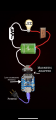
My question is if I can have a simple circuit consisting of a rechargable LIPO, led, switch, and resistor in one contained circuit, then from the - and + of the Lipo also connect a magnetic pogo adapter to recharge the battery. Would I just have to make sure the switch is turned off before connecting to charge? Or would this even be a problem. My attached picture is the circuit I’d like to run. I’m trying to fit this into the smallest possible space. So I need to ditch the charging module board. My first design had the Lipo connecting to the rechargeable Lipo module directly via jst. The charging board has + and - holes to connect your circuit to after connecting the battery, so I soldiered the LED, switch, and resister circuit directly to that board. But the circuit was too large with the battery and Lipo recharging module all together. So I had the idea to keep the charging module outside of the main circuit, using magnetic pogo adapters. That way I save space and can just attach it outside the device in a sort of special charger that I make with the module. Any issues with this?
 

Attachments

Audioguru again

Joined Oct 21, 2019
6,826
The LED might not light up when the single Li-PO battery cell voltage discharges to 3V. Also, the LED brightness changes when the Li-PO voltage is between 3.0V and is fully charged at 4.2V.
 

MisterBill2

Joined Jan 23, 2018
27,501
Aside from the brightness concern, there is the additional question as to what will happen when the LED switch is closed during battery charging, given that the supplied voltage MUST be grater than the terminal voltage to increase the battery's state of charge. The simple work-around will be a double throw switch so that the charging source is only connected when the LED is off. Suddenly the simple circuit requires some not quite as simple math.
 

Thread Starter

Laotzsa

Joined Nov 8, 2022
10
Aside from the brightness concern, there is the additional question as to what will happen when the LED switch is closed during battery charging, given that the supplied voltage MUST be grater than the terminal voltage to increase the battery's state of charge. The simple work-around will be a double throw switch so that the charging source is only connected when the LED is off. Suddenly the simple circuit requires some not quite as simple math.
After a quick you tube search on the function of a double pole double throw switch I believe this is a perfect work around so as to not accidentally charge while the LED is on. Thank you so much! As for all the comments on the brightness of the LED dropping while the lipo drains I’m not so worried about this. The led runs @ 3.3 volts. With a max of 3.8. So far with my tests I get a max brightness of approx 6 hours before it starts to dim. For my prototype this is fine. Plus it’ll encourage charging before the Lipo runs fully dead which is better for the health anyways right?
 

Thread Starter

Laotzsa

Joined Nov 8, 2022
10
Aside from the brightness concern, there is the additional question as to what will happen when the LED switch is closed during battery charging, given that the supplied voltage MUST be grater than the terminal voltage to increase the battery's state of charge. The simple work-around will be a double throw switch so that the charging source is only connected when the LED is off. Suddenly the simple circuit requires some not quite as simple math.
my only question is whether having the double pole double throw switch in the position that disconnects the led but leaves the battery connected in a loop by itself is bad for the battery.
 

Thread Starter

Laotzsa

Joined Nov 8, 2022
10
The charging board I’m using charges at 100ma and my LED only pulls 20 ma. So even with a single pole single throw switch doesn’t this mean I’d be okay even if the LED is on. As the battery would just be charged a bit slower @ 80 ma?
 

MisterBill2

Joined Jan 23, 2018
27,501
Most battery chargers do not drain the battery when not charging. BUT the simple fix is to get a switch with a center-off position. Those are often available in models similar to the two position toggle switches.
 
Top