Shaded Pole Motor Speed Control

Thread Starter

KAN3KI5

Joined Feb 25, 2018
14
Can't really seem to come up with a solution. Though I was wondering. The mains supply, does that run at a constant 50Hz or are there fluctuations? Thought maybe I could use a separate oscillator that operates at 50Hz and provides trigger waves for a 555 via voltage. Is this possible? Or am I definitely going to need the zero crossing detector?
 

Thread Starter

KAN3KI5

Joined Feb 25, 2018
14
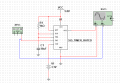
Hi. I've tried to fix the issue and i think i've come up with something.
kutjyrther.PNG
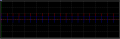
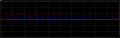
It's basically a 555 in monostable mode. Whenever the trigger pin receives a negative voltage, the 555 will generate a pulse that i can control with voltage at pin 5. Here's the output waves at pin 5 at 0.35V and 3.1V respectively. The red wave is output of the 555 and the blue wave is simulated output of the zero crossing detector. Will this work with the rest of the circuit?
utrytherwcs.PNG


qwegerfdsd.PNG
 
Hi. I've received a task recently as part of a design project. I'm going to be given a 24W 230VAC shaded 2 pole motor in order to be used as a variable speed fan. The fan is supposed to sense temperature and adjust the speed of the motor accordingly. I need to know the best method for achieving this (controlling the speed, not the other part). I have researched and have come up with simply lowering the voltage to the motor but it seems to be destructive to the motor. Any tips?
Hi KAN3KI5, I've received ths exact project and have been assigned the same part as you (controlling the speed of the motor) for my design module. Can you please explain how you went about controlling the speed, I feel highly confused.
 

MrAl

Joined Jun 17, 2014
13,711
Heads up, older thread.

That is NOT a good idea. You really need a frequency controller.
Hi,

You are right some AC motors have to have frequency control along with voltage control where the sinusoidal frequency has to be related to the voltage. As the voltage goes down the frequency has to go down with it to avoid "slip".
Back when i worked in the industry we had to design such a thing but i cant remember the required relationship between voltage and frequency even for the type of motor we were working with. I suppose there should be some info on the web somewhere.
The design though does not have to have a pure sine wave. The way we did it was using a non filtered synthesized sine which is variable pulse width PWM (pulse width modulation with variable pulse widths that simulate a sine wave). There was no LC filtering on the output so the design was simpler than a regular variable frequency drive that has to put out a clean sine wave.
The type of control was mostly feed forward where there was no attempt to measure the slip or anything like that, just a predefined set relationship between voltage and frequency so when the user turned the control knob both voltage and frequency changed. There was a 3rd power relationship in there somewhere but i cant remember if that was the air speed or power to voltage relationship or what.

For a small fan though it may not make much difference if the voltage range is also somewhat narrow. We can think of the allowed voltage tolerance of a typical US home 120vac 60Hz line which is something like plus or minus 15 percent. Over that range fans have to be able to work without any frequency variation, but i suspect they would work over a wider range without too much problem as long as they were not gigantic.

As i am sure you know, a triac does not actually vary the voltage it varies the turn on phase angle which varies the power and for certain ranges like below 90 degrees the peak. It will not turn off until the current phase goes though zero and that will limit the useful range.
Not the best way to do it but it has been known to work. If the motor gets too hot though it will blow the thermal fuse which is a safety requirement in most modern fan motors.
 
I've received a task as part of a design project. I am going to be given a 24W 230VAC single phase shaded pole motor with 2 poles in order to be used as a variable speed fan. The fan is supposed to sense temperature and adjust the speed of the motor accordingly (220v high, 150v medium, 80v low speed). My initial thoughts were to use a VFD but extensive research shows that it is not advisable to use a VFD for a single-phase motor. The better option seemed to be using a triac but I am not sure how to go about doing that. Please may you explain the best method for controlling the speed as that is my part of the project.
 
Define "best".
A simple way is to use a TRIAC to chop the AC waveform to reduce the average voltage and thus the speed, but that often causes a buzz from the motor.
Would that buzz be a problem?
I'm sorry by "best" I meant the simplest way to do it. The buzz won't be a problem. In the project there also has to be isolation between low voltage circuitry and high voltage circuitry so how would I go about doing that while also using the triac to control the speed? My initial thought was to use an optocoupler but I'm not sure how it will fit in with the triac
 

cmartinez

Joined Jan 17, 2007
8,777
Several years ago, I tried to control a shaded pole motor using the phase chop technique, and didn't like the results. The motor behaved in a jerky way, and power jumped too abruptly between one setting and the next. So I made a small PWM circuit that worked using a couple of nFets connected back to back, and that were switched using a galvanically isolated DC-DC converter... it worked like a charm.
 

crutschow

Joined Mar 14, 2008
38,530
The problem is, the 2 pole AC shaded pole motor is about the least efficient motor out there and therefore tends to run very hot.
The may run hot at full load, but you are reducing the average voltage and speed, which significantly reduces the load from the fan, so I don't see how that's problem.
 

MrAl

Joined Jun 17, 2014
13,711
Hello again,

There is a bearing wear issue related to the jerk. The abrupt change in acceleration causes uneven bearing wear (non circular) which makes it rattle after a while. The exact amount of wear though may come into question because after all how long do we expect a given motor to last anyway. The study was done with PC cooling fan motors under regular PWM control. The PWM causes a small jerk that causes the wear at some angles to be more than others and over time becomes accumulative.
I would wonder though how bad it actually is with different types of motors given that the PWM cycle period would most likely appear random to the rotation angles. Maybe there is some signigicant natural syncing that occurs from time to time.
 

MaxHeadRoom

Joined Jul 18, 2013
30,680
The may run hot at full load, but you are reducing the average voltage and speed, which significantly reduces the load from the fan, so I don't see how that's problem.
The reason they are mainly (or only) seen in fan usage, is that the fan also provides cooling, lower the rpm and lower the air flow.
The heat does not originate from the 'load' but the lack of efficiency
 
Top