Facebook
 Google
 GitHub
 Linkedin

Hello!
So I have always been interested in power electronics, purely as a hobby. I have little interest in the whole digital/microcontroller stuff, in fact I prefer to not use semiconductors whatsoever. I suppose other than the odd bridge rectifier.
Recently I have been on the rediscovering arc again, and been tinkering with purely electromagnetic relays and solenoids after being inspired by an old arcade machine.
I want to run it all on DC power, as battery power is quite handy, and so is solar.
I have managed to make some test coils to play around with, and so far I have learned that the solenoid works wonderfully, but I have trouble figuring out how to manage the power it gets. My current idea is to use some capacitors, that save up energy, to then give a good sudden whack. Then there would be a couple seconds time before needing for it to fire again.
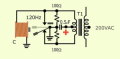
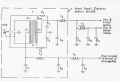
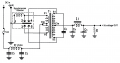
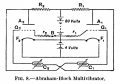
So I assume the higher the voltage, the higher power I can deliver to the solenoid. So if I have a relatively high voltage capacitor, say 25 or 50 V. Probably have a line of Farad caps for buffering, that then feed a surge cap that unloads into the solenoid. Is there even a non semiconductor way to charge a higher voltage cap from a lower voltage source, like a 12V battery?
How can I limit things, so that the solenoid doesn't actually fire until a voltage threshold is reached?
I thought maybe I could wind a relay, and set it up so that it only closes contacts when a certain threshold is reached, but I'm kinda at a similar problem there, how do I change that trigger voltage? Bunch of resistors maybe?
I suppose I welcome any pointers really. Just tinkering about with coils I wind.
So I have always been interested in power electronics, purely as a hobby. I have little interest in the whole digital/microcontroller stuff, in fact I prefer to not use semiconductors whatsoever. I suppose other than the odd bridge rectifier.
Recently I have been on the rediscovering arc again, and been tinkering with purely electromagnetic relays and solenoids after being inspired by an old arcade machine.
I want to run it all on DC power, as battery power is quite handy, and so is solar.
I have managed to make some test coils to play around with, and so far I have learned that the solenoid works wonderfully, but I have trouble figuring out how to manage the power it gets. My current idea is to use some capacitors, that save up energy, to then give a good sudden whack. Then there would be a couple seconds time before needing for it to fire again.
So I assume the higher the voltage, the higher power I can deliver to the solenoid. So if I have a relatively high voltage capacitor, say 25 or 50 V. Probably have a line of Farad caps for buffering, that then feed a surge cap that unloads into the solenoid. Is there even a non semiconductor way to charge a higher voltage cap from a lower voltage source, like a 12V battery?
How can I limit things, so that the solenoid doesn't actually fire until a voltage threshold is reached?
I thought maybe I could wind a relay, and set it up so that it only closes contacts when a certain threshold is reached, but I'm kinda at a similar problem there, how do I change that trigger voltage? Bunch of resistors maybe?
I suppose I welcome any pointers really. Just tinkering about with coils I wind.