RF Transceiver Problem

Thread Starter

Scratchysack

Joined May 8, 2017
4
Hey everyone!
I'm hoping that someone here can give me some advice. I have a remote control unit for a Leica Total Station that communicates via two Cirronet WIT2400 2.4ghz frequency hopping RF radio modules. One of the modules died recently. They are obsolete now and no-one carries them anymore, and the newer versions of those RF modules are extremely expensive and are also prohibited in the EU under their new Hazardous Substances laws. So I'm trying to find a cheap replacement option. According to the spec sheet, the WIT2400 uses CMOS as its logic. I'm trying to install some RS232 RF modules instead, but am having trouble getting them to communicate with the existing Leica hardware, which seems to only be capable of handling CMOS. Can anyone help me?

The existing RF modules are Cirronet WIT2400's. The datasheet can be found here:

https://www.digchip.com/datasheets/p...IT2400-pdf.php

The replacement RF modules are DORJI DRF4432D20I-043L1. The data sheet can be found here:

http://www.dorji.com/products-detail.php?ProId=30

I'll try and attach screenshots of the data specs if I can so you don't need to follow links.

After a lot of research (I know nothing about this sort of thing) it would seem that CMOS and RS232 don't seem to be compatible. So, I bought some signal converters (https://www.artekit.eu/products/accessories/ak-rs232/) but I'm not sure if TTL and CMOS are compatible either. Can anyone tell me if I am on the right track?

Also, the new modules run on no more than 5.5 volts, but my existing system runs on 6-12 volts. So I have installed some voltage converters as well. Will I need to use some sort of opto-isolator for the different ground voltages?

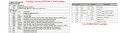
Any advice would be greatly appreciated.RF Module Wiring for forum.jpg Modem Measurements.jpg
 
Last edited by a moderator:

dendad

Joined Feb 20, 2016
4,637
This may be a larger problem than just the radios. Does the controller initialize them or are they just a radio wire replacement?
It may be once the units are configured, they just work, but is that what the old ones were like? The controller may send config info to them.
Can you just connect both ends together without the radios for a test to see if that works. Maybe look at the data stream with a terminal program to see what it says.
Of course you could just configure the radios with the config utility so they talk to each other and the RS232 interface baud rate matches the system and try it out to see.

If both the old and new radios are RS232, you should be able to connect the new ones with just adding a 5V regulator for the power I think. The only connections you will use are TXD, RXD, Gnd and +5v. If it has RS232, it should stand more than 5V data inputs.
This is just a guess but it seems ok to me. Maybe someone else has had experience with them?

You commented on different ground voltages. But that sounds strange.
The grounds should be common I would think. If they are at different potentials it starts to get a bit tricky. Then you may need to optoisolate them.
I hope that doesn't muddy the water too much. I'll be interested to see how you go.
 

DickCappels

Joined Aug 21, 2008
10,661
Connect all of the grounds together, you should not have any problems especially if you don't have analog signals.

The TS-232 to TTL converter is a good idea (a necessity) and is probably compatible with your CMOS device since it is very likely that the converter chip is CMOS anyway.
 

Thread Starter

Scratchysack

Joined May 8, 2017
4
First of all, thanks for the lightning quick reply. I wasn't expecting that!


"Does the controller initialize them or are they just a radio wire replacement?"


I have no idea. I also have no idea how to check. I am a qualified surveyor with a toolmaking background. Unfortunately, electronics isn't something I studied. I have a multimeter but no oscilloscope. If I had to guess I would no, as the system seems to boot up quite quickly and power down even faster.


" It may be once the units are configured, they just work, but is that what the old ones were like? The controller may send config info to them."


The remote unit is capable of configuring the modem, but only through a selectable function in the menu. I haven't checked to see what sort of voltage signal is sent during that process, but I'll try if you think it is relevant! The remote unit will only allow you to select what they call a "link number", which changes the channel within the modem (15 "link numbers" available). If you connect the Total Station's modem/radio (that attaches via a Lemo cable) to the remote unit then you can configure both at the same time so they match. No other options are available during the configuration process. Baud rate, parity etc are all absent. Those functions are only available to be configured via PC and even then only if the modem in the remote is removed. The modem in the Total Station radio can be plugged in to a PC and configured in any way that you want. Obviously, that is not advisable. It would cause a catastrophic mismatch.


"Can you just connect both ends together without the radios for a test to see if that works. Maybe look at the data stream with a terminal program to see what it says."


I don't have the physical capability (cables etc) to monitor the data via a terminal program.


The remote unit itself gives you the option to communicate via the internal modem (the WIT2400 that I would like to replace) or via an external modem of your choice that plugs into a Lemo 0B port on the remote. I have done various different things regarding this option:


*I have a set of Parani SD1000 RS232 bluetooth modules and have wired them into the internal modem's wiring. No joy.


*I also wired the SD1000's from the external modem port on the remote to the Total Station. They worked. But only on the highest baud rate setting that the Total Station and remote unit could handle (a pitiful 19200). However, because the remote unit has no ability to control the power supply to the external port, replacing the internal modem is the only feasible option. The internal modem switches off when you power down the unit. For practical reasons; I need that. Also, bear in mind that the SD1000's are not passive or stupid. Apparently they regulate/adjust their own signals accordingly. This is why I thought that I need various converters to get the new Chinese RS232 modules to function. They don't seem capable of figuring out what they need to do.


*Connecting the external port of the remote to the Total Station via a cable works fine, as long as the baud rate is higher than 4800.


*Connecting the RS232 radio modules to the external port of the remote (eventually) allowed for comms to be sent from the Total Station to the remote unit. But the data (regardless of what I tried) was "dirty". Weird symbols appeared on the screen of the remote, but limited functionality occurred. The Total Station was able to control the remote, but not the other way around. The job of the remote is to mimic the screen of the Total Station and nothing else. So a remote that can't send commands to the Total Station is useless.


*Connecting the new radio modules to the internal modem of the remote has not worked. Not in any way shape or form. Even reinstalling the original WIT2400 RF modem and piggy-backing the RX/TX signal to the new RS232 radio module made no difference. (Having said that, I didn't have the signal converters at that time.)This is why I thought there was a "language" problem more than anything else. I guess I have made up my mind that the RX/TX data itself needs to be modified somehow. I could be wrong. I know nothing about this sort of stuff.


It would appear to me that the RX/TX data between the internal modem and the external modem option are different.


Interestingly, I also have two survey grade GPS systems that export data via RS232. I connected one of the new radio modules to my PC and the other to one of the GPS's. That all worked fine. That's another reason why I thought that the CMOS issue was the main problem.


As for the ground issue, I don't really understand "ground" as a concept. I guess I was wondering what effect the voltage converter would have on the ground signal of the complete system. I was worried that changing the overall potential difference from 6V to 5V on part of the system would cause compatibility issues.
 

Thread Starter

Scratchysack

Joined May 8, 2017
4
Well, this is what I tried today. Direct cable replacement of the internal WIT2400 radio modems (no null modem). It didn't work. So, while I am almost convinced that there is a signal incompatibility issue, it would seem that dendad was right with his opening comment:

This may be a larger problem than just the radios
It would seem that the remote is waiting for some sort of signal to get the ball rolling. In the past I have tried a hardware handshake but to no avail. I guess the next step would be to reinstall the original modem in the remote then piggy-back the cable replacement to the Total Station radio. The problem with that would be that even if that works (which it should) I fail to see what I would learn from that.DSC_1325.JPG
 
Top