Replace BNC cable jack with threaded jack (or otherwise securing existing jack)

Thread Starter

EvanBrenner

Joined Jun 24, 2018
17
Hi,
I want to secure the BNC jacks on some video monitors.
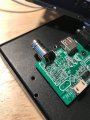
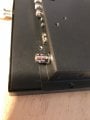
Below are pictures of the monitor with and without the cover.
Better jacks have threads and nuts are secured to the jack both inside and outside so any stress to the cable is transferred to the board. With the existing jacks, the whole jack would pull out if any substantial force is applied.
I have two questions:
1) If I found a similar jack, how big a job would it be for an electronics person to replace the jack? Would they need to remove the whole board? (Even a ballpark esimate of replacing this component would be helpful)
2) Has anyone here ever encountered this kind of problem and found a simple solution for securing the jack?
Thanks in advance for any thoughts!
IMG-0941.JPG IMG-0940.JPG
 

Thread Starter

EvanBrenner

Joined Jun 24, 2018
17
Yes, I work in video production and we connect and disconnect the cables multiple times a day and people trip on the cords, etc.. I had one pulled out and others get loose and the signal gets unreliable.
 

Hymie

Joined Mar 30, 2018
1,347
Yes, I work in video production and we connect and disconnect the cables multiple times a day and people trip on the cords, etc.. I had one pulled out and others get loose and the signal gets unreliable.
Unfortunately when someone trips on such a cable (with sufficient force), something must give.

If the BNC connector were secured to the equipment chassis (via a thread), the equipment may be pulled to the floor – or the conductors within the cable break.

Although not an ideal solution, you could consider the use of phono connection using the adapters in the links below. By using such connections, someone pulling on the cable would break the phono connection (saving the cable and connection). The downside is that you have introduced an additional two connectors in the signal path, which may unacceptably degrade the video signal.


https://www.ebay.co.uk/itm/10-PCS-B...454427&hash=item2856aeb8d5:g:6G0AAOSwW3VaxDkW

https://www.ebay.co.uk/itm/3-10-Pc-...96:m:m2FwPSs96RLSvgQzY4Ji3GQ&var=541444779506
 

Thread Starter

EvanBrenner

Joined Jun 24, 2018
17
Hymie and Paulktreg both excellent suggestions - thank you! I am modifying these high bright monitors so they fit on teleprompters (my business) and I actually may offer both of those workarounds as precautions. Thanks!!
 

Thread Starter

EvanBrenner

Joined Jun 24, 2018
17
But one last question. Were I to find a threaded BNC jack, how much time would it take someone someone experienced with soldering and electronics to replace the existing BNC jack with a new, threaded one?
 

crutschow

Joined Mar 14, 2008
38,349
But one last question. Were I to find a threaded BNC jack, how much time would it take someone someone experienced with soldering and electronics to replace the existing BNC jack with a new, threaded one?
Depending upon how long it takes to open the case and extract the circuit board, I would think a couple hours, assuming he has the proper repair equipment.
 

MrChips

Joined Oct 2, 2009
34,649
BNC jacks are very secure. You have to twist it to get it off. I have never seen one come off accidentally if it was put on properly.
If you must have a screw -on jack, there is TNC, available at the usual suppliers, Digikey, Mouser, Newark.
 

MrChips

Joined Oct 2, 2009
34,649
If you want to protect the board where the jack is mounted, you can use BNC bulkhead connector that is mounted on the metal front plate of the instrument rack. In this case, if someone trips on the BNC cable they may cause the whole rack to topple over.


You can mount this on a front panel plate and then connect from behind with a short BNC cable to the instrument. No soldering nor alterations required to your equipment.
 

Thread Starter

EvanBrenner

Joined Jun 24, 2018
17
Very interesting MrChips and Reloadron. So I understand clearly, I think you are suggesting a short BNC attached to the existing port that then loops back inside the housing and attaches to a secured port. Am I understanding your suggestions?
 

MrChips

Joined Oct 2, 2009
34,649
Very interesting MrChips and Reloadron. So I understand clearly, I think you are suggesting a short BNC attached to the existing port that then loops back inside the housing and attaches to a secured port. Am I understanding your suggestions?
What Ron has suggested is called a BNC female bulkhead jack. You need to solder a short length of coax cable of the correct cable impedance between the bulkhead jack and the solder points on your instrument (or monitor) PCB.

What I have shown is a BNC-to-BNC female bulkhead connector. With this, you need a short length of BNC cable with male plugs on both ends. These cables are sold-off-the shelf at whatever length you desire.
 
Top