Recharable battery in circuit

Thread Starter

Killerbee65

Joined May 15, 2017
256
Hello all!

I wanted to know, how can I use two 18650 batteries (in series) to output to a circuit, while having the ability to charge via micro usb or just usb? Ofcourse the two instances wont be simultaneous (separated using a switch)
 

Thread Starter

Killerbee65

Joined May 15, 2017
256
Does the voltage to the circuit need to be regulated?
What's the circuit voltage and current?
Yes, the circuit needs to be regulated at atleast 7v which is what I have (adding one more battery will being me to roughly 12v which is borderline too much and might fry my circuit)and current is atleast 500mah, I have 3500mah to work with.
 

Audioguru again

Joined Oct 21, 2019
6,826
USB is 5V and two 18650 Lithium cells in series are 8.4V when fully charged. The charger circuit might need 10V. So you need a voltage boost circuit and a lithium battery charger circuit.

Most 18650 cells are actually 3000mAh maximum but some ebay scammers say more. With a load the battery voltage slowly drops to 6V when a circuit should disconnect the load to avoid damaging the battery. Since you need at least regulated 7V then the regulator input must be maybe 8V so very little of a battery charge will be used and your device will run for only a couple of minutes unless you use more voltage. But more voltage from the voltage booster increases the battery current so you still have a problem with the length of time the thing will run.
 

Thread Starter

Killerbee65

Joined May 15, 2017
256
Yes ... with the benefit of charge/test all cells individually and replace each on the need also allowing "continuous use" in case required
It's a good idea and honestly easier but the project cant allow to easy easy access to the battery. I would have to dismantle the whole thing to replace the batteries
 

Thread Starter

Killerbee65

Joined May 15, 2017
256
USB is 5V and two 18650 Lithium cells in series are 8.4V when fully charged. The charger circuit might need 10V. So you need a voltage boost circuit and a lithium battery charger circuit.

Most 18650 cells are actually 3000mAh maximum but some ebay scammers say more. With a load the battery voltage slowly drops to 6V when a circuit should disconnect the load to avoid damaging the battery. Since you need at least regulated 7V then the regulator input must be maybe 8V so very little of a battery charge will be used and your device will run for only a couple of minutes unless you use more voltage. But more voltage from the voltage booster increases the battery current so you still have a problem with the length of time the thing will run.
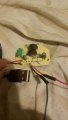
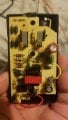
I have a 12v 500 mAh battery from a rc car. It is charged via usb. Iv tried to look up the module but nothing came up and the writing on the board itself is in, presumably, chinese. Also if I read it right, what you are saying is that even of I did add another 18650 battery in series(making it 3) it still wouldnt last more than let's say 30 minutes?also I have a power bank module and a step up dc to dc
Voltage converter I have no idea (if it even works) how to solder the modules together with the battery to get it to where it last atleast 30 minutes running, it is rechargeable using micro usb, and the voltage is aswell as the amps per hour are sufficient.
 

Audioguru again

Joined Oct 21, 2019
6,826
You say you want to use two 18650 batteries (6.2V to 8.4V) and have them charged by 5V USB. Then you need a voltage boost converter plus a charger circuit.
You want to regulate the battery voltage to 7V but the battery voltage is too low to drive a 7V regulator.

Therefore use three 18650 battery cells which will produce 9V to 12.6V and you can drop the voltage with a 7V regulator.
The 3 fully charged cells will drive the regulator and have a 7V/500mA output for 6 hours if the cells are good quality Name Brand. You will need a 3-cells charger and an AC/DC adapter to power it. USB cannot be used.
 

Thread Starter

Killerbee65

Joined May 15, 2017
256
You say you want to use two 18650 batteries (6.2V to 8.4V) and have them charged by 5V USB. Then you need a voltage boost converter plus a charger circuit.
You want to regulate the battery voltage to 7V but the battery voltage is too low to drive a 7V regulator.

Therefore use three 18650 battery cells which will produce 9V to 12.6V and you can drop the voltage with a 7V regulator.
The 3 fully charged cells will drive the regulator and have a 7V/500mA output for 6 hours if the cells are good quality Name Brand. You will need a 3-cells charger and an AC/DC adapter to power it. USB cannot be used.
I see, I understand what you are saying I just dont understand how the people that made the RC car got it to work with a usb
 

jpanhalt

Joined Jan 18, 2008
11,087
I am mostly familiar with single cell chargers that allow the circuit to be run while charging. I suspect chargers for 2 cells in series are made that allow the same functionality. I just haven't looked for them. TI and Microchip are the two manufacturers with which I am most familiar.

As everyone has said, you will need to boost the UBS.

1) Will the UBS provide enough current to properly charge after boosting?
2) Do you want the circuit to run from the battery while it is being charged or from the boosted USB? An electronic switch can be used to make that change over automatic. A P-Mosfet is usually used.
3) Most chargers with which I am familiar use linear regulation. Thus, you will need to consider heat.
4) It is possible to make the charger external and still do either option in #2. That is what I did recently to mitigate the heat issue.
5) Will your design include an MCU that can help with some of the battery charging logic and status reporting?
6) I have no idea what limits "connecting to an Arduino RC car circuit imposed. Maybe you can elaborate.
 

Thread Starter

Killerbee65

Joined May 15, 2017
256
I am mostly familiar with single cell chargers that allow the circuit to be run while charging. I suspect chargers for 2 cells in series are made that allow the same functionality. I just haven't looked for them. TI and Microchip are the two manufacturers with which I am most familiar.

As everyone has said, you will need to boost the UBS.

1) Will the UBS provide enough current to properly charge after boosting?
2) Do you want the circuit to run from the battery while it is being charged or from the boosted USB? An electronic switch can be used to make that change over automatic. A P-Mosfet is usually used.
3) Most chargers with which I am familiar use linear regulation. Thus, you will need to consider heat.
4) It is possible to make the charger external and still do either option in #2. That is what I did recently to mitigate the heat issue.
5) Will your design include an MCU that can help with some of the battery charging logic and status reporting?
6) I have no idea what limits "connecting to an Arduino RC car circuit imposed. Maybe you can elaborate.
1. Not sure it is currently on the table of ways to charge the battery
2. By boosted usb do you mean the output is turned off from the battery to enable charging? If yes then I would prefer an electronic switch.
3. I havent really considered heating since the housing of the project is hollow, vented, and big comparably to the circuits. But if there is an alternative like you mentioned later on please let me know.
4. That actually sounds genius, do you mind sharing how you did it?
5. Yes, I have a power bank module that tracks the percentage aswell as the input and out put using a button. The bad thing is I doubt the circuit will hold up against 12v.
6. The reason I added that was because in an earlier forum they mentioned that having motors takes up a lot of energy to do, this was back when I was trying to find a battery, so I added that part to let it be known I'm not just recharging a battery here. I'm recharging a battery to power a arduino rc car circuit. I hope that kinda gave you an idea of the required output aswell as what is and isnt limited. Also hope this helped.
 

jpanhalt

Joined Jan 18, 2008
11,087
1. Not sure it is currently on the table of ways to charge the battery
2. By boosted usb do you mean the output is turned off from the battery to enable charging? If yes then I would prefer an electronic switch.
No, by "boosted" I meant what everyone else was saying. You cannot charge to 8.4 V or so with a 5 V supply unless you "boost" it. Does your USB provide 10 to 12 V?
4. That actually sounds genius, do you mind sharing how you did it?
No flattery needed. Quite common. I simply use a USB plug and socket with slightly re-purposed pins. Why USB connectors? They are cheap and rated for 10,000 cycles of insertion/removal. Try to find any other connector with that rating. Most are rated for 100 or less.
6. The reason I added that was because in an earlier forum they mentioned that having motors takes up a lot of energy to do, this was back when I was trying to find a battery, so I added that part to let it be known I'm not just recharging a battery here. I'm recharging a battery to power a arduino rc car circuit. I hope that kinda gave you an idea of the required output aswell as what is and isnt limited. Also hope this helped.
I usually use a "lipo" style battery to power the motors in my electric sailplanes. Most have a BEC (battery eliminator circuit rated at 8A or more) to supply electronics from the same battery used for motive power. In your cars, weight is not such a factor, you probably have fewer servos, so you could easily have 2 battery packs.
 

Thread Starter

Killerbee65

Joined May 15, 2017
256
No, by "boosted" I meant what everyone else was saying. You cannot charge to 8.4 V or so with a 5 V supply unless you "boost" it. Does your USB provide 10 to 12 V?

No flattery needed. Quite common. I simply use a USB plug and socket with slightly re-purposed pins. Why USB connectors? They are cheap and rated for 10,000 cycles of insertion/removal. Try to find any other connector with that rating. Most are rated for 100 or less.

I usually use a "lipo" style battery to power the motors in my electric sailplanes. Most have a BEC (battery eliminator circuit rated at 8A or more) to supply electronics from the same battery used for motive power. In your cars, weight is not such a factor, you probably have fewer servos, so you could easily have 2 battery packs.
What do you mean by boost? I'm gueniuly interested. As far as the usb goes, what do you mean if it provides 10 to 12v? I have a 18650 charger pack that holds 2 batteries at a time. The problem is I wouldnt know where to solder the output points.
 

jpanhalt

Joined Jan 18, 2008
11,087
What do you mean by boost? I'm gueniuly interested.
From Google:
1588571793773.png

In the context of this thread, "boost' was used to mean you take the nominal 5V available with a USB port and "boost" (i.e., increase) it to what you will need to charge your series connected batteries.

As far as the usb goes, what do you mean if it provides 10 to 12v? I have a 18650 charger pack that holds 2 batteries at a time. The problem is I wouldnt know where to solder the output points.
What I said was , " Does your USB provide 10 to 12 V? " Notice the question mark. It appeared that you were thinking of simply using USB voltage without increasing it to charge your series connected cells. I was questioning the silliness of that proposition. You can charge one cell or you might charge cells in parallel; although, a USB2 port will not provide much current. From what I saw in reviewing single-cell chargers, such chargers are generally limited to 1 amp or a little more when working from wall warts with USB connectors.

This explains the power available from a typical USB2 port on a computer. Generally, that is limited to about 500mA (maybe less); however, small wall warts designed for battery charging but using USB connectors will be rated to 1 A or maybe more. I settled on 1 A maximum.
 

Thread Starter

Killerbee65

Joined May 15, 2017
256
From Google:
View attachment 206199

In the context of this thread, "boost' was used to mean you take the nominal 5V available with a USB port and "boost" (i.e., increase) it to what you will need to charge your series connected batteries.


What I said was , " Does your USB provide 10 to 12 V? " Notice the question mark. It appeared that you were thinking of simply using USB voltage without increasing it to charge your series connected cells. I was questioning the silliness of that proposition. You can charge one cell or you might charge cells in parallel; although, a USB2 port will not provide much current. From what I saw in reviewing single-cell chargers, such chargers are generally limited to 1 amp or a little more when working from wall warts with USB connectors.

This explains the power available from a typical USB2 port on a computer. Generally, that is limited to about 500mA (maybe less); however, small wall warts designed for battery charging but using USB connectors will be rated to 1 A or maybe more. I settled on 1 A maximum.
I see, so how could I boost the voltage from a usb?
 
Top