Facebook
 Google
 GitHub
 Linkedin

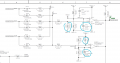
Reading this article and looking at the schematic inherent Phase Overcurrent Detection, I don't understand the function of these circled R85, R94, C91, C92 in blue.
I did not go into detail with the schematic, but the circuit in question has two comparators (the one up for highest level and the one down for lower level) that compare the voltage of the three phases of the electric motor with a threshold set via voltage divider on the "+" terminal of the comparator (or "-" in the case of the one down).
In my opinion:
- R85 is pulldown resistor to avoid floating voltage at "-" terminal and false error detection
- R94 at the bottom maybe does the same thing as R85 (but this time pullup) .. so to avoid floating voltage at the "+" terminal and false error detection
- CP1 and C92 are in parallel with the resistor of the divider that sets the V to compare with the input from the phases ... perhaps a low-pass filter?
What do you think?
I did not go into detail with the schematic, but the circuit in question has two comparators (the one up for highest level and the one down for lower level) that compare the voltage of the three phases of the electric motor with a threshold set via voltage divider on the "+" terminal of the comparator (or "-" in the case of the one down).
In my opinion:
- R85 is pulldown resistor to avoid floating voltage at "-" terminal and false error detection
- R94 at the bottom maybe does the same thing as R85 (but this time pullup) .. so to avoid floating voltage at the "+" terminal and false error detection
- CP1 and C92 are in parallel with the resistor of the divider that sets the V to compare with the input from the phases ... perhaps a low-pass filter?
What do you think?