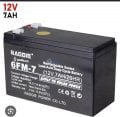
NO you cannot. To charge 12V battery, you need more than 13V power supply. Also you need to limit the charging current, 5A heavy current kills the 7AH battery too fast.
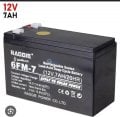
NO you cannot. To charge 12V battery, you need more than 13V power supply. Also you need to limit the charging current, 5A heavy current kills the 7AH battery too fast.
I've designed circuits for charging SLA batteries. Eventually, I came to realize that a commercial battery maintainer was more trouble free. The benefit is that in addition to charging and maintaining batteries, it can also recover some of them.
I had a 12V/7Ah SLA in a UPS that recently "failed". I put it on the maintainer and it restored the battery enough that the UPS stopped alarming. Still replaced with a new battery because I want the UPS to have its full runtime capacity restored.
I am going with the above or just a simple Google of 12 Volt battery maintainer. I also discovered it was cheaper to buy verse build. You also need at least 13.6 volts, as mentioned, to charge a 12 volt SLA battery.
Almost certainly, no, as everyone has mentioned. You need nearly 14V at the supply to properly charge a 12V battery. By the time the unloaded voltage of a battery has fallen to 12V, it's nearly "dead". Said another way, charging a lead acid to just 12V is gets it to a better place than any lower voltage, but it's far from charged.
However, it depends on your adapter. In the old days, before widespread SMPS, a 12V nominal wall wart might output 16VDC or so when unloaded - at low current - and will only be drawn down to 12V when under the stated load. This behavior made it acceptable for charging a lead acid battery. Higher current while bulk charging, low current once charged. Not ideal maybe, but it could get the job done.
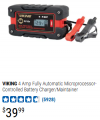
A commercial, off-the-shelf battery tender can be very inexpensive. In the realm of make-or-buy decisions, it's a very strong buy.
If you already have a >2A, 15-20Vdc souce (such as from an old laptop or bench supply) you could use this LDO charging circuit (LTspice sim below), which performs the three desired lead-acid charging states of: constant-current bulk, constant-voltage absorption, and constant-voltage float charge.
M1 will need to be on a heatsink; size depending upon the supply voltage used.
But as noted, it's likely easier (and probably cheaper) just to buy one of those low-cost chargers available for that.
Since we know nothing about that "12 volt 5amp adapter", we have not enough information. I have one 12 volt adapter with a "no-load" output of 15 volts, that drops to 12volts with a 400mA load. Certainly a scheme to limit the current (see post #10), if you would be able to build it.
If the adapter voltage is actually 12.0 volts no load, then you can do some charging and the current will drop rapidly as the battery charges. But you will not get close to a full charge.
If all else fails, read what it says on the battery.
When charging, start with something between 14.5 V and 14.9 V, limiting the current to no more than 2.8 A.
When floating it (maintaining it), use something between 13.6 V and 13.8 V.
As everyone has advised, NO, you cannot safely charge the battery you show in the photograph with a simple 12v 5a adaptor.
You could use a 12-volt float charger designed for motorcycles if you are not looking for quick turnaround charging. (Motorcycle batteries are not much bigger that the deep cycle lighting battery you show, therefore have current capabilities much closer to the needs of your battery.) Quite often you may find you don’t actually need the battery again until the next day, in which case this may be your best option. These are generally pretty cheap too.
If you are looking for the fastest (and safe) possible turnaround charging, you will need to use a profile charging method. This consists of initial constant current charging to a specific voltage, where it then switches to constant voltage charging and the current is allowed to decrease to a pre-determined point. The charger then goes back to a constant voltage mode with a reduced voltage for float/maintenance charging. This would probably be a custom-design option (See post #12 by crutschow).
If you are OK with manually reducing the voltage shortly after the battery reaches its maximum voltage (in this case 14.7 volts), a common “Lab Power Supply” where the maximum voltage and the maximum current can be independently set works very well. These are available from Amazon for around $35 to $50. There are also several power supply modules available where you can “roll your own” for even less money.
If you use a lab power supply, as a rule, the maximum charging current should be no more than 20% of the amp-hour rating. In this case, the maximum charging current should be 1.4 amps. The maximum voltage while under charge (“Cycle use”) should nominally be 14.7 volts. Shortly after this point is reached, you should reduce the maximum voltage setting to 13.7 volts and continue to charge the battery for at least one additional hour. You can maintain the battery by 13.7 volts on the battery continuously (“Standby use”).
I should also note that the “Initial current: 2.8 amps” would apply if you were using a constant voltage charging circuit and the current is continuously falling during the charge cycle. In this mode of operation, the battery charger’s internal resistance (impedance) becomes an integral part of establishing a safe charging profile.

 Facebook
 Google
 GitHub
 Linkedin